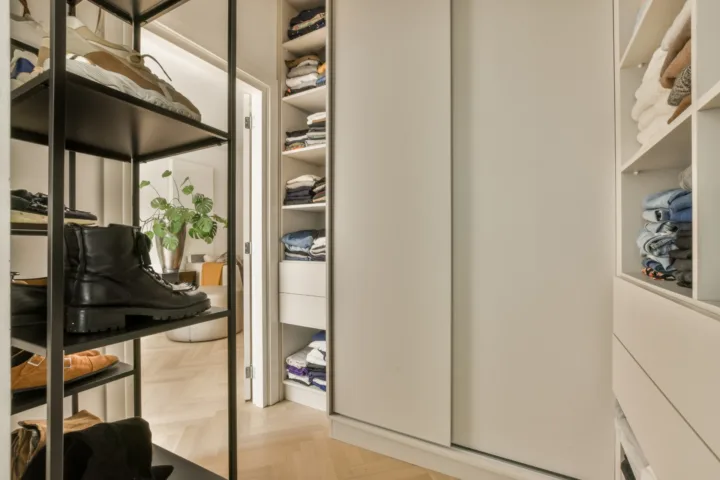
I used to ignore the top of my closet completely. Dust collected. Random boxes sat there for years. Every time I needed something seasonal I had to dig through a mess that made me want to quit organizing altogether. That changed when I committed to fixing the highest shelves first. These 16 top of closet organization ideas grew out of my own trial and error in a small apartment closet that never seemed big enough.
Honestly? The top shelf is the most wasted real estate in most closets. I learned that the hard way after years of cramming everything at eye level and pretending the upper zone did not exist.
Why the Top of the Closet Deserves Real Attention
I spent too long treating the highest shelf like a dumping ground. Out-of-season coats. Old photo albums. That one suitcase I use twice a year. Everything went up there and stayed forever.
See, the problem is reach. Most of us cannot grab items without a stool. So we stop using the space. I fixed that by deciding the top shelf would only hold things I needed a few times a year. Everything else had to live lower.
That single rule changed how the whole closet worked. Suddenly the middle shelves felt roomy. Getting dressed stopped feeling like a scavenger hunt.
1. Clear Plastic Bins with Lids
I started with clear bins. Not the cloudy ones. Fully transparent.
I can see exactly what sits inside without climbing up every time. I label the short end that faces forward so the text is readable from the floor.
My rule: only seasonal clothing or extra bedding goes in these. I keep two large ones for winter scarves and one for summer linens. The lids keep dust out. That alone saved me hours of cleaning later.
2. Matching Fabric Baskets
Clear bins work. Fabric baskets look better.
I switched half my top shelf to identical woven baskets in the same color. They hide the chaos inside while still looking intentional. I line each one with a cheap fabric scrap so nothing snags.
Honestly? Matching containers made the whole shelf feel designed instead of desperate. I pull one down, grab what I need, and put it back. No more avalanche of mismatched cardboard boxes.
3. Shelf Dividers That Actually Stay Put
Stacks of folded sweaters used to topple the second I touched the shelf. I added tall wire shelf dividers.
They create vertical walls between stacks. Now my sweaters stay in neat columns instead of sliding into one giant pile. I space them about twelve inches apart.
This is one of the cheapest upgrades I made. It turned a messy top shelf into something I could maintain without constant re-folding.
4. Vacuum Storage Bags for Bulky Items
Comforters and heavy coats take up ridiculous space. I rolled mine into vacuum bags and sucked the air out with a regular vacuum hose.
The bags shrink down to a fraction of their original size. I stack three of them easily where one puffy coat used to live. When the season changes I open one, fluff the item, and put the empty bag back.
FYI, buy the ones with double zip seals. The cheap single-seal versions fail after two uses.
5. Labeled Cardboard Boxes for Keepsakes
Not everything needs a fancy bin. I still use sturdy cardboard boxes for items I almost never touch: old yearbooks, kids’ artwork, holiday decorations that only come out in December.
I write the contents in big black marker on every side. That way I never have to open a box just to remember what is inside. I stack them two high at the very back of the top shelf.
This keeps nostalgia accessible but out of the way of daily life.
6. A Dedicated Luggage Shelf
My hard-shell suitcase used to live on the floor and collect dust. I installed one extra floating shelf near the ceiling just for luggage.
It holds two medium suitcases stacked. I can still reach them with a step stool when I travel. The rest of the year they stay clean and out of sight.
This single change freed an entire corner of floor space that used to feel unusable.
7. Stackable Wire Cubes
I bought a set of wire cubes that snap together. On the top shelf I built a two-high, three-wide grid.
Each cube holds a category: one for hats, one for gloves, one for lightweight scarves. The open design means I can see everything. Air flows through so nothing smells musty.
I like that I can reconfigure the cubes if my needs change. Flexibility matters when your wardrobe shifts with the seasons.
8. Acrylic Risers for Smaller Items
Some things need elevation. I placed clear acrylic risers on the top shelf and set smaller bins on top of them.
This creates two levels in the same footprint. Lower level holds bulkier boxes. Upper level holds smaller containers of accessories I rarely use.
The clear material keeps the shelf from looking crowded even when it is full.
9. Seasonal Clothing Rotation System
I rotate clothes twice a year. Winter items go up high in spring. Summer items go up high in fall.
I pack them in matching bins labeled with the season and the year. When the weather turns I swap the entire set in one afternoon. The top shelf becomes temporary storage instead of permanent clutter.
This keeps my everyday hanging space limited to what I actually wear right now.
10. Soft-Sided Zippered Bags for Linens
Extra sheets and towels used to live in a crumpled heap. I switched to soft zippered bags that compress a little when stacked.
They slide easily on and off the shelf. I can fit more sets than I ever could with rigid boxes. The fabric sides also prevent the sharp edges that used to catch on other items.
I keep two bags for guest sheets and one for the extra comforter we only pull out when temperatures drop hard.
11. Vertical File Organizers for Flat Items
Magazines, folders, and flat packaging used to slide around. I stood a few vertical file organizers on the top shelf.
They hold flat items upright like books on a shelf. Nothing tips over. I can pull one file out without disturbing the rest.
This works surprisingly well for keeping gift wrap and tissue paper tidy too.
12. Baskets with Handles for Easy Pull-Down
I learned the hard way that heavy bins without handles are a pain. Now every container on my top shelf has solid handles.
When I need something I climb the stool once, grab the handles, and lower the whole basket to the floor. No tipping. No spilled contents.
Handles also make it safer. I never have to stretch and hope the bin stays balanced on my fingertips.
13. Corner Space Maximizers
My closet has awkward corners on the top shelf. I filled them with smaller square bins that fit the exact dimensions.
Nothing wastes space like empty corners. These little bins hold random cords, extra batteries, and the tiny tools I only need once in a while.
Custom fit beats generic every time in a small space.
14. Dust Covers for Anything Fabric
Even with lids, some items still collect dust. I added cheap fabric dust covers over the soft baskets.
They slip on and off in seconds. When I open the closet the top shelf looks finished instead of half-done. Guests never see the real contents unless I choose to show them.
15. A Simple Inventory List
I keep a handwritten list taped inside the closet door. It shows exactly what lives on the top shelf and which bin holds it.
No more guessing. No more climbing up three times to find the right box. I update the list whenever I rotate seasons.
This tiny habit keeps the whole system working long after the initial organizing day ends.
16. Step Stool That Lives Nearby
None of these ideas work if I cannot reach the shelf safely. I bought a sturdy folding step stool and keep it in the bedroom closet itself.
It folds flat against the wall. When I need something from up high I open it in five seconds. Safety and convenience matter more than I first realized.
IMO this is the quiet hero of the entire setup.
How I Keep the System from Falling Apart
I check the top shelf every three months. I remove anything that no longer belongs. I wipe the surfaces. I make sure labels still match the contents.
The key is treating the top shelf as active storage instead of a graveyard. Once I stopped dumping and started assigning specific jobs to each container, the clutter stopped returning.
You do not need a huge budget. Most of my containers came from basic home stores. The real cost was time and a willingness to climb up there and sort properly once.
Frequently Asked Questions
What should I store on the top of my closet? I keep only items I use a few times a year: seasonal clothing, extra linens, luggage, and keepsakes. Everyday clothes and shoes stay lower where I can reach them without tools.
How do I reach the top shelf safely every day? I keep a folding step stool right inside the closet. It takes almost no space when folded and makes every trip up there quick and stable.
Are clear bins better than fabric baskets for top of closet organization ideas? Clear bins win when I need to see contents fast. Fabric baskets win when I want the shelf to look neat from the floor. I use both depending on the category.
How often should I reorganize the highest shelves? I do a full check every season when I rotate clothes. A quick wipe and label update keeps everything working without a major overhaul.
Can these ideas work in a very small closet? Yes. In fact they work better in small spaces because every inch counts. I started in a reach-in closet that felt impossible and still found room for all sixteen approaches by choosing smaller containers and stacking smart.
I used to open my closet and feel defeated before the day even started. Now the top shelf works as hard as the rest of the space. Those sixteen changes did not happen overnight. They happened one bin, one label, and one decision at a time.
If your highest shelves currently hold nothing but dust and regret, pick one idea from this list and try it this weekend. Start small. Stack one set of matching baskets. Add dividers to one shelf. The rest will follow once you see how much calmer the whole closet feels.
Your future self will thank you every time you open the doors and actually find what you need.