My tiny closet used to defeat me every single morning. I would open the door and watch a cascade of shirts, shoes, and random bags spill out. Honestly? I felt like the space was mocking me. After years of living with a reach-in closet under four feet wide, I collected 17 tiny closet organization ideas that actually worked in my own home. These are the exact changes I made, one by one, until the chaos stopped.
I am not a professional organizer. I am just someone who got tired of losing half an hour every day hunting for a matching pair of socks. What follows is the system I built through trial, error, and a few late-night Amazon orders. Every idea below fits a real tiny closet. No custom built-ins. No contractor. Just practical moves that freed up space I did not know I had.
Why Most Tiny Closets Feel Impossible
See, the problem is rarely the square footage. Most tiny closets ship with one high rod and one shelf. That setup wastes about 40 percent of the usable height. Clothes pile on the floor. Shoes create a permanent obstacle course. Accessories vanish into black holes.
I used to think I needed a bigger apartment. Wrong question. The right question was how to claim every vertical inch and every unused surface. Once I shifted that thinking, the same closet started working for me instead of against me.
The First Moves That Changed Everything
Before I added a single product, I had to clear the decks.
1. Empty the entire closet and edit hard. I pulled every item out and laid it on the bed. Anything I had not worn in a year went into a donate bag. Sentimental pieces I kept, but I moved them to a bin under the bed. The result? Instant visual calm. A half-empty closet already feels twice as big.
2. Switch every hanger to slim velvet ones. Plastic hangers are space thieves. I replaced my mismatched collection with a pack of slim velvet hangers. The difference shocked me. In a 36-inch rod, I gained nearly nine inches of hanging room. Clothes stopped sliding off. The whole rail looked uniform. IMO, this single swap delivers the highest return for the lowest cost.
3. Install a second hanging rod. My original rod sat high and left a dead zone below. I added an adjustable second rod that hangs from the first one. Shirts and jackets went on top. Pants, skirts, and folded jeans hung below. Suddenly I had double the hanging capacity without touching the walls.
Claiming Vertical Space Like It Is Free Real Estate
Tiny closets reward anyone who looks up and down.
4. Add shelf dividers for folded stacks. Sweaters and jeans used to topple the moment I pulled one piece. Clear acrylic dividers fixed that. I slipped them between stacks so each category stays upright. Now I can grab a sweater without the whole pile collapsing.
5. Mount extra shelves above the existing one. I installed two simple wire shelves near the ceiling. Off-season clothes and luggage live up there. I keep a small step stool nearby so I can reach them without drama. Vertical storage turned the top of my closet into usable real estate instead of wasted air.
6. Hang a multi-shelf fabric organizer from the rod. This hanging unit creates five soft cubbies for folded tees, workout gear, and intimates. It hangs right next to my shorter clothes and turns empty air into drawer-like storage. I love that it requires zero tools and zero holes in the wall.
The Door and Walls Do Heavy Lifting
Most people ignore the door. I stopped ignoring it.
7. Use an over-the-door organizer with clear pockets. I hung one on the inside of the door. It holds 24 pairs of shoes plus scarves and belts. The clear pockets mean I see everything at a glance. Floor space that once disappeared under a mountain of shoes is now clear.
8. Install hooks or a small pegboard on the side wall. Command hooks or a compact wooden pegboard handle bags, hats, and robes. I keep my everyday tote and a couple of frequently worn jackets right there. No more digging through the hanging clothes to find them.
9. Add a slim valet rod for next-day outfits. A retractable valet rod lets me stage tomorrow’s clothes the night before. It pulls out when I need it and tucks away when I do not. Mornings became calmer the day I installed it.
Floor and Accessory Solutions That Stick
The floor is usually the first place the system fails. I refused to let that happen again.
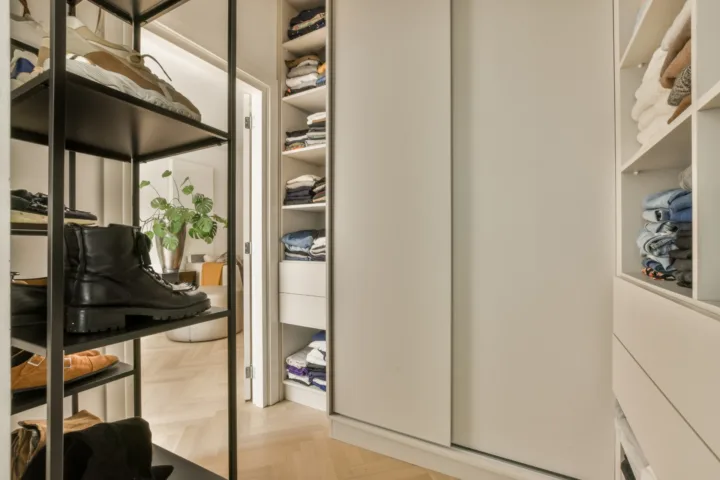
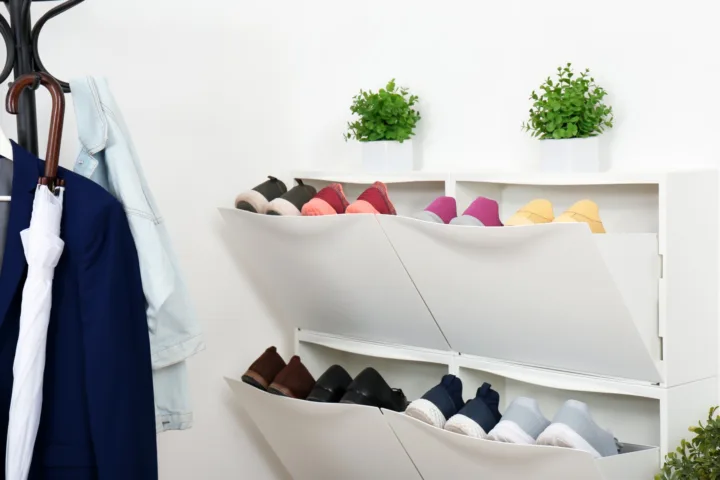
10. Place a three-tier shoe rack on the floor. A narrow rack holds nine to twelve pairs in the same footprint that three pairs used to occupy when they lay flat. I keep everyday shoes on the bottom two tiers and dressier pairs on top. The floor stays open for a quick vacuum.
11. Corral small accessories in labeled fabric bins. Belts, socks, and underwear live in matching bins on the lower shelves. Labels keep me honest. When everything has a home, the “where did I put that” search ends.
12. Use cascading hangers for skirts and pants. Instead of giving each skirt its own full rod space, I switched to multi-tier hangers that stack five skirts vertically. The same idea works for pants with clips. One hanger now does the work of five.
13. Store handbags in clear stackable boxes or upright on a shelf. Soft bags used to collapse into each other. Clear drop-front boxes or simple upright shelf dividers keep their shape and make every bag visible. I can grab the exact one I need without a landslide.
Systems That Keep the Order Alive
Organization dies without maintenance habits. These last ideas protect the gains.
14. Create strict zones by frequency of use. Everyday clothes stay at eye level. Work outfits sit in the middle. Formal pieces and seasonal items go high or in bins. When every category has a permanent zone, putting things away becomes automatic.
15. Rotate the wardrobe by season. Twice a year I pack the off-season clothes into vacuum bags or under-bed bins. The closet only holds what I actually wear right now. The lighter load makes the space feel generous again.
16. Keep a small “donation” bag hanging on a hook. Any time I try something on and realize it no longer fits or feels right, it goes straight into the bag. When the bag fills, I drop it off. This prevents the slow creep of unused items that used to choke my closet.
17. Light the space properly. I stuck a simple battery-powered LED strip under the top shelf. Suddenly I could see the back of the closet. Dark corners no longer hid forgotten clothes. Good lighting turns a tiny closet from a guessing game into a functional tool.
How These 17 Tiny Closet Organization Ideas Work Together
None of these ideas requires a full remodel. Most cost under twenty dollars. The real magic happens when you stack them. Slim hangers plus a second rod plus an over-door organizer plus shelf dividers create compounding space. One change helps. Seventeen changes transform the whole system.
I started with the hangers and the second rod because they delivered the biggest visual win in one afternoon. Then I tackled the door and the floor. The final pieces were the zones and the seasonal rotation. The whole process took about three weekends of focused work, not because it was hard, but because I did not want to rush and make a mess I would have to undo later.
Honestly? The hardest part was the initial edit. Letting go of clothes I might need “someday” felt uncomfortable. But every time I open the door now and see clear space and matching hangers, I remember why the discomfort was worth it.
Frequently Asked Questions
Do I need to buy expensive systems for a tiny closet? No. Most of the gains come from slim hangers, a second rod, and an over-door organizer. Those three items alone free more space than most custom systems for a fraction of the price.
How often should I reorganize a tiny closet? I do a full edit twice a year when the seasons change. A five-minute reset every Sunday keeps the daily mess from building up.
What if my closet has sliding doors instead of a swinging door? Skip the over-the-door organizer and use the side walls for hooks or a narrow pegboard instead. You can still add a second rod and shelf dividers.
Can these 17 tiny closet organization ideas work in a shared closet? Yes. Assign each person a clear vertical zone and use matching hangers so the visual clutter stays low. Color-coded bins help keep items from migrating into the wrong territory.
Is it better to fold or hang everything in a tiny space? Hang what wrinkles easily and fold the rest into bins or on shelves with dividers. The mix prevents the rod from overcrowding while still keeping folded items neat.
The Quiet Payoff
I no longer dread opening my closet. The space still measures the same, yet it holds everything I need without the morning scramble. Getting dressed takes minutes instead of a scavenger hunt. That small daily win compounds. I start the day already feeling a little more in control.
If your tiny closet currently feels like a lost cause, pick one idea from this list and try it this weekend. Start with the hangers or the second rod. Watch what happens. Then add the next piece. Tiny closets do not need miracles. They need a system that respects the limits of the space and works with them instead of fighting them.