
I spent years staring at a closet that felt like it was actively working against me. Clothes piled up. Shoes vanished. Mornings turned into a scavenger hunt. I needed real fixes, not pretty photos. After testing dozens of approaches in my own small apartment closet, I landed on 20 adult closet organization ideas that actually stuck. These are the ones that cut my getting-ready time in half and stopped the daily frustration.
See, the problem was never a lack of space. It was how I used every inch. I treated the closet like a dumping ground instead of a system. Once I shifted that mindset, everything changed.
Why Most Closet Fixes Fail Adults
Adults deal with different stuff than kids. Work clothes. Seasonal coats. Bags that cost real money. Shoes that need to last. Random accessories that somehow multiply overnight. Generic tips fall short because they ignore that mix.
I learned this the hard way. I tried the color-coded rainbow look once. It looked great for about three days. Then real life hit and the system collapsed. Honestly? Pretty systems that ignore how you actually dress every day just create more work.
The better approach starts with function first. Beauty can come later.
Start Here Before You Buy a Single Organizer
I always begin the same way now. I pull everything out. Everything. Floor. Shelves. Rod. The whole mess lands on my bed.
Then I sort into three piles: keep, donate, maybe. The maybe pile gets a two-week deadline. If I do not wear it in that window, it goes. This step alone freed up almost a third of my space the first time I did it properly.
Do not skip this. Organizing clutter just hides the problem. You need less stuff before any of the following ideas can work well.
My Top 20 Adult Closet Organization Ideas
I group these by what they solve. Some cost almost nothing. Others need a small investment. All of them earned their spot through repeated use in my own closet.
Hanging Solutions That Actually Multiply Space
1. Switch to slim velvet hangers I used to keep the free plastic ones from the dry cleaner. They bent. Clothes slipped. The rod looked chaotic. Slim velvet hangers changed that overnight. They grip silky fabrics. They take up less room. Suddenly I could hang twice as many tops without the rod sagging. IMO, this is the single highest-impact cheap fix most people skip.
2. Add a second hanging rod Most reach-in closets have one rod at standard height. That wastes the lower half. I installed a second adjustable rod underneath for shirts and pants. Long dresses and coats stay on the top rod. Short items drop to the bottom. Instant double capacity without buying a full system.
3. Use cascading hangers for pants and skirts These vertical multi-hangers let me stack several pairs of pants in the space of one. I keep them toward the side so they do not block other clothes. The metal ones hold up better than plastic over time.
4. Install a valet rod This pull-out rod sits near the front of the closet. I hang tomorrow’s outfit on it the night before. No more last-minute digging. It also works for airing out a jacket I just wore. Small tool. Huge daily win.
Shelf and Vertical Tricks
5. Add clear acrylic shelf dividers My top shelf used to turn into one giant sweater landslide. Dividers fixed that. I section off stacks of folded jeans, sweaters, and bags. Everything stays upright and visible. I can grab what I need without restacking the whole shelf.
6. Go vertical with hanging shelf organizers These fabric or canvas units hang from the rod and create instant cubbies. I use one for folded t-shirts and another for workout clothes. They take advantage of the empty air space between the rod and the floor.
7. Mount extra shelves above the existing ones Most closets have a single high shelf. I added two more levels using simple brackets and boards. The highest holds seasonal storage. The middle holds bags. Eye level stays for daily folded items. Vertical space is free real estate most people ignore.
8. File-fold everything on shelves I stopped stacking folded clothes the old way. Now I fold them so they stand on edge like files in a drawer. I can see every piece at a glance. No more digging through piles. This works especially well for jeans and sweaters.
Shoe and Accessory Zones
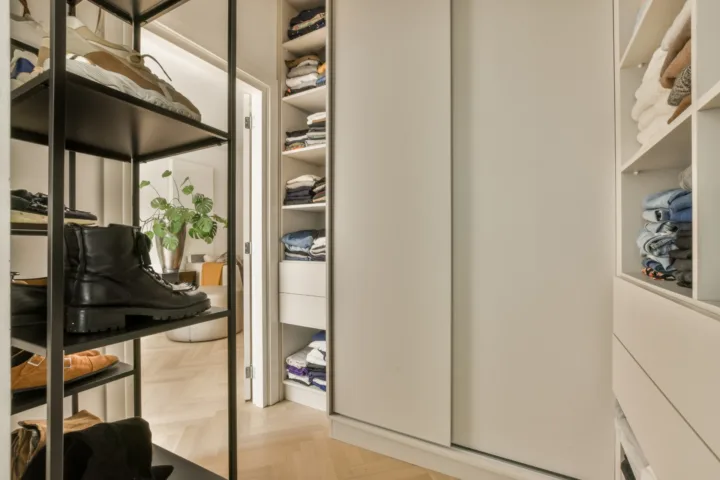
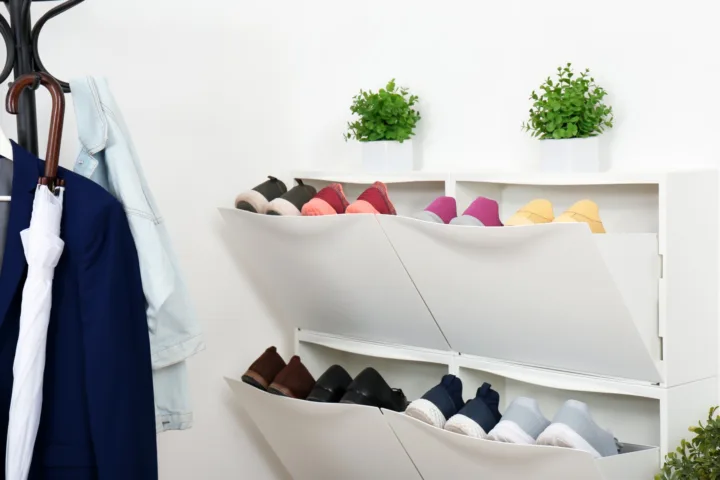
9. Use a freestanding shoe rack or stackable bins Floor space under hanging clothes is prime for shoes. I keep a simple two-tier rack for daily pairs and clear stackable bins for the rest. Visibility matters. If I cannot see the shoes, I forget I own them.
10. Hang an over-the-door shoe organizer The back of the closet door is pure bonus space. I use a clear pocket version for flats, sandals, and even rolled belts. It keeps the floor clear and makes shoes easy to grab.
11. Install bag hooks or a purse file Handbags lose their shape when they sit on a shelf. I hang them from sturdy hooks or use a hanging purse organizer with individual pockets. Each bag stays upright and ready. No more hunting for the one I want.
12. Create a dedicated accessory station Belts, scarves, and hats used to live in a tangled drawer. Now they hang on a small rack or pegboard inside the closet. Jewelry sits in a clear tray on a middle shelf. Everything has a home within arm’s reach.
Drawers, Bins, and Small Item Control
13. Add drawer dividers for underwear and socks Even if your closet has no built-in drawers, a small freestanding unit works. Dividers keep categories separate. I can find a matching pair of socks in seconds instead of digging.
14. Use labeled bins for the awkward stuff Scarves. Gloves. Swimsuits. Random tech chargers that somehow end up in the closet. Clear or labeled bins keep these from becoming floor clutter. I keep them on the highest shelf so they stay out of the way but stay findable.
15. Try vacuum storage bags for off-season clothes Bulky winter coats and heavy sweaters take up serious space in summer. I pack them into vacuum bags, suck out the air, and store the flat packs on the top shelf or under the bed. When the weather turns, they expand back to normal with almost no wrinkles if I pack carefully.
Systems and Habits That Keep It Going
16. Zone by category and frequency I divide the closet into clear zones. Work clothes on the left. Casual in the middle. Formal and outerwear on the right. Daily items sit at eye level. Occasional pieces go higher or lower. This matches how I actually get dressed.
17. Color-code within categories Once the zones exist, I arrange each section by color. It makes pulling an outfit faster. It also shows me when I own five nearly identical black tops. That visibility helps me edit better next time.
18. Keep a donation bag right in the closet I hang a small tote or bag on a hook. Any time I try something on and hate it, it goes straight into the bag. When the bag fills, I drop it off. This stops the slow creep of unused clothes.
19. Label everything that is not obvious Shelf edges. Bin fronts. Even hanger sections if needed. Labels remove the mental load of remembering where things live. I use simple removable ones so I can update them as my wardrobe shifts.
20. Build in a weekly five-minute reset Every Sunday night I spend five minutes putting stray items back. I rehang anything that slipped. I check the donation bag. This tiny habit prevents the whole system from unraveling. Consistency beats perfection every time.
What Worked Best in My Small Closet
I live in a standard reach-in, not a walk-in. Space is limited. The combination of slim hangers, a second rod, shelf dividers, and the over-the-door organizer gave me the biggest gains. The modular systems look nice in photos, but I did not need a full custom install to feel organized.
The biggest surprise was how much mental calm came from the zones and labels. I stopped opening the door and feeling defeated. Now I open it and know exactly where everything sits.
Common Mistakes I Made (So You Can Skip Them)
I used to buy organizers first and sort later. That created neat-looking clutter. Sort first. Buy second.
I also chased trends. The rainbow closet looked Instagram-ready but failed real life. Function before aesthetics.
And I tried to organize everything in one marathon weekend. That led to burnout. Better to tackle one zone at a time over a few evenings.
Frequently Asked Questions
How do I start with 20 adult closet organization ideas if my closet is tiny? Focus on the free and low-cost ones first: purge, switch hangers, add an over-the-door organizer, and create clear zones. Those four alone transformed my small space.
Do I need an expensive closet system? No. Most of the ideas on this list use basic tools from any big-box store or online. Custom systems help if you have a big budget and awkward layout, but they are not required.
How often should I reorganize? I do a full reset twice a year when seasons change. The weekly five-minute tidy keeps things stable between those bigger sessions.
What if I share the closet with a partner? Assign clear zones for each person. Use different hanger colors or labeled sections. Shared space works better when boundaries stay obvious.
Will these ideas work for a walk-in closet too? Yes. The same principles scale up. You just have more room to create extra zones or add a small seating area if you want.
Final Thoughts From Someone Who Used to Dread Opening the Closet Door
I used to waste ten minutes every morning just finding a complete outfit. That stress spilled into the rest of the day. These 20 adult closet organization ideas fixed the physical mess and the daily friction that came with it.
Start with the purge. Then pick three ideas that match your biggest pain points. Test them for two weeks. Adjust. Add more only when the first ones stick.
Your closet does not need to look like a boutique. It needs to work for the way you actually live. Once it does, mornings get quieter. Getting dressed feels automatic. And that small daily win compounds in ways you do not expect.
Go open your closet right now. Pull one thing out that no longer serves you. That single action is the real beginning.