
I spent years staring at that weird triangular void under my stairs and pretending it didn’t exist. Boxes piled up. Coats spilled out. Shoes vanished into the dark. Then I finally claimed it as a proper closet and worked through 18 under stairs closet organization ideas until the chaos stopped. These are the ones that actually stuck in my house.
Honestly? The space felt cursed at first. The ceiling slopes hard. You can’t stand up straight past the first three feet. Everything I shoved in there disappeared forever. I tried the usual “just throw bins in” approach and watched it fail. So I measured every angle, tested cheap fixes and a few custom ones, and kept what worked. Here’s what I landed on after living with the results.
Start With Zones Before You Buy a Single Thing
I used to dump everything in one big pile. That was the real problem. Now I divide the closet into three clear zones based on height.
The tall end gets daily-use items. The middle slope holds weekly stuff. The low crawl space stores what I only need a few times a year. This one change cut my search time in half. You walk in and know exactly where to reach.
Measure the slope first. I grabbed a tape and marked the points where the ceiling drops below five feet, then below three. Those marks became my boundaries. Without them every shelf looked wrong.
Coat and Entry Setup That Stops the Morning Pile
I turned the tallest section into a real coat station. A single rod never worked because the slope made half the coats drag on the floor. So I hung the rod only in the tall zone and added double rows of hooks below it.
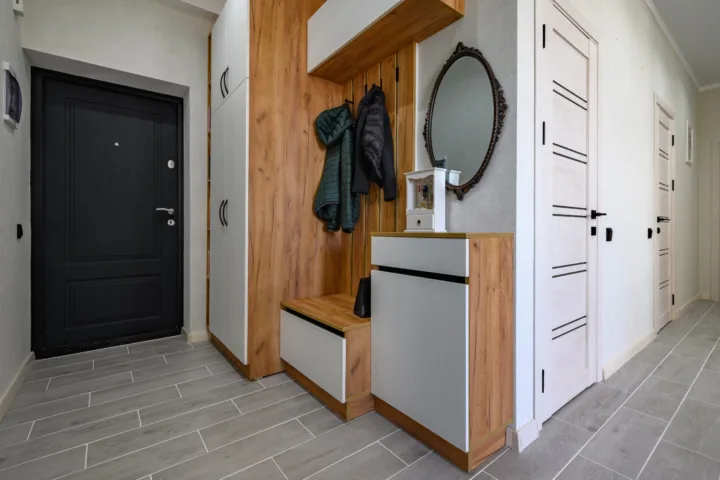
Adults get the higher hooks. Kids get the lower ones. A narrow bench sits right at the doorway with open cubbies underneath for shoes. I keep a boot tray on the floor so wet pairs never touch the wood. The whole entry now empties itself instead of exploding onto the floor.
Hooks beat hangers for everyday coats. I learned that after watching jackets slide off thin hangers every single day. Heavy-duty hooks hold the weight and stay put.
Pull-Out Shoe Drawers That Follow the Stairs
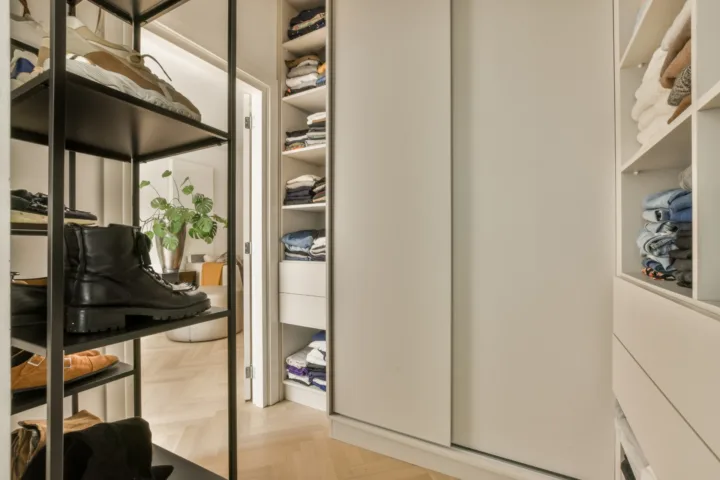
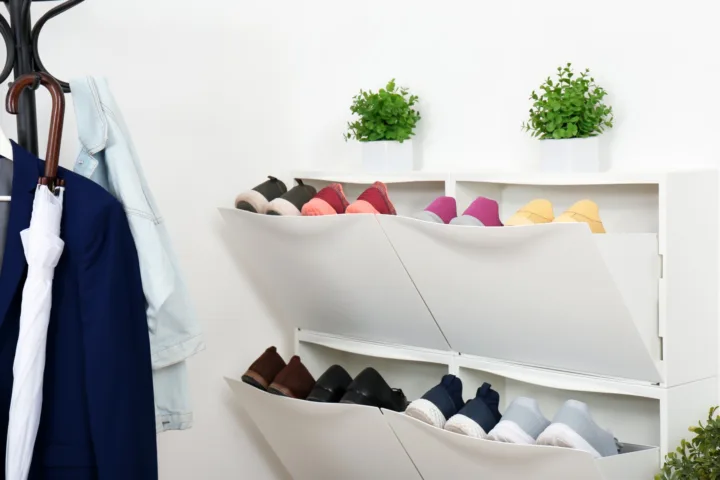
Regular shoe racks wasted the angle. I measured each step of the slope and ordered graduated pull-out drawers that match the height at every point. The deep ones near the tall end hold boots. The shallow ones at the low end hold flats and sneakers.
Everything slides out. Nothing gets buried. I can see every pair without crawling. This single upgrade removed the daily “where are my black shoes” hunt.
Under Stairs Pantry That Actually Holds Bulk Buys
My kitchen shelves always overflowed with Costco bags. The under-stairs closet became the overflow pantry. I installed adjustable shelves that step down with the ceiling. Clear bins hold flour, rice, and snacks. Labels face out so I never dig.
I keep heavier cans on the lower shelves and lighter paper goods higher. A small power strip lets me plug in a rechargeable light so the back corner never goes dark. The space now holds two full weeks of extras without looking like a disaster zone.
Cleaning Supply Station With Vertical Power
Vacuums and mops never fit anywhere else. I dedicated the tallest wall to cleaning tools. A wall-mounted rack holds the vacuum upright. Hooks grab the broom, dustpan, and Swiffer. Shallow shelves above hold spray bottles and cloths.
I added an outlet so cordless tools charge right there. No more dragging the vacuum across the house just to plug it in. Everything stays contained and ready.
Linen Closet That Respects the Angle
Sheets and towels used to live in a random hall closet that never stayed neat. I moved them under the stairs and built stepped shelves that follow the slope. Each shelf holds one category: sheets on top, towels in the middle, spare pillows at the bottom.
I fold everything the same way so stacks stay stable. Vacuum bags compress the bulky comforters. The space stays dry because I left a small gap at the back for air flow. No more musty linens.
Family Drop Zone That Catches the Daily Chaos
Backpacks, lunch boxes, and school papers used to land on the kitchen counter. I carved out a drop zone in the middle section. Floating shelves hold labeled bins for each person. Hooks below catch bags. A small basket on the floor collects outgoing mail and library books.
Everyone knows their spot. The counter stays clear. I check the zone once a week and clear anything that doesn’t belong. It takes five minutes and keeps the rest of the house from absorbing the mess.
Kids’ Cubby System With Soft Bins
Toys used to scatter from the living room into every corner. I gave the low end of the closet to the kids. Soft fabric bins sit on the floor and lower shelves. Each bin has a picture label so even the youngest can put things away.
A fun wall decal turns the space into a mini play nook instead of a dark hole. They actually use it because it feels like theirs. I rotate the toys every month so nothing goes stale.
Seasonal Storage That Stays Accessible
Holiday decor used to live in the attic and never come down. I claimed the deepest low corner for seasonal bins. Clear plastic boxes stack in height order. Each one gets a bold label on two sides.
I keep the most recent season at the front. Older ones slide behind. When December hits I pull the Christmas bin in thirty seconds. No attic trip required.
Wine Rack That Uses the Cool Spot
The temperature under the stairs stays steady. I installed diamond-shaped wine racks along one side wall. Bottles sit at the perfect angle and look intentional instead of forgotten. A small shelf above holds glasses and a corkscrew.
I only store what we actually drink. The rest goes elsewhere. The setup looks sharp and keeps bottles from rolling into corners.
Craft Supply Hub With Clear Visibility
My craft materials lived in three different rooms and always ran out at the wrong moment. I moved them under the stairs and used clear bins on adjustable shelves. An over-the-door organizer holds scissors, tape, and small tools.
A bright battery light clips to the highest shelf so colors stay true. Labels keep categories honest: paper, fabric, adhesives. I can find any supply in under a minute now.
Pet Nook With Built-In Feeding Station
The dog’s bowls used to trip everyone in the kitchen. I built a low shelf in the crawl space for food and water. A pull-out tray holds the bowls so they slide out for filling and slide back for neatness. A small bin above stores treats and leashes.
The dog claimed the spot immediately. The kitchen floor stayed dry. Everyone wins.
Sliding Barn Door That Hides the Clutter
A regular hinged door swung into the hallway and blocked traffic. I swapped it for a sliding barn door that rides along the wall. The look feels intentional and the hallway stays open. I painted the door the same color as the wall so it disappears when closed.
Inside stays private. Outside stays calm. The track took one afternoon to install and changed how the whole entry feels.
Bookshelf and Cabinet Combo for Mixed Storage
Some items need open display and some need closed doors. I mixed both. Open shelves on the tall end hold books and baskets. Closed cabinets below hide less pretty stuff like spare light bulbs and batteries.
The combination looks collected instead of purely utilitarian. I can grab a book without opening a door and still keep the ugly items out of sight.
Drawer Front Storage That Looks Like Furniture
Instead of a plain closet door I installed drawer fronts that pull out like a giant dresser. Each “drawer” is actually a deep bin on slides. The fronts match the rest of the house trim so the whole thing reads as built-in furniture.
I use the top drawers for everyday gloves and scarves. Lower ones hold bulkier items. Guests never realize it’s a closet until I open one.
Hidden Push-Latch Doors for a Clean Look
I wanted the under-stairs wall to look solid. Push-latch doors sit flush with no handles. A light press opens them. The front blends into the paneling so the storage stays secret.
Inside I still use shelves and bins. Outside the wall looks intentional. This works especially well when the stairs face the living room.
Glass-Front Closet for Visual Order
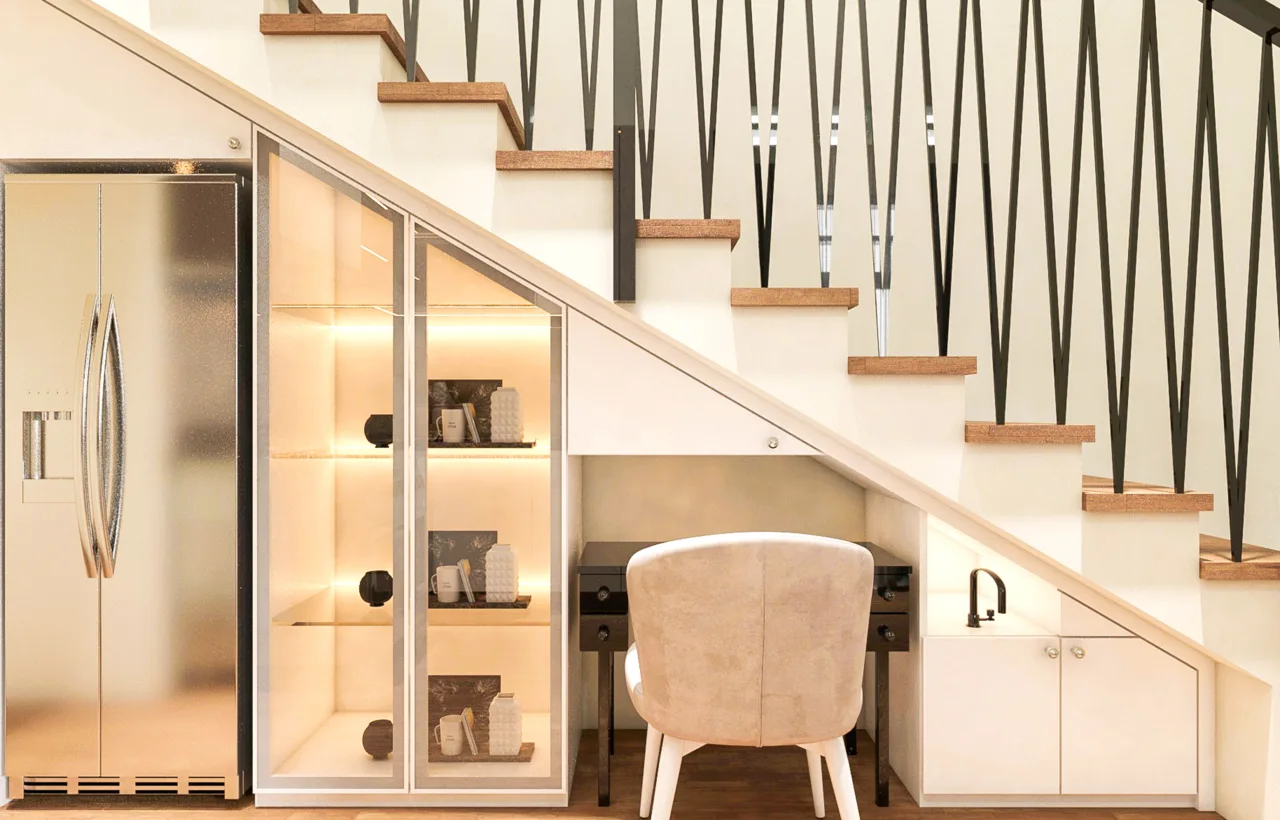
Sometimes you want to see what’s inside. I added glass panels to the upper doors and kept solid lower ones. The glass forces me to keep the top shelves neat because everything stays visible. Baskets and labeled boxes create a clean grid.
The lower solid doors hide the messier cleaning supplies. The mix keeps the space honest without demanding perfection everywhere.
Backlit Open Shelving for a Feature Moment
In the final tall section I skipped doors entirely and installed open shelves with soft LED strips underneath. The light turns the storage into a quiet feature. I style the front of each shelf with a few nice baskets and hide the rest behind.
It works because I only put attractive or frequently used items there. The glow makes the whole staircase feel finished instead of leftover.
Frequently Asked Questions
How do I organize an under stairs closet when the ceiling slopes so hard? I measure the height at every foot and build or buy shelves that step down with the angle. Tall items stay near the door. Shallow bins fill the low end. Fighting the slope never works.
What are the best 18 under stairs closet organization ideas for a family with kids? The drop zone with labeled bins, the kids’ cubby system with soft bins, and the double-height hooks for coats solve most of the daily mess. Those three alone cut my morning chaos in half.
Should I use open shelves or closed doors under the stairs? I use both. Open shelves work for items I grab often and want to see. Closed doors or drawer fronts hide the ugly stuff. Mixing them keeps the space functional and calm.
How much does a basic under stairs closet organization cost? My simplest version used adjustable shelves, clear bins, and hooks for under $150. Custom pull-out drawers and a sliding door pushed it higher, but the cheap version still solved most problems.
Can I turn the under stairs closet into a pantry if my kitchen is small? Yes. I did exactly that. Stepped shelves, clear bins, and a light transformed the space into reliable overflow storage. Just keep food in sealed containers and watch humidity.
I still walk past that closet and feel a quiet hit of satisfaction. The space that once swallowed everything now hands me exactly what I need. Pick one idea that matches your biggest daily frustration and start there. The rest will follow once you see how good it feels to open the door and find order instead of mystery.