I spent years wrestling with a narrow walk-in that felt more like a coat closet with attitude. Clothes piled up. Shoes vanished. Every morning started with frustration. Then I tested real solutions and landed on 15 closet organization ideas small walk in setups that finally made the space work. These ideas turned my daily scramble into something calm and usable.
I still remember the day I stood in that cramped rectangle and decided enough was enough. My goal was simple: more function without a full gut renovation. What follows comes straight from what worked in my own space and what I watched fail in friends’ closets.
Start With the Foundation: Clear and Measure First
I emptied everything. Every single item came out. Honestly? The floor looked bigger already.
I sorted into keep, donate, and trash piles. Then I measured the exact width, depth, and height. Most small walk-ins sit around five to six feet wide and six to seven feet deep. Those numbers matter because every idea below has to fit those limits.
I kept only what I actually wore in the last year. That single step freed more space than any organizer I bought later.
Double Up on Hanging Space
Double hanging rods gave me the biggest immediate win.
I installed one rod high for shirts and jackets. A second rod sat lower for pants and skirts. The gap between them stayed clear so nothing dragged. In my closet this nearly doubled the hanging capacity without touching the walls beyond two new brackets.
I used adjustable brackets so the heights could shift later. Short items go on the lower rod. Longer pieces stay on the upper one. The result felt intentional instead of stuffed.
Go Floor to Ceiling With Shelves
Vertical space is free real estate in a small walk-in.
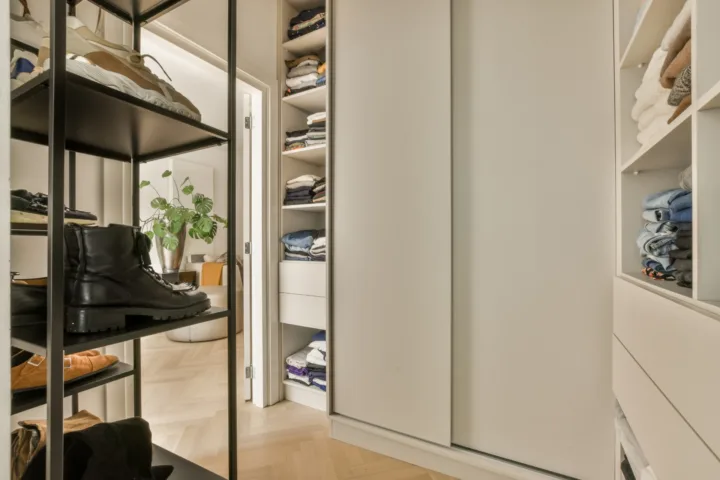
I added shelves that ran from just above the lower rod all the way to the ceiling. Everyday folded items lived at eye level. Seasonal boxes sat on the very top. I could still reach the high ones with a small step stool I keep tucked in the corner.
Floor-to-ceiling shelving stopped me from stacking clothes into unstable towers. Everything had a flat surface and a clear front edge.
Add a Pull-Out Valet Rod
I used to drape tomorrow’s outfit over a chair. That chair lived in the bedroom and made the whole room look unfinished.
A slim pull-out valet rod fixed it. I mounted it at shoulder height near the door. In the evening I hang the next day’s clothes. In the morning I grab them and go. The rod slides back flush when I finish. No extra floor space required.
Switch to Slim Matching Hangers
Bulky plastic hangers waste inches.
I replaced every one with slim velvet hangers. They grip better and take up far less horizontal room. Suddenly the same rod held thirty percent more clothes. Matching hangers also make the closet look calmer. My eyes stop hunting for empty spots.
FYI, the velvet ones cost a bit more upfront but they last and they stop clothes from sliding off.
Create Zones for Shoes
Shoes used to claim the entire floor.
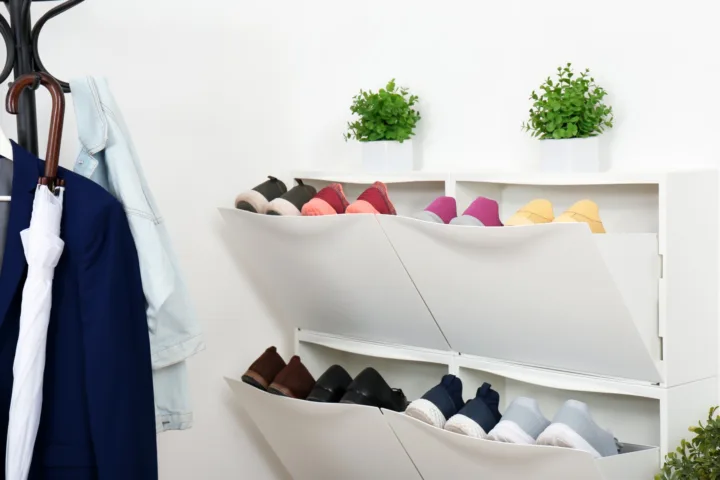
I installed narrow open shelves along one short wall for everyday pairs. Tall boots went into a vertical boot rack in the corner. Over-the-door shoe pockets handled the rest. The floor stayed clear so I could actually walk in and turn around.
I keep only the shoes I wear most often in the closet. Everything else lives in under-bed boxes. That rule alone kept the shoe zone from expanding.
Use the Door as Storage
The back of the door is prime real estate.
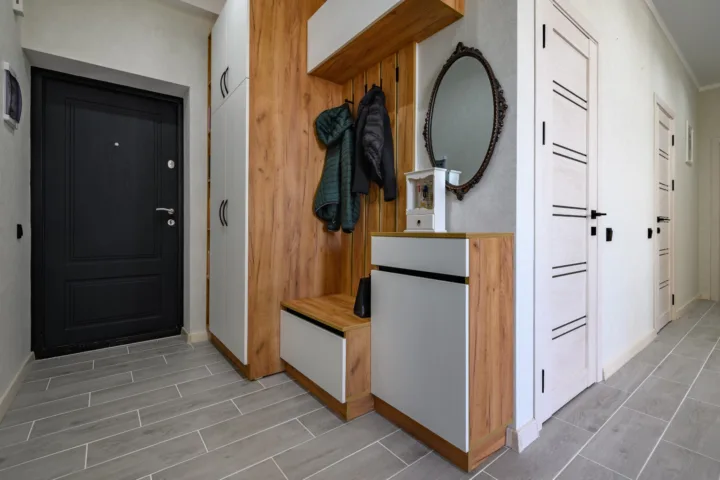
I hung a multi-pocket organizer for scarves, belts, and small bags. A second over-the-door rack holds lightweight jackets I grab often. Nothing blocks the doorway. The pockets stay visible so I stop digging.
Install Hooks for Accessories
Bags and hats used to disappear into dark corners.
I mounted a simple row of sturdy hooks on the side wall. Handbags hang by their straps. Hats sit above them. Belts drape on S-hooks nearby. Everything stays visible and off the shelves. I can grab what I need without shifting piles.
Build a Small Drawer Zone
Tiny items create the biggest mess.
I added two shallow drawer units under a section of hanging space. One drawer holds socks and underwear sorted in dividers. The other holds jewelry trays and small accessories. Closed drawers hide the clutter while still giving quick access.
I prefer drawers over open bins for these pieces. They keep dust out and the visual noise down.
Try a Slim Peninsula if You Have Room
My closet was too narrow for a full island. A short peninsula worked instead.
I built a narrow counter against one wall with drawers underneath. The top surface gives me a place to fold or set out accessories. The drawers store folded jeans and sweaters. The footprint stays small enough that I can still walk past it comfortably.
Label Everything Clearly
Labels stop the slow slide back into chaos.
I use simple printed labels on every bin and basket. Seasonal clothes go in clear bins on the top shelf with labels facing out. Everyday categories get their own labeled spots. When I put something away I know exactly where it belongs. No guessing.
Light the Space Properly
A dark closet makes everything feel smaller.
I added battery-powered LED strip lights under the upper shelves and a small puck light near the door. Suddenly I could see the back of every shelf. Clothes looked brighter. I stopped leaving things in the wrong place because I could finally see them.
Add a Mirror for Scale
A full-length mirror on the end wall bounced light and made the narrow space feel deeper.
I chose a frameless one so it did not eat visual width. It also lets me check outfits without stepping into the bedroom. That small addition changed how the whole closet felt.
Color Code Your Clothes
I used to dig through mixed piles.
Now I group by type first, then by color from light to dark. Shirts run left to right in a soft gradient. Pants follow the same pattern. Finding a specific piece takes seconds instead of minutes. The closet also looks more intentional when the door stays open.
Rotate Seasonally Without Drama
I keep only the current season in the main hanging and shelf zones.
Off-season pieces move into labeled bins on the highest shelves or into under-bed storage. Twice a year I swap. The process takes one afternoon. The daily closet stays lean and usable the rest of the time.
Keep a Step Stool and a Donation Basket Ready
I leave a small folding step stool in the corner. High shelves stay usable. I also keep an empty basket on the floor for items I decide to donate. When the basket fills I take it out. Clutter never gets the chance to rebuild.
Frequently Asked Questions
How do I start organizing a small walk-in closet without feeling overwhelmed? I empty everything first and sort ruthlessly. Then I measure and plan zones before buying a single organizer. That order keeps the process manageable.
What is the single best upgrade for 15 closet organization ideas small walk in setups? Double hanging rods. They give the fastest capacity boost in almost every narrow space I have seen.
Can I organize a small walk-in on a tight budget? Yes. Slim hangers, over-the-door organizers, basic hooks, and clear bins cost little and deliver most of the function. Custom systems can wait.
How often should I reorganize? I do a full edit twice a year with the seasonal swap. Quick ten-minute resets once a month keep things from drifting.
Do I need custom shelving or will store-bought work? Store-bought adjustable systems worked fine in my closet. Custom only becomes necessary if the walls are unusually shaped or you want built-in drawers everywhere.
I still walk into that same narrow closet every morning. It no longer stresses me out. The fifteen ideas above turned a daily headache into a space that supports the rest of my day. Start with the ones that match your exact measurements and the clothes you actually wear. Build from there. Your future self will thank you when the next outfit comes together in under a minute.