
Standing water in my sink always hits the same way. I stare at it. I poke at it. I feel that small wave of defeat because the water just sits there, mocking me. Last month my kitchen sink clogged right after I rinsed a pan of leftover pasta, and I decided I was done guessing. I spent the next hour testing every method I already knew and a couple I picked up from watching actual plumbers work. The primary goal stayed simple: get the sink clogged situation fixed so I could unclog a drain without spending a hundred bucks on a service call.
I learned what works, what wastes time, and what I will never do again. This is the exact process I now follow whenever the water stops moving.
Why My Sink Keeps Getting Clogged in the First Place
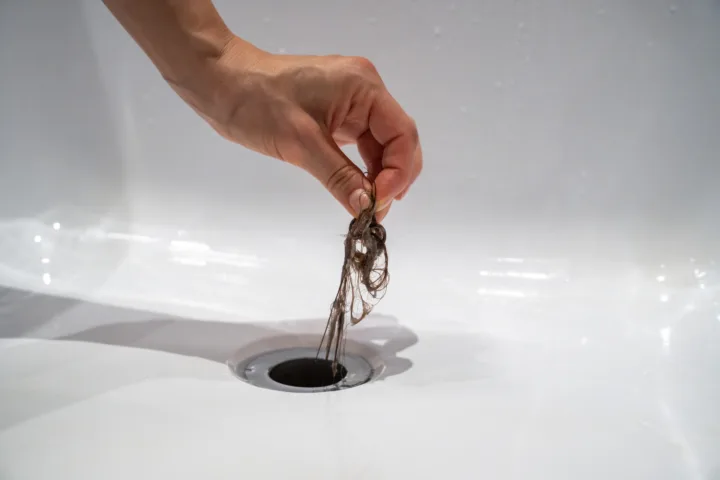
Most of my clogs come from the same three things. Grease. Hair. Soap scum. Kitchen sinks collect cooking oil and food scraps. Bathroom sinks collect hair and toothpaste. Both collect slow-building gunk that eventually stops the water cold.
I used to think a clog meant something dramatic got stuck. Honestly? Ninety percent of the time it is just a thick layer of everyday residue that hardened in the trap or a few feet down the pipe. Once I accepted that, the fixes got simpler.
See, the trap under the sink is designed to hold a little water so sewer gas stays out of the house. That same little curve also catches everything you rinse. When it fills up, the whole system backs up. That is usually the first place I look.
Install a removable mesh strainer sized for your sink to catch food scraps, hair, and toothpaste before they reach the trap.
The First Thing I Always Try: Hot Water
I start with the cheapest method that still works more often than it should.
I boil a full kettle. I remove as much standing water as I can with a cup. Then I pour the boiling water straight down the drain in two or three stages, waiting about thirty seconds between each pour.
Boiling water softens grease and soap. It does almost nothing for hair, but if the clog is mostly oil it can open the line in under a minute. I only use this on metal pipes. Plastic pipes can soften if the water is too hot, so I keep the temperature just below a full rolling boil if I know the plumbing is PVC.
This step takes five minutes and costs nothing. I do it first every single time.
Porcelain and glass sinks can crack from thermal shock, so use very hot tap water instead of boiling water.
Baking Soda and Vinegar: The Combo I Keep Coming Back To
If the hot water fails, I reach for the two things already sitting in my pantry.
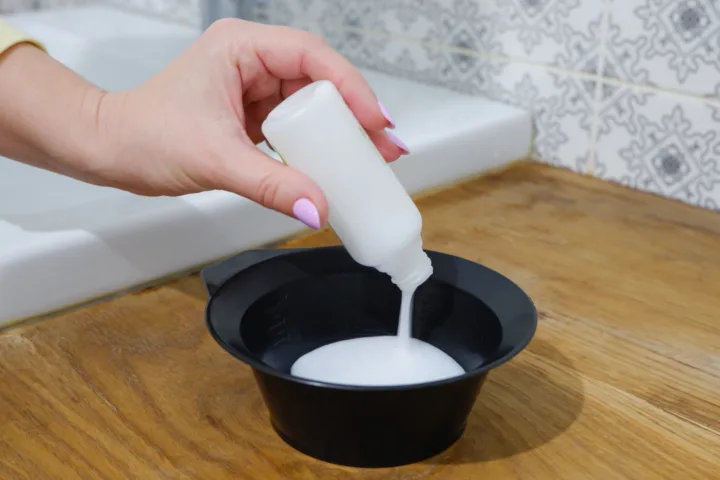
I pour one cup of baking soda down the drain. I follow it with one cup of white vinegar. The fizz starts right away. I cover the drain with a stopper or a wet rag and let it sit for fifteen to twenty minutes. Then I flush with more hot water.
The reaction helps break down organic material. It will not dissolve a solid chunk of hair, but it loosens the sticky film that holds everything together. I have cleared three separate kitchen clogs with this method alone. FYI, I skip this if I already poured any commercial cleaner earlier. Mixing the two can create nasty fumes.
I also tried salt mixed with baking soda once. It worked okay, but the vinegar version feels more consistent in my experience.
How I Plunge a Sink the Right Way
A plunger is the tool I underestimated for years. I used the wrong kind and the wrong technique, so I assumed it never worked. Once I fixed both, plunging became my second move after hot water.
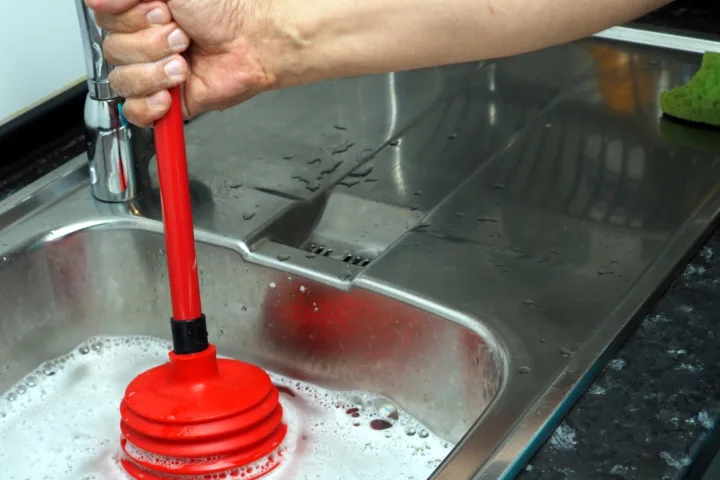
I use a cup plunger, the flat one without the extra rubber flap. Toilet plungers do not seal well on a sink. I fill the sink with three or four inches of water so the cup stays submerged. If I have a double sink, I stuff a wet rag into the other drain so the pressure stays focused.
I place the plunger over the opening, press down to create a seal, and pump hard for twenty to thirty seconds. The pull stroke matters as much as the push. I lift the plunger, check the water level, and repeat if needed.
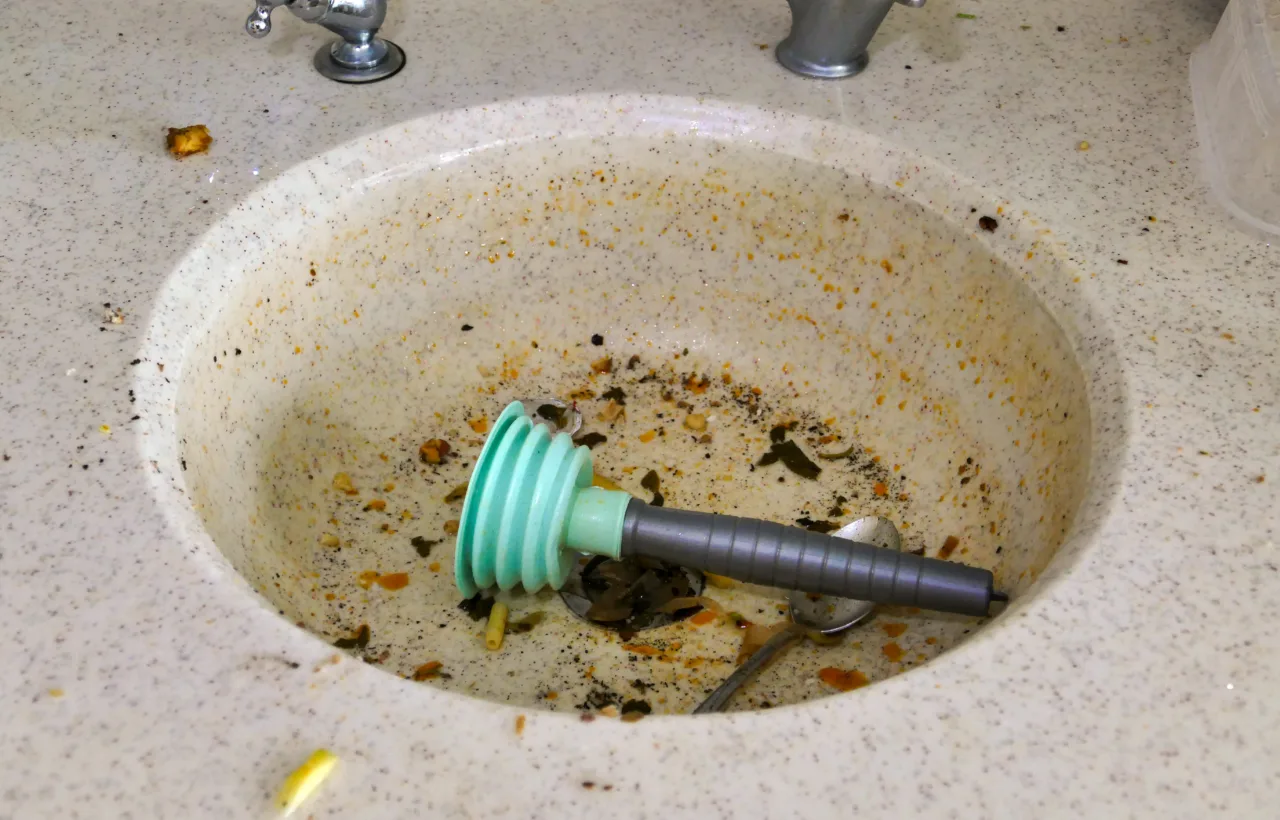
This method moves soft clogs that sit within a few feet of the drain. It will not reach deep blockages, but it clears a surprising number of everyday backups. I keep a dedicated sink plunger under the kitchen cabinet now so I never have to dig through the bathroom again.
Cover the sink’s overflow opening with a damp cloth before plunging, or pressure will escape through that passage.
When I Pull Out the Drain Snake
Some clogs sit deeper. When plunging fails, I grab a small plastic drain snake or a short handheld auger.
These tools cost under ten dollars and look like a long zip tie with barbs or a thin coiled cable. I remove the sink stopper if there is one. I feed the snake into the drain until I feel resistance. Then I twist and push a little farther, pull back, and repeat. The barbs catch hair and soft debris.
I have pulled out clumps that looked like something from a horror movie. One time the snake came up with a thick rope of hair and soap that had blocked the line for days. The water drained in under a minute after that.
A full metal plumber’s snake reaches farther, but the cheap plastic version handles most of my sink problems. I keep one in the same drawer as the plunger.
If the cable catches hard and will not advance, stop forcing it, since you may be against a fitting rather than the clog.
Cleaning the P-Trap Myself
If nothing else works, I go under the sink.
I put a bucket under the U-shaped pipe. I loosen the slip nuts by hand or with a pair of channel locks. The trap comes off, and whatever lives inside falls into the bucket. I clean the pipe with an old toothbrush or a wire hanger, rinse it, and put everything back together. The nylon washers have to sit correctly or the joint will drip later.
This step is messy. It is also the most reliable fix for clogs that sit right in the trap. I have done it four times in the last two years. Each time the drain ran perfectly afterward. Gloves are non-negotiable. The smell is exactly as bad as you expect.
What I Refuse to Do Anymore
I stopped using chemical drain cleaners. They can clear a clog, sure. They also eat at older pipes, create toxic fumes, and leave a residue that makes the next clog worse. I tried one brand years ago on a bathroom sink. The clog moved, but the pipe later developed a slow leak at a joint. I do not need that kind of drama.
Enzyme cleaners are gentler. They work slowly on organic material and do not damage pipes. I keep a bottle for monthly maintenance, not for emergency unclogging.
How I Keep the Drain from Clogging Again
Prevention is the part I ignored for too long.
I run hot water for thirty seconds after every greasy dish. I keep a mesh strainer in the kitchen sink so food scraps never go down. In the bathroom I installed a simple hair catcher that sits under the stopper. I pull it out once a week and toss the collected hair.
Once a month I pour a cup of baking soda followed by a cup of vinegar, let it sit, and flush. The whole routine takes less than five minutes. My drains stay clear longer now than they ever did when I waited for a full clog.
Kitchen Sink Versus Bathroom Sink
The methods stay mostly the same, but the causes differ. Kitchen clogs are usually grease and food. Bathroom clogs are almost always hair and soap. If my kitchen sink has a garbage disposal, I check that first. A humming disposal with no grinding usually means something jammed the blades. I use the hex key that came with the unit to free it from the bottom. Never stick my hand in there while the power is on.
Double sinks need extra attention. I always block the second drain when I plunge so the force does not escape sideways.
When I Finally Call a Professional
I give myself one solid hour. If the water still sits after hot water, baking soda, plunging, snaking, and cleaning the trap, I stop. A clog that deep or a problem that involves multiple fixtures usually means something in the main line. I would rather pay once than risk a bigger mess.
Most of the time I never reach that point. The simple steps clear the majority of my sink problems.
Frequently Asked Questions
How do I unclog a drain when my sink is completely full of water? I bail out as much water as possible with a cup or small bowl first. Standing water dilutes every method and makes plunging less effective. Once the level drops, I start with hot water or the baking soda mix.
Can I use the same methods if my sink clogged because of a garbage disposal? I always check the disposal first. Reset the red button on the bottom and try the hex key to free the blades. If the disposal runs fine and the sink still backs up, the clog sits farther down the line and the regular unclog steps apply.
Is it safe to pour boiling water down a plastic drain to unclog a sink? I avoid full boiling water on PVC. I use very hot tap water instead. Plastic softens under extreme heat, and I do not want to create a new problem while fixing the old one.
How often should I clean my drains to keep them from getting clogged? I do a quick baking soda and vinegar flush once a month. That schedule has kept both my kitchen and bathroom sinks running freely for over a year now.
What is the fastest way to unclog a drain when the sink is clogged right before guests arrive? I go straight to the plunger with a good water seal. If that fails in five minutes, I pull the plastic snake. Those two tools clear most last-minute problems without a long wait.
Final Thoughts
A clogged sink feels bigger than it is. The water sits there and the whole kitchen or bathroom seems broken. In reality the fix is usually simple once I stop guessing and follow a clear order. Hot water first. Baking soda and vinegar next. Plunge. Snake. Clean the trap. That sequence has saved me more service calls than I can count.
I keep the tools in one drawer so I never have to hunt when the next clog shows up. And it will show up. That is just how sinks work. The difference now is that I already know exactly what to do. You will too after you try these steps once.