
I used to dread opening my walk-in closet door. Clothes piled on the floor. Shoes kicked into a corner. Accessories vanished into black holes of clutter. After years of half-hearted attempts, I finally landed on a set of practical fixes that changed everything. These 19 walk in closet organization ideas turned my chaotic space into something I actually enjoy using every morning.
Honestly? The breakthrough came when I stopped buying random bins and started treating the closet like a real system. See, most advice focuses on pretty pictures. I needed solutions that survived real life with laundry, seasonal swaps, and limited patience.
Here is what worked for me.
Start With a Ruthless Clear-Out
Nothing else matters until you empty the space. I pulled every single item out one Saturday morning. The pile on my bed looked ridiculous. Then I sorted fast.
I kept only what I wore in the last year, what fit well, and what still felt like me. Everything else went into donate or toss bags. FYI, this step alone freed up about a third of my space.
Do not skip this. An organized mess is still a mess.
Double Up on Hanging Space
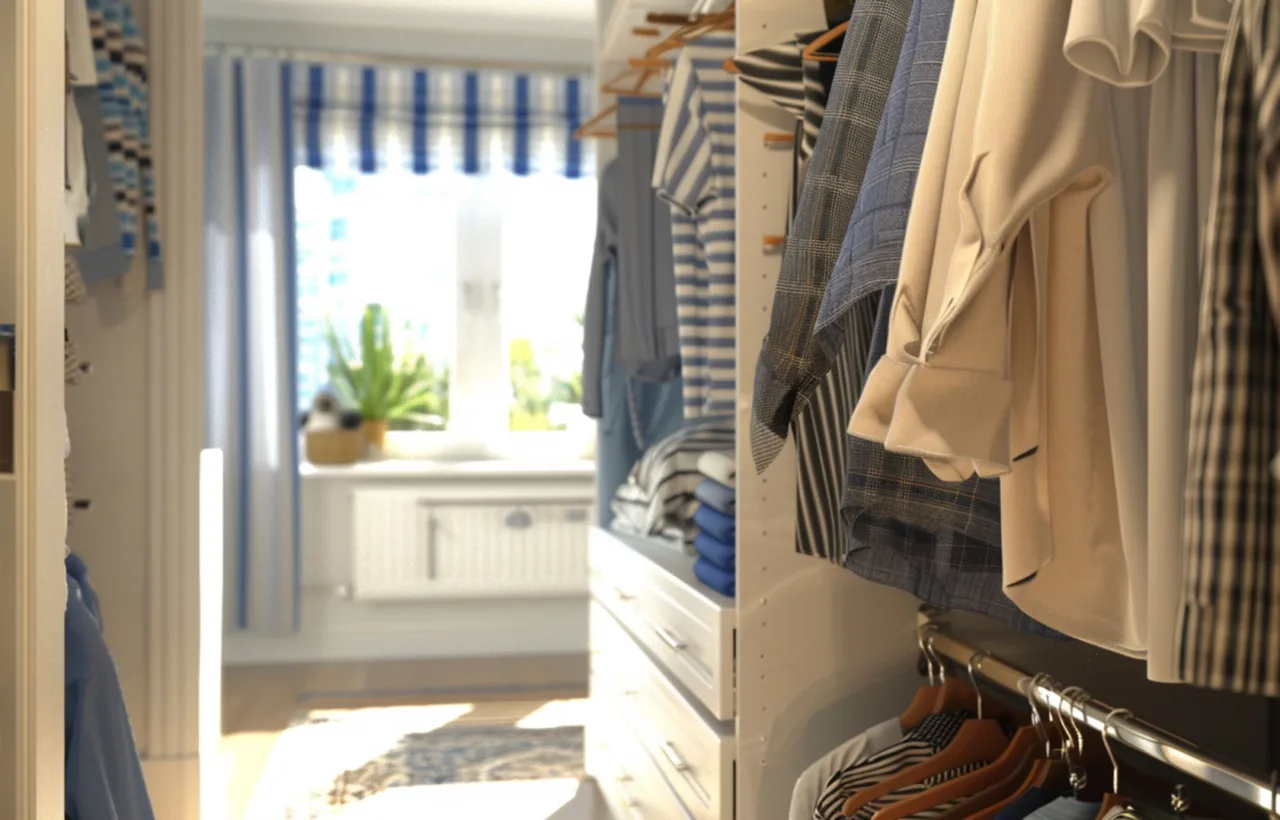
Double hanging rods delivered the biggest capacity boost for the least money. I installed a second rod below the existing one in the short-item zones.
Shirts, blouses, and folded pants now hang on both levels. Long dresses and coats stay on the higher single rod. This simple change nearly doubled my hanging real estate without touching the floor footprint.
I measured carefully first. Top rod around 80 inches from the floor. Bottom one near 40 inches. The difference felt immediate.
Switch to Matching Slim Hangers
Mismatched plastic hangers steal space and look chaotic. I replaced every one with slim velvet hangers in the same dark gray.
They grip better so clothes stay put. They take up far less rod length. The visual calm alone made mornings easier. IMO, this is one of the highest-impact low-cost moves you can make.
Buy a full set in one color. Consistency wins.
Create Clear Zones by Category and Use
I divided the closet into distinct zones the way a store does. Everyday clothes live at eye level and arm reach. Work pieces stay together. Workout gear gets its own section. Formalwear moves to the back.
Within each zone I sorted by type then by color. Whites to blacks in a simple sequence. Finding an outfit now takes seconds instead of minutes of digging.
This zoning approach keeps the system from falling apart after a few weeks.
Go Vertical With Floor-to-Ceiling Shelves
Unused upper space is pure waste. I added adjustable shelves that reach the ceiling in the corners and along one wall.
Seasonal items and extra linens live up high in labeled bins. Everyday folded pieces sit lower. The full height suddenly worked for me instead of against me.
A small step stool stays nearby for the top shelves. Problem solved.
Add Dedicated Shoe Storage
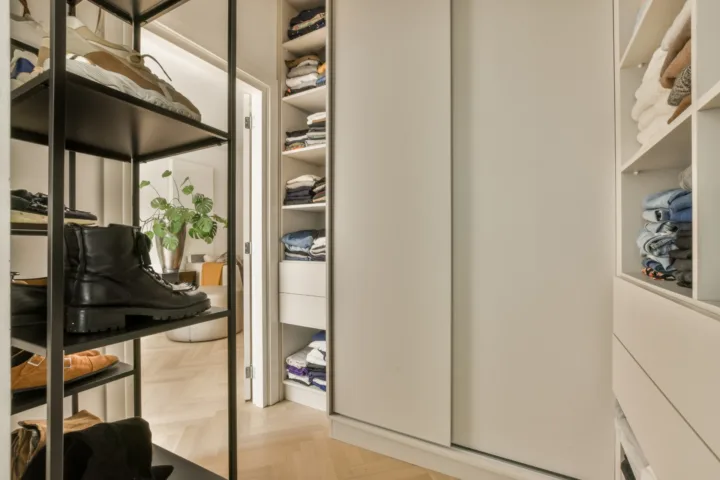
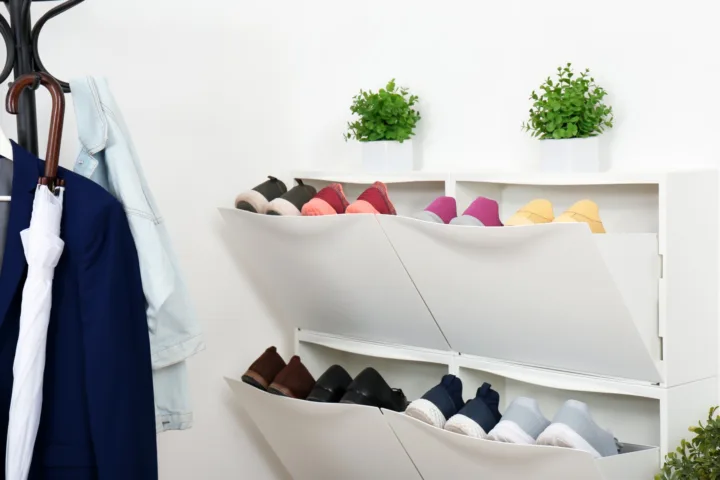
Shoes used to live in a sad pile by the door. Now they have slanted shelves and individual cubbies along the lower wall.
I can see every pair at a glance. Nothing gets crushed. Tall boots stand upright in a taller section. The floor stays clear, which makes the whole closet feel larger.
Clear acrylic boxes work well for special pairs I want protected.
Install Drawers With Dividers
Open shelves look nice until stacks topple. I added a bank of drawers for underwear, socks, belts, and small accessories.
Dividers keep everything from sliding into chaos. I file-fold the soft items so I can see them all at once. No more digging through a mess every morning.
Pull-out drawers beat fixed shelves for anything that tends to get buried.
Use Baskets for Soft Storage
Woven baskets add texture and hide the less pretty stuff. I keep scarves, hats, and off-season accessories in them on the middle shelves.
They look intentional. They contain the clutter. And they make seasonal swaps simple because I just lift the whole basket.
Label the fronts so you never have to guess.
Mount Hooks for Bags and Hats
Handbags and hats ate shelf space for years. Wall-mounted hooks solved that.
I hung a row at a comfortable height along one short wall. Bags hang open and ready. Hats stay shaped. The visual display even encourages me to use pieces I forgot I owned.
Choose sturdy hooks that can handle real weight.
Claim the Back of the Door
The door itself is free real estate. I hung an over-the-door organizer with clear pockets.
It holds smaller shoes, scarves, and jewelry rolls. Everything stays visible and off the main shelves. This trick works especially well in narrower walk-ins.
Consider a Simple Island If Space Allows
My closet is large enough for a basic center island. I went with a modest one that has drawers underneath and a flat top for folding or laying out outfits.
The extra surface changes how I use the space. I can sort laundry or plan a week of clothes without leaving the room. Drawers below hold ties, socks, and jewelry trays.
If your space is tight, skip this one. Floor clearance matters more than an island you cannot walk around.
Bring in Better Lighting
Dark corners hide mess and make mornings frustrating. I added LED strip lights under the shelves and a simple motion-sensor puck light near the entrance.
Suddenly I could actually see what I owned. Matching colors became easy. The whole space felt more like a real dressing room.
Warm white light works best. Cool light can make clothes look off.
Add a Full-Length Mirror
I mounted a full-length mirror on the back wall. It does double duty.
I can check outfits without leaving the closet. It also bounces light around and makes the space feel bigger. A cheap frameless one worked fine for me.
Create an Accessory Display Wall
Accessories used to disappear into drawers. Now a narrow section of wall holds acrylic risers for sunglasses, a tray for watches, and a few small hooks for necklaces I wear often.
Seeing them encourages actual use. It also stops the “where did I put that?” scramble.
Label Everything That Lives in a Bin or Drawer
Labels remove decision fatigue. I use simple printed labels on every basket and drawer front.
Seasonal bins get clear names like “Winter Sweaters” or “Holiday Formal.” When I rotate clothes twice a year, the system stays honest.
Rotate Seasonally Without Guilt
I keep only current-season clothes in the main zones. Everything else moves to upper shelves or under-bed bins in another room.
This single habit prevents the closet from overflowing again. Twice a year I spend an hour swapping. That is it.
Build in a Hidden Hamper Spot
Dirty clothes used to land on the floor. I carved out a lower cabinet space for a simple pull-out hamper with a removable liner.
It stays out of sight yet stays convenient. Laundry day became less of a scavenger hunt.
Keep a Small Valet Area
I left a short empty rod section near the entrance as a temporary holding zone. Tomorrow’s outfit or clothes ready for the dry cleaner hang there overnight.
It stops me from draping things over chairs in the bedroom. Small but effective.
Maintain With a Ten-Minute Monthly Reset
Systems fail without light maintenance. Once a month I set a timer for ten minutes and walk the zones.
I straighten hangers, return strays to their sections, and empty any overflowing baskets. That short check keeps the whole setup from sliding back into chaos.
Frequently Asked Questions
How do I start with these 19 walk in closet organization ideas if my space is small? Focus first on double rods, slim hangers, vertical shelves, and clearing the floor. Those four moves give the biggest return in tight walk-ins without needing custom work.
Do I need expensive custom systems? No. I built most of mine with basic adjustable shelves, a second rod, matching hangers, and baskets from regular stores. Custom looks nice but is not required for function.
How often should I reorganize? I do a full seasonal rotation twice a year and a quick ten-minute tidy once a month. That rhythm has kept things stable for me.
What if I share the closet with a partner? Give each person clear zones and matching hangers in different colors if needed. Separate shoe sections help too. Shared systems work when boundaries stay obvious.
Can these ideas work on a tight budget? Absolutely. Start with the clear-out, matching hangers, and a second hanging rod. Those three changes cost little and deliver the most visible improvement.
I still catch myself smiling when I open the door now. The space works with me instead of against me. Pick two or three of these ideas and start this weekend. The rest can follow once you feel the difference. Your future morning self will thank you.