I used to start every day irritated. My side of the closet spilled into his. His belts tangled with my scarves. We both claimed the good shelf space. That daily friction wore me down faster than any messy drawer ever could. After months of trial and error, I landed on 17 closet organization ideas his and hers that finally gave us peace. These are the exact systems that stopped the morning arguments in my own shared closet.
Honestly? I almost gave up twice. The third try stuck because I stopped aiming for magazine perfection and started building what actually fit our clothes and habits.
Start With Clear His and Hers Zones
See, the biggest mistake I made early on was treating the closet like one big free-for-all. Clothes mixed. Socks vanished. Resentment grew.
I fixed it by drawing a hard line down the middle. One wall became mine. The opposite wall became his. No negotiations after that point.
Physical dividers helped more than I expected. A slim vertical shelf unit or even a hanging fabric panel keeps things honest. I measured our wardrobes first. She needed more long-hang space for dresses. He needed extra short-hang for shirts and pants. We split accordingly instead of forcing a 50/50 that never worked.
This single change cut our morning search time in half. Everything had a home. Ownership became obvious.
Color-Code Everything for Instant Recognition
I assigned blue hangers to him and white hangers to me. The difference showed up the first week.
Blue for him. White for me. Same rule for bins and drawer inserts. When a blue hanger shows up on my side, I know who moved it. No more guessing games.
IMO this is the cheapest win on the list. A pack of matching hangers costs less than dinner out and delivers daily clarity. I also color-coded the laundry hampers. His dirty clothes go in the blue one. Mine in the white. Sorting laundry stopped being a negotiation.
Install Double Hanging Rods on Both Sides
Single rods waste vertical space. I learned that the hard way when shirts piled up and pants dragged on the floor.
Double rods fixed it. Upper rod for shirts and jackets. Lower rod for pants and skirts. I set the heights differently on each side. His upper rod sits a bit higher for longer dress shirts. Mine drops lower to fit blouses and shorter pieces.
The result: hanging capacity nearly doubled without buying a bigger closet. Clothes stay visible. Wrinkles decrease. Grabbing an outfit takes seconds instead of minutes.
Give Each Person Dedicated Shoe Real Estate
Shoes caused more fights than anything else. His sneakers mixed with my heels. Boots toppled into everything.
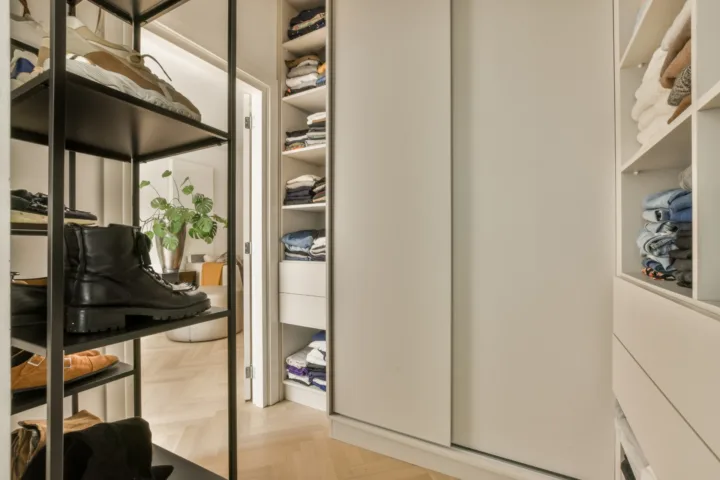
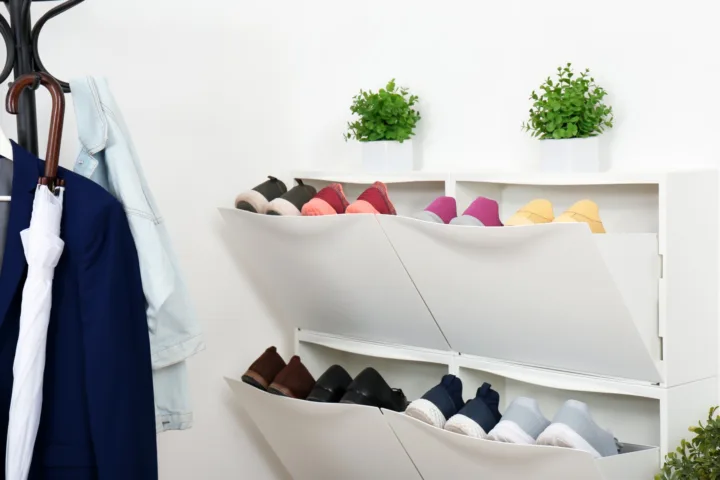
I carved out separate shoe zones. His side got open cubbies for sneakers and loafers. Mine got angled shelves with fences so heels stay upright. Tall boots live on the floor under his side in a dedicated boot tray. My tall boots got their own tall cubby on my side.
No more floor piles. No more stepping on someone else’s shoes while half-asleep. This one change alone made the closet feel twice as big.
Use Drawer Dividers Like You Mean It
Undivided drawers turn into black holes. Socks disappear. Belts coil into knots. Jewelry tangles overnight.
I added adjustable dividers to every drawer. His drawers got sections for socks, underwear, watches, and sunglasses. Mine got sections for intimates, scarves, and jewelry trays. Velvet-lined trays went in my jewelry drawer. Simple plastic dividers handled the rest.
Everything stays put. I can find a specific pair of earrings without dumping the whole drawer. He can grab a matching pair of socks without digging. Small win. Huge daily payoff.
Create Personal Accessory Stations
Accessories used to live in random piles. Ties wrinkled. Belts got lost. Handbags slumped and lost their shape.
I built dedicated stations. His side got a sliding tie and belt rack plus a small tray for watches and cufflinks. My side got hooks for scarves, a handbag shelf with upright dividers, and a jewelry drawer. We both got a short valet rod for the next day’s outfit.
These stations live at eye level. No more hunting. No more wrinkled ties or crushed bags. The closet starts to feel intentional instead of chaotic.
Maximize the Back of the Door
Most people ignore the door. I used to. Then I hung over-the-door organizers on both sides of the shared closet door.
One side holds my everyday scarves, a lint roller, and small bags. The other holds his belts, a couple of caps, and a shoe horn. The organizers stay slim so the door still closes cleanly.
This free real estate keeps high-use items within arm’s reach. It also keeps the main shelves clearer. FYI: measure the door thickness first so the organizers fit without binding.
Claim Vertical Space With High Shelves and Bins
Floor-to-ceiling space matters more than most couples realize. I installed adjustable shelves all the way up on both sides.
Top shelves hold seasonal bins. Winter coats and heavy sweaters go up in spring. Summer clothes go up in fall. Clear bins with simple labels make the switch fast. Each of us owns our own set of bins so nothing gets mixed during rotation.
Lower shelves stay for daily folded items. The height difference keeps everyday clothes easy to grab while the seasonal stuff stays out of the way until needed.
Label Everything Without Overdoing It
Labels feel fussy until you live without them. Then they feel essential.
I used simple printed labels on every bin and drawer front. His side says “Dress Shirts,” “Casual Tees,” “Belts.” Mine says “Work Tops,” “Weekend Jeans,” “Jewelry.” No fancy calligraphy. Just clear text.
When something ends up in the wrong spot, the label makes the mistake obvious. We both started putting things back correctly because the system made it easy. Labels also help guests or house cleaners who might open the closet.
Separate the Laundry Hampers Completely
Shared hampers breed resentment. Dirty socks mix. Someone always feels they do more of the sorting.
I placed two slim hampers side by side at the back of the closet. Blue for him. White for me. Each of us is responsible for emptying our own. The visual separation removed the daily debate about whose turn it was.
Laundry day got simpler. The closet stayed cleaner because dirty clothes never sat in open piles.
Add Soft Lighting That Actually Works
Dark closets hide problems. I installed battery-powered LED strip lights under the shelves on both sides. Motion sensors turn them on when the door opens.
Suddenly I could see the back of every shelf. Colors looked accurate. Matching outfits became faster. He stopped grabbing the wrong shade of blue shirt because the light made the difference obvious.
Cheap lights. Big improvement. No electrician required.
Place a Full-Length Mirror in the Neutral Zone
We used to fight over the bathroom mirror in the morning. I solved it by hanging a full-length mirror on the shared back wall of the closet.
Neither of us owns that wall. It belongs to both. We can check outfits without leaving the space. The mirror also makes the closet feel larger and brighter.
Bonus: it stops us from carrying clothes all over the bedroom while deciding what to wear.
Keep a Shared “Marriage Saver” Drawer
Organizers call it different names. I call it the marriage saver.
One small drawer in the center stays intentionally messy. It holds the random items neither of us wants to claim yet: extra chargers, random socks that lost their match, the occasional gift bag. The rule is simple. Anything in that drawer can be sorted or tossed once a month. Until then, it stays contained and out of sight.
This single drawer absorbs the friction that used to spill into the rest of the closet. We both feel less pressure to be perfect every single day.
Rotate Seasonal Items Aggressively
I used to keep everything accessible year-round. The closet stayed overcrowded as a result.
Now I rotate hard. Off-season clothes go into under-bed bins or high closet bins. Only current-season pieces stay in the main hanging and shelf areas. Each of us handles our own rotation. The process takes under an hour twice a year.
The closet breathes again. Finding an outfit becomes simple because fewer options compete for attention.
Use Matching Bins With Personal Touches
Matching storage looks calm. Personal details keep ownership clear.
I chose the same style of woven bins for both sides. Then I added different colored tags or monogrammed labels. His bins carry a navy tag. Mine carry a soft gray tag. From a distance the closet looks unified. Up close the ownership stays obvious.
This balance matters. The space feels like a shared design, not two separate closets forced together.
Build in a Quick Outfit Staging Spot
Mornings move faster when tomorrow’s clothes wait ready.
I added a short valet rod on each side. The night before, each of us hangs the next day’s outfit on our own rod. Shoes sit underneath. Accessories go in a small tray beside it.
When the alarm rings, the decision is already made. No last-minute hunting. No arguments about whose turn it is to pick something. The system works even on rushed days.
Reassess the Split Every Six Months
People change. Closets should too.
Every six months I pull everything out with him and we reassess. Maybe he needs more drawer space after buying more athletic gear. Maybe I need longer hanging after adding dresses. We adjust the rods, move a shelf, or reassign a bin.
The system stays alive instead of becoming rigid. That flexibility keeps both of us happy long-term.
Frequently Asked Questions
How do I start with 17 closet organization ideas his and hers if our closet is tiny? Start with zones and color-coding. Those two alone create order even in a reach-in closet. Add double rods and over-door storage next. The rest can wait until you see what works.
What if one person has way more clothes than the other? Split space by actual inventory, not by fairness. Measure the clothes. Give the larger wardrobe the larger section. Resentment drops when the allocation matches reality.
Do I need a custom closet system to make these ideas work? No. Most of what I use is off-the-shelf. Adjustable rods, dividers, bins, and hangers from any big-box store deliver 90 percent of the benefit. Custom looks nicer but is not required.
How often should we declutter a shared closet? I do a full purge twice a year with the seasonal rotation. Quick weekly checks keep the daily mess from building. Consistency beats big dramatic cleanouts.
Can these ideas work if we have different styles? Yes. Keep the structure the same and let the personal details differ. Matching hangers and bins create visual calm. Individual colors and accessory stations let each personality show through.
I still remember the first morning after we finished the full system. I opened the closet, grabbed everything I needed in under a minute, and walked out without a single complaint. He did the same. The quiet felt almost strange.
That quiet is the real payoff. These 17 closet organization ideas his and hers did not just tidy a space. They removed a daily source of friction from our life. Start with the zones and the color-coding. Build from there. Your mornings will thank you.