I used to dread opening my closet door. Clothes spilled out. Shoes stacked in chaotic piles. I could never find the shirt I wanted without digging through layers of forgotten stuff. That tiny reach-in closet felt like a daily defeat until I started testing real 19 small closet ideas organization strategies that actually fit my space and budget. I spent months swapping systems, measuring every inch, and learning what sticks. Now the same closet holds almost twice what it did before. And I still open it without a sigh.
Honestly? The biggest shift came when I stopped treating the closet like a dumping ground and started treating it like a puzzle with clear rules.
How to implement it immediately
-
Remove anything you have not worn in the past year.
-
Add a second hanging rod to double your clothing space.
-
Use slim matching hangers so more clothes fit side by side.
-
Store shoes, bags, and accessories in labeled bins or door organizers.
-
Keep daily items at eye level and move seasonal clothes to the top shelf.
Why Most Small Closets Feel Impossible
I used to blame the size. My closet is barely three feet wide. One rod. One high shelf. Standard stuff in older apartments. Every professional organizer online talks about custom systems that cost hundreds. I could not swing that. So I focused on cheap, reversible moves that add capacity without tools or landlords getting involved.
See, the real problem is rarely the square footage. It is the single-rod layout that leaves half the height unused. Once I fixed that, everything else clicked.
I sorted my clothes by how often I wear them. Everyday pieces stay at eye level. Seasonal stuff goes high or into bins. Accessories get their own zones. That simple filter cut the visual noise fast.
The Foundation Moves That Free the Most Space
I always start with the hangers. Bulky plastic ones steal inches. I switched every single one to slim velvet hangers. Instantly the rod looked less crowded. Clothes stop sliding off. Matching hangers make the whole thing look calmer even when it is full.
Next came the second rod. I hung a tension rod about 40 inches below the original one. Tops and jackets stay on top. Pants and skirts go below. That one change nearly doubled my hanging capacity. No drilling required.
I added shelf dividers next. Stacks of sweaters used to topple every time I pulled one out. Clear acrylic dividers keep each pile upright and separate. I can see everything without digging.
Here is the short list of foundation tools I still use:
- Slim velvet hangers: free up rod space and prevent slips
- Adjustable tension rod: creates double hanging without permanent installs
- Shelf dividers: keep folded stacks neat
- Matching bins: store off-season items on the top shelf
These four pieces cost less than a nice dinner out and fixed the core layout problems.
Vertical Space Tricks I Rely On Daily
I used to ignore the upper third of the closet. Now I treat it like premium real estate. Floating shelves above the door hold luggage and rarely used bags. I installed two simple brackets and a board. Done.
Hooks became my secret weapon. I mounted a few on the side walls for belts, scarves, and hats. S-hooks let me hang jeans by the belt loop so they take zero rod space. Bags hang by their straps instead of collapsing on the floor.
Pegboards surprised me. A small wooden one on the side wall holds jewelry, sunglasses, and even a few lightweight bags. I move the pegs around as my needs change. It looks intentional instead of cluttered.
I also use cascading hangers for similar items. One hanger holds three skirts or pairs of pants stacked vertically. That trick alone freed almost a foot of rod space in my narrow closet.
Door Real Estate That Most People Waste
The back of the door used to be blank. Now it holds more than some drawers. An over-the-door shoe organizer with clear pockets stores twenty pairs of flats and sneakers without touching the floor. I can see every pair at a glance.
I added a slim Command caddy for lint rollers, sunglasses, and small bags. Scarves hang on a simple towel bar I stuck on with heavy-duty adhesive. No holes. No commitment.
Valet rods changed my morning routine. I installed a small retractable one near the door. Each night I hang the next day’s outfit there. No more frantic searching while the coffee cools.
FYI: these door solutions work even if your door is hollow-core. Just use the right weight-rated hooks.
Floor Solutions That Stop the Avalanche
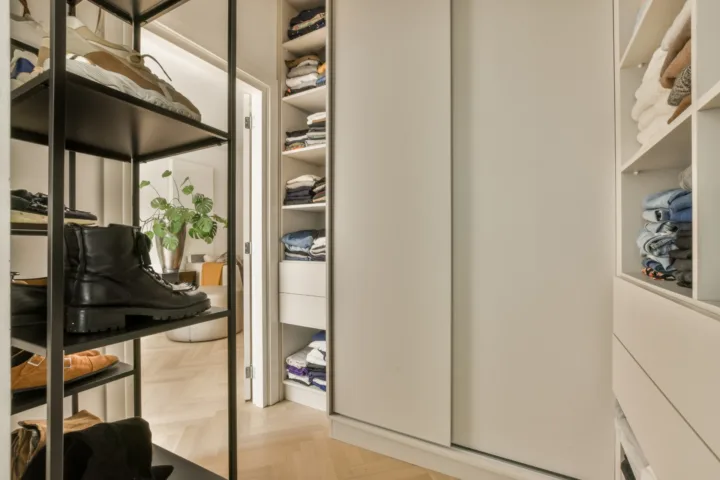
Shoes used to live in a permanent pile. I brought in a slim three-tier rack that fits the width of the closet. Nine pairs now stand upright in the same footprint three pairs used to occupy.
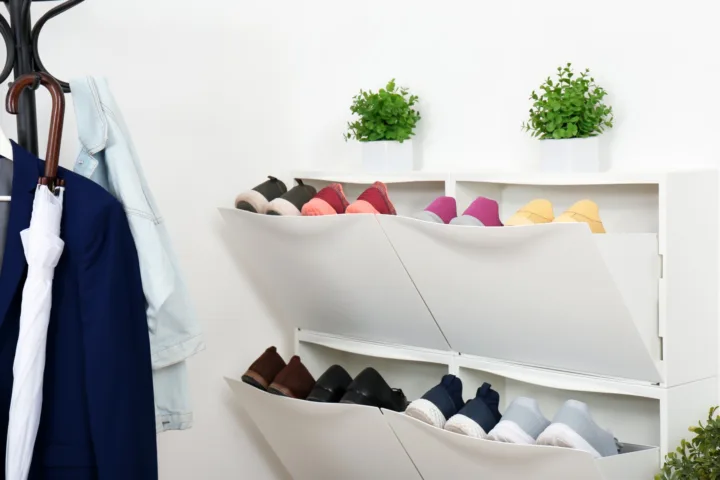
For boots I use a simple boot rack that keeps the tops from flopping over. Clear drop-front boxes hold dress shoes and protect them from dust. I stack those on the side so the floor stays walkable.
A small set of rolling drawers sits under the lower hanging rod. Socks, underwear, and workout gear live there. I can pull the whole unit out when I need something. The floor stays clear.
I keep one empty zone on the floor for the laundry basket or the shoes I just kicked off. That tiny buffer prevents the whole system from collapsing by Friday.
Zoning and Daily Habits That Keep It Working
I divided the closet into clear zones even though the space is tiny. Left side is work clothes. Right side is casual. Top shelf is seasonal. Door is accessories and shoes. Once everything has a home, putting items away takes seconds instead of minutes.
I rotate seasons twice a year. Winter coats and thick sweaters go into labeled bins on the highest shelf. Summer dresses take their place on the rods. The closet never feels overstuffed because half the wardrobe is always packed away.
I follow a two-minute rule every evening. Hang what I wore. Toss what needs washing. Put shoes back on the rack. That tiny habit keeps the system from sliding back into chaos.
IMO the zones matter more than any fancy product. Without them the best organizers just become another place for clutter to hide.
Budget-Friendly Upgrades That Feel Custom
I never bought a full closet system. Instead I mixed affordable pieces that look cohesive. Matching fabric bins on the top shelf. Clear acrylic trays for jewelry. One wooden pegboard for visual interest.
A hanging six-shelf organizer adds vertical storage for folded tees and jeans without eating rod space. I hang it from the main rod on the far side where longer items never go.
For jewelry I use a small hanging organizer with clear pockets. Necklaces stop tangling. Earrings stay paired. It hangs from a single hook on the side wall.
I even turned an old shower curtain ring set into a scarf holder. Loop the rings over a hanger and thread scarves through. Instant vertical storage for soft items that used to take drawer space.
Lighting and Finishing Touches That Make It Feel Bigger
My closet used to be a dark cave. A battery-powered LED strip under the top shelf changed everything. I can see colors accurately. No more grabbing the wrong black shirt in the morning.
I painted the back wall a soft light color. The space feels deeper and brighter. A small mirror on the side wall helps with quick outfit checks without leaving the closet.
Labels matter more than I expected. Simple printed labels on bins mean I never open the wrong one. Guests who stay over can find towels without asking. Small win.
Real Results From These 19 Small Closet Ideas Organization Moves
After putting all these pieces together I measured the difference. I went from roughly 40 hanging items to nearly 75. Shoes went from a floor pile of 12 pairs to organized storage for 25. Accessories that once lived in a tangled drawer now hang in plain sight.
Mornings feel calmer. I grab what I need and close the door. No digging. No frustration. The closet finally works for me instead of against me.
I still edit every few months. Anything I have not worn in a year leaves the house. That habit protects the new space I worked hard to create.
Frequently Asked Questions
What is the single best first step for small closet organization? Clear everything out and sort by category before you buy a single organizer. You cannot design a system around clutter you do not need.
Do I need to spend a lot of money on 19 small closet ideas organization tools? No. Most of my biggest gains came from under $30 products like tension rods, slim hangers, and over-the-door organizers. Custom systems look nice but are not required.
How do I keep the system from falling apart after a month? Build a two-minute nightly reset into your routine. Hang what you wore and return shoes to their spot. Consistency beats perfect systems every time.
Can these ideas work in a closet with sliding doors? Yes. Focus on the interior walls and floor. Over-the-door products will not fit, so use side-wall hooks and floating shelves instead.
Should I fold or hang everything in a small closet? Hang what wrinkles easily and fold bulky items that take too much rod space. I hang shirts and pants. I fold sweaters and jeans with dividers so the stacks stay neat.
I still walk past other people’s open closets and feel a quiet sense of relief. Mine used to look like that. Now it does not. The same square footage holds more and works better because I treated every inch like it mattered. Start with the hangers and the second rod. The rest builds from there. Your closet does not need to be bigger. It just needs better rules.