I spent years shoving clothes into a single rod and one sad shelf. Every morning felt like a fight. Shoes piled up. Sweaters toppled. Accessories vanished into the black hole behind the door. I finally got serious about 16 inside closet organization ideas that work in actual homes, not just magazine photos. These came from my own trials, a few expensive mistakes, and the systems that lasted longer than a week.
I live in a regular reach-in closet. No walk-in palace. No custom build-out budget. Just the same builder-grade box most of us get. The ideas below fixed it. They still work three years later.
How to implement it immediately
-
Empty the closet and group everything by type before putting anything back.
-
Add slim matching hangers to free up space and make clothes easier to scan.
-
Use shelf dividers, bins, or baskets for bags, sweaters, and small accessories.
-
Install hooks or an over-the-door organizer for belts, scarves, shoes, and hats.
-
Keep everyday items at eye level and move seasonal pieces to the top shelf.
The Double-Rod Move That Doubled My Hanging Space
I started here because the single rod left a giant empty zone underneath.
Install a second hanging rod. Hang the top one for shirts and jackets. Put the lower one for pants, skirts, or folded jeans on hangers. Measure so the lower rod sits about 40 inches from the floor. Leave enough clearance so nothing drags.
I tried a cheap tension rod first. It sagged. I switched to a proper adjustable closet rod that screws into the side walls. The difference was immediate. I gained almost double the hanging real estate without buying a single new piece of furniture.
Honestly? This one change alone made the closet feel twice as big.
Vertical Space Is the Real Estate You Keep Ignoring
Most people look left and right. I look up and down now.
Add extra shelves above the top rod. Use the dead zone between the existing shelf and the ceiling. Stack seasonal bins or extra folded items there. Label them clearly so you do not climb up every time you need a winter scarf.
Bring in shelf dividers. Clear acrylic ones slide onto existing shelves and stop sweater stacks from collapsing into each other. I keep one divider for jeans, one for tees, one for workout gear. No more avalanche every time I pull something out.
I once watched a friend dig through a single mountain of folded clothes for ten minutes. Shelf dividers fixed that for me in under five dollars per unit.
The Door Is Not Just a Door
The inside of the closet door is free real estate. Most people leave it blank. I do not.
Hang an over-the-door organizer. Choose one with clear pockets or fabric slots. I use mine for scarves, belts, socks, and the lint roller that used to live under a pile of shoes. Everything stays visible and off the floor.
Add slim hooks or a small pegboard. Mount a few sturdy hooks for bags, hats, or tomorrow’s outfit. A wooden pegboard gives more flexibility if you want to rearrange later.
I tried the soft fabric shoe organizer first. It worked, but the clear plastic version lets me see exactly which pair of flats is where. That small upgrade cut my morning search time in half.
Floor and Lower Zones Need Their Own Plan
The floor turns into a shoe graveyard if you let it.
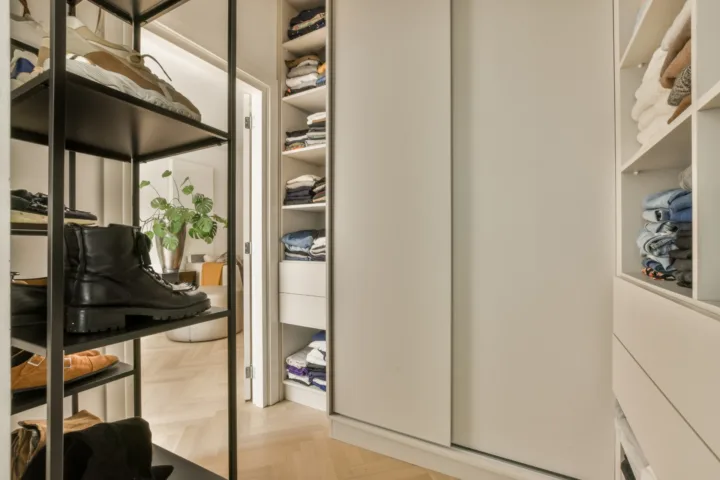
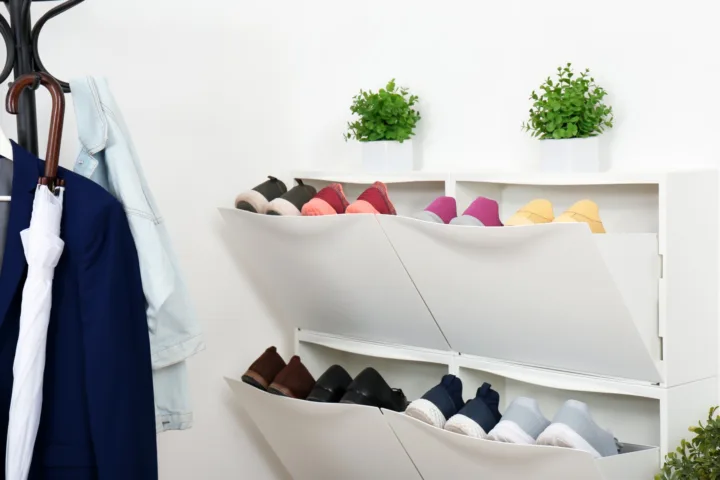
Use a tiered shoe rack. Even a simple two- or three-tier metal rack keeps pairs upright and visible. I keep everyday shoes on the bottom tier and dressier ones higher up.
Slide in a slim set of drawers or stackable bins. If the closet is wide enough, a narrow rolling drawer unit holds underwear, socks, and folded tees. Stackable fabric bins work the same way for less money. Label the fronts.
I used to keep a laundry basket outside the closet. It became a dumping ground. Now a slim canvas bin lives inside next to the shoe rack. Dirty clothes go straight in. The floor stays clear.
Hanging Organizers That Earn Their Keep
Not everything belongs on a rod or a shelf.
Add a canvas hanging shelf unit. These drop from the main rod and create cubbies for sweaters, handbags, or folded pants. I keep one on the far right for bags so they stay upright and do not crush each other.
Try cascading hangers or multi-tier hangers. Space-saving hangers that hold several pairs of pants or shirts vertically free up horizontal rod space. I switched my entire wardrobe to slim velvet hangers first. Then I added a few cascading ones for pants. The rod suddenly had room again.
See, I used to think hangers were just hangers. Matching slim ones changed the whole look and the capacity.
Zones Make the Difference Between Chaos and Calm
A closet without zones is just a storage unit with a door.
Create clear zones by category. Everyday clothes at eye level. Work clothes in one section. Workout gear in another. Formal pieces higher up or toward the back. Shoes and accessories get their own spots.
I color-code within each zone now. Blues together. Blacks together. It sounds fussy until you open the door and everything makes sense in two seconds.
Keep a small “daily grab” area near the front. Hooks or a short rod section for the jacket, bag, and shoes you use most. This front zone stops me from digging through the whole closet every morning.
Lighting and Visibility Changes Everything
A dark closet hides problems.
Add battery-powered LED strip lights or puck lights. Stick them under the top shelf or along the side walls. Suddenly you see the back of the closet. I installed three small stick-on lights. The difference is huge on dark winter mornings.
I used to pull out three wrong shirts before finding the right one. Lighting fixed the guessing game.
Bins, Baskets, and Containers That Actually Stay Useful
Open shelves look nice until they turn into messy piles.
Use clear or labeled bins for small items. Transparent bins for accessories. Opaque ones for seasonal bulk. I keep one bin for “maybe donate” so those pieces leave the main rotation without cluttering the floor.
Shelf risers create two levels where you only had one. They sit on the shelf and double the usable surface for shoes or folded clothes. Simple and cheap.
I bought a set of matching fabric bins in one color. The visual calm alone made me more likely to put things back.
Accessories Need Dedicated Homes
Scarves, belts, jewelry, and bags love to tangle.
Mount a few wall hooks or a small rack inside. Belts hang flat. Scarves stay wrinkle-free. Jewelry stays untangled if you use a hanging organizer with small pockets or a dedicated tray on a shelf.
Display bags upright with shelf dividers or bookends. They stop toppling and you can see every option at once.
I once lost a favorite belt for six months. It was buried under a pile of scarves. Dedicated hooks ended that drama.
The Valet Rod Trick for Next-Day Outfits
Install a short valet rod or pull-out rod. Hang tomorrow’s outfit the night before. No more morning decisions while half-awake. I use a simple retractable one that tucks away when not needed.
This single habit cut my morning stress more than any other change.
Seasonal Rotation Keeps the Everyday Zone Light
Store off-season clothes in labeled bins on the highest shelf. Rotate twice a year. The main hanging and shelf zones stay focused on what you actually wear right now.
I used to keep everything out all year. The closet felt permanently overstuffed. Rotation gave the daily items room to breathe.
Slim Drawers and Cubbies for the Fussy Stuff
Tuck a small freestanding drawer unit under the lower rod if space allows. Use it for socks, underwear, and folded tees. Everything stays contained and easy to reach.
Some people prefer open cubbies. I prefer drawers with soft-close slides so the whole unit stays quiet and neat.
Matching Hangers Are Not Optional Anymore
Switch to one style of slim hanger. Velvet or thin plastic. They take less space and the clothes hang evenly. The visual consistency alone makes the closet look intentional instead of chaotic.
I did this in one afternoon. The before-and-after photo still makes me smile.
Labels Turn “Where Did I Put That?” Into “Right There”
Label every bin, shelf section, and zone. Simple adhesive labels or a label maker. Even clear bins benefit from a quick word on the front.
I resisted labels for years because they felt too “organized person.” Then I realized labels are just memory aids. They work.
A Quick Maintenance Habit That Protects the System
Do a five-minute reset once a week. Hang anything that fell. Return shoes to the rack. Empty the laundry bin if it is full. This tiny habit keeps the whole setup from sliding backward.
I set a phone reminder for Sunday evenings. It takes less time than scrolling social media and saves me from a full re-organization every few months.
The Final Layout That Works for My Exact Closet
After testing all of these, here is the combination I landed on:
- Double rods for hanging
- Over-the-door clear organizer
- Tiered shoe rack on the floor
- Stackable bins on the top shelf
- Shelf dividers on the middle shelf
- Hooks on the side wall
- LED lights
- Matching slim hangers
- Labeled zones
Your closet will need different ratios. Start with the double rod and the door organizer. Those two alone fix the biggest space wasters.
Frequently Asked Questions
What are the best 16 inside closet organization ideas for a really small reach-in closet? Focus first on a second hanging rod, over-the-door storage, vertical shelf space, and slim hangers. Those four deliver the biggest gains without any renovation.
Do I need to buy a full closet system or can I mix individual pieces? I mixed individual pieces for years and still do. A full system looks polished, but rods, bins, dividers, and an over-the-door organizer solve most problems at a fraction of the cost.
How often should I reorganize once the system is in place? I do a full reset twice a year with the seasons. Weekly five-minute tidy-ups keep it functional the rest of the time.
Are clear bins better than fabric ones? Clear bins win when you need to see contents fast. Fabric ones look softer and hide visual clutter. I use both depending on the zone.
What is the single most effective change I can make this weekend? Add the second hanging rod and clear the floor with a simple shoe rack. Those two moves create the most usable space with the least effort.
I still open my closet some mornings and feel a quiet satisfaction. The system holds. Clothes stay visible. Mornings feel lighter. Pick two or three of these 16 inside closet organization ideas and start this weekend. The rest will follow once you see how much better the space works.