I spent years fighting a standard reach-in closet that turned every morning into a scavenger hunt. Clothes piled up. Shoes vanished into the void. Accessories tangled into knots I never planned. These 18 standard closet organization ideas pulled me out of that mess and kept me there. I tested them in my own small closet, adjusted what flopped, and kept what stuck. You get the real version here, not the glossy version that looks perfect for five minutes then collapses.
I treat this like chatting with a friend who just opened their closet and sighed. No fancy systems required. Just practical moves that work in ordinary spaces.
My Go-To Foundation for These 18 Standard Closet Organization Ideas
Honestly? Most people start in the wrong place. They buy bins and hangers first. I think that’s the wrong way to go about it. Stuff isn’t the problem. Excess is the problem.
I emptied everything onto my bed one Saturday. Every shirt, every pair of jeans, every random scarf. Seeing the pile hurt. I sorted into keep, donate, and trash. Anything I hadn’t worn in a year went out. Seasonal pieces got set aside. The keep pile shrank fast.
This step alone opened so much space that the rest of the ideas actually had room to work. See, an organized closet full of clothes you never wear still feels chaotic. Start here or the other seventeen ideas fight an uphill battle.
Purge without mercy. Then move forward.
Maximize Every Inch of Hanging Space
Standard closets waste vertical room. One rod leaves a big empty gap underneath. I fixed that first.
1. Add a second hanging rod. I hung a simple extender rod under the original one. Short items like shirts and folded pants went on the lower rod. Longer pieces stayed up top. Instant double capacity. Cost me under $20. No tools beyond a measuring tape.
2. Switch to slim velvet hangers. Bulky plastic hangers eat space. Velvet ones grip better and take half the width. I replaced every hanger in one afternoon. My rod suddenly held more without looking stuffed. Matching hangers also calm the visual noise. IMO, this single swap makes the biggest daily difference.
3. Use specialty hangers for pants and skirts. Wooden pants hangers with clips keep bottoms neat and prevent creases. I hang two pairs on one hanger when space gets tight. No more folding that creates weird lines.
4. Group by category and length. I keep work tops together, casual tops together, and long items in their own section. Frequency matters too. Everyday pieces stay at eye level. Special-occasion stuff goes higher or farther back. This stops the daily dig.
Turn Shelves into Real Storage
Most standard closets have one lonely shelf up top. That shelf becomes a dumping ground. I changed how I use every horizontal surface.
5. Install shelf dividers. Clear acrylic dividers slide onto existing shelves. They stop sweater stacks from toppling. I keep folded tees in one section, jeans in another. Everything stays upright and visible.
6. Add shelf risers. Where clearance allowed, I dropped simple risers onto the main shelf. Instant second level for smaller items or bins. No drilling needed.
7. Use labeled bins and baskets. I bought a few matching fabric bins for out-of-season layers and random accessories. Labels go on the front. FYI, reusable labels win because needs change. I can read them without pulling the bin down.
8. Store by frequency of use. Eye-level gets daily wear. Top shelf holds seasonal bags and winter coats in vacuum bags. Bottom gets shoes or heavier items. This one habit keeps the closet functional long-term.
Conquer Shoes and the Floor Zone
The floor of a standard closet turns into a shoe graveyard faster than anything else. I refused to accept that.
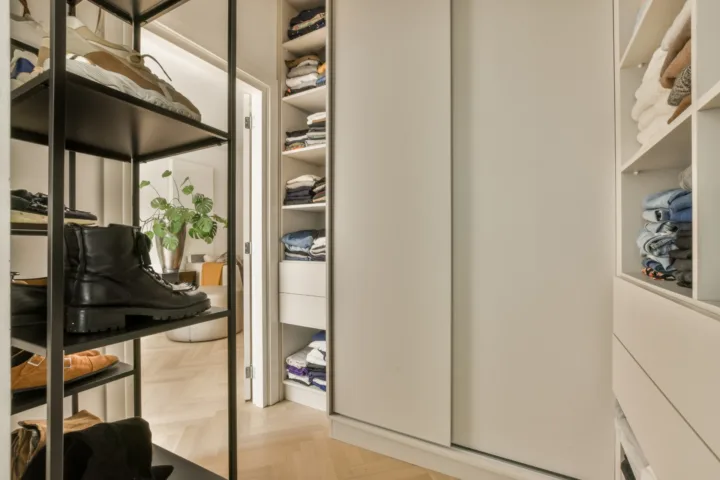
9. Clear stackable shoe boxes. I moved most pairs into clear plastic boxes that stack. I can see every pair without opening lids. Boots stand in their own taller bins. The floor stayed clear for the first time in years.
10. Over-the-door shoe organizer. The back of the door holds flat shoes, sandals, and a few accessories in the pockets. Zero floor space used. I check it every morning when I open the door. Perfect for the pairs I wear most.
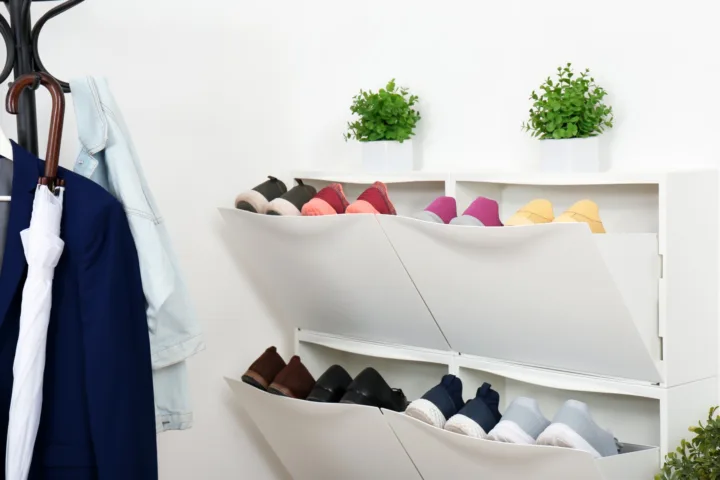
11. Simple floor-level shoe rack. For the few pairs I want open, a low two-tier rack sits under the short hanging section. Nothing piles. Nothing gets dusty as fast.
Handle Accessories Without the Tangle
Scarves, belts, bags, and jewelry used to live in a single drawer that never closed properly. That ended.
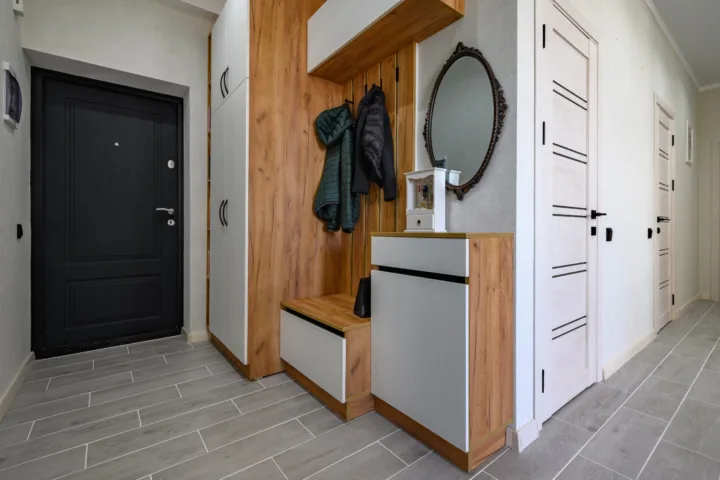
12. Wall hooks and over-door hooks. I stuck a few sturdy hooks on the side wall and inside the door. Bags hang by their straps. Belts and scarves drape neatly. I see them. I use them more.
13. Accessory hangers. One multi-hook hanger holds ties, thin belts, and a couple of necklaces. It hangs on the main rod and takes almost no space.
14. Drawer organizers for small items. Socks, underwear, and jewelry went into simple plastic dividers. Each category gets its own section. No more digging. No more mystery pairs of socks.
Seasonal and Overflow Solutions
Standard closets cannot hold everything year-round. I stopped forcing them to try.
15. Vacuum storage bags. Bulky winter coats and extra blankets compress into flat bags. They slide onto the top shelf or under the bed. I pull them out when the weather changes. Space returns immediately.
16. Dedicated seasonal rotation. Twice a year I swap. Summer clothes move forward. Winter pieces go into bags or higher shelves. The closet always matches the current season. Mornings feel lighter.
Keep the System Alive
Ideas fail when they demand constant maintenance. I built habits that stick without daily effort.
17. Match everything possible. Same hangers. Same bins. Same labels. The visual calm makes it easier to put things back correctly. Chaos stands out faster when the baseline looks clean.
18. Leave breathing room. I never fill every inch. About 20 percent empty space stops the overflow cycle. New purchases force a trade. Something old leaves. The closet stays usable instead of becoming a stuffed storage unit.
These eighteen moves work together. One alone helps. All of them turn a standard closet into something that supports your day instead of slowing it down.
I still catch myself smiling when I open the door now. Everything has a spot. I grab what I need in seconds. That never happened before.
Frequently Asked Questions
Do these 18 standard closet organization ideas work in a really small reach-in closet? Yes. Most of them specifically target limited vertical and floor space. Double rods, slim hangers, door organizers, and shelf risers deliver the biggest gains in tight spots.
How much money do I need to spend to see results? You can start under $50 with hangers, one rod extender, and a few bins. The purge costs nothing and often creates the most space.
What if I share the closet with someone else? Assign clear zones. One side for you. One side for them. Matching hangers and labeled bins keep the peace. I learned this the hard way after too many mixed piles.
How often should I reorganize once the system is in place? I do a quick seasonal swap twice a year and a five-minute tidy once a week. Full overhauls only happen when something major changes, like a new job wardrobe.
Can I skip the purge and just buy organizers? You can try. The organizers fill up fast and the chaos returns. The purge makes every other idea stick.
I still open my closet some mornings and feel a quiet sense of relief. No hunting. No frustration. Just clothes ready to wear. These 18 standard closet organization ideas gave me that. They can give it to you too. Start with the purge this weekend. Pick two or three more ideas that fit your space. Watch the difference show up by Monday.