
I spent years kicking shoes into a growing heap at the bottom of my closet. Every morning turned into a scavenger hunt. One black pump always vanished. The other sat alone under a pile of sneakers. I tried the usual quick fixes. None lasted more than a week.
Then I started testing real systems. I measured my shelves. I rotated pairs by season. I stopped treating the floor like a free-for-all. These 18 closet organization ideas for shoes changed everything for me. They work in tight reach-in closets and bigger walk-ins. They keep pairs visible, protected, and easy to grab. No more digging. No more mystery orphans.
I still catch myself smiling when I open the door now. The difference feels personal.
Start With a Ruthless Edit Before Any Storage Goes In
I used to skip this step. Big mistake. I bought fancy racks first and still had nowhere to put half my collection.
Pull every pair out. Line them up on the floor or bed. Pair them. Look at each one. Ask yourself when you last wore it. If the answer stretches past a year and the shoes still look good, box them for donation or sale. Keep only what you reach for.
Honestly? This part stings a little. I said goodbye to three pairs of heels that pinched and two pairs of boots I never broke in. The remaining pile looked manageable for the first time. Editing creates space no organizer can invent.
Once the keepers stay, measure your closet. Note shelf depth, the gap under hanging clothes, and the back of the door. Those numbers decide which ideas fit.
Use Vertical Space Like You Mean It
Most closets waste the height above the rod and the air between shelves. I ignored that for too long.
Install Adjustable Shelves or Add Risers
I moved my existing shelf brackets higher and lower to match boot shafts and flat sandals. Cheap plastic risers doubled the pairs on each shelf. One riser lets flats sit above heels without crushing them. The result feels intentional instead of cramped.
Try a Tall Bookcase Inside the Closet
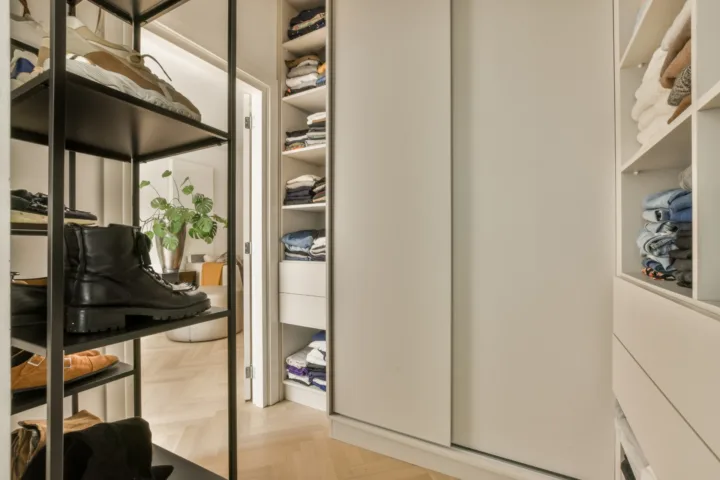
I slid an old Billy bookcase into the corner of my walk-in. It holds twelve to twenty pairs depending on how I space the shelves. Adjustable heights handle everything from sneakers to knee-highs. It costs less than custom built-ins and looks cleaner than a random rack. I keep everyday pairs at eye level and seasonal ones higher up.
Go Floor-to-Ceiling With Narrow Cubbies
For tight spaces I added a slim cube unit that reaches almost to the ceiling. Cubbies keep pairs upright and separate. I label the top row for rarely worn formal shoes so they stay dust-free.
Claim the Back of the Door
That empty door surface used to mock me. Now it works harder than any shelf.
Over-the-door organizers with mesh or clear pockets hold twenty to thirty pairs. I hang one on the inside of my closet door for sandals, flats, and light sneakers. Heavier boots stay elsewhere. The mesh lets air move so nothing gets musty. I can see every pair without opening a single box.
Some versions use angled rods instead of pockets. Those work better for heels. I tried both. The pocket style wins for everyday use because shoes stay put when the door swings.
Clear Boxes Change the Game
Opaque boxes hide everything. Clear ones show me exactly what I own.
I stack drop-front clear boxes four high on the upper shelf. Each one holds one pair. I snap a quick photo of the shoes and tape it to the front. No more opening three boxes to find the right color. The front-opening design means I never unstack the whole tower. Dust stays out. Shoes keep their shape.
For chunky sneakers that refuse to fit standard boxes I use slightly larger clear bins. Same idea. Same visibility.
Heel-to-Toe and Side-by-Side Placement Tricks
Standard front-facing rows waste depth. Most closet shelves run twelve to sixteen inches deep. Most shoes measure nine to thirteen inches long. Leaving dead space behind each pair is pure loss.
I place one shoe of the pair pointing forward and its mate pointing backward. The pair now occupies the depth of a single shoe. I fit almost twice as many pairs on the same shelf. Side-by-side still works for very deep shelves or when I want a boutique display. Heel-to-toe wins for pure capacity.
Color-Code or Style-Code the Whole Collection
I once mixed everything by size. Finding a matching set took forever. Now I group by color first. Neutrals sit together. Bold colors live in their own section. Within each color I sort by style: flats, heels, boots, sneakers.
The visual calm feels better than I expected. Getting dressed speeds up. I reach for the right pair without second-guessing. Some people swear by frequency of wear instead. I tried that too. Color still wins for me because it looks intentional every time I open the door.
Seasonal Rotation Keeps the Active Zone Lean
Summer sandals do not need prime real estate in January. I pack off-season pairs into breathable bins or under-bed rolling drawers. I label the bins by season and store them on a high shelf or under the bed.
When the weather shifts I swap. The closet stays focused on what I actually wear right now. The swap takes twenty minutes twice a year. That small habit prevents the pile from creeping back.
Rotating Racks and Lazy Susans for Deep Closets
If your closet has depth but limited width, a rotating shoe tree or lazy Susan shelf works wonders. I keep one in the corner. Spin it and every pair faces front. No more losing the back row. Some models hold sixteen pairs in a footprint smaller than a standard rack. I use mine for the mid-season shoes I reach for often but do not want on open shelves.
Boot Solutions That Stop the Collapse
Tall boots used to flop over and crease. I tried stuffing them with newspaper. It worked until the paper yellowed. Now I use quilted boot shapers or simple pool noodles cut to length. They keep the shaft upright without bulk. For really tall pairs I hang them from sturdy hooks on the side wall using boot clips. The boots stay off the floor and hold their shape.
Hanging Organizers on the Rod
A ten-compartment hanging shoe organizer uses only six or seven inches of rod space. I hang one next to my dresses for the pairs I wear with those outfits. It keeps the floor clear and the shoes at hand height. I prefer the ones with clear fronts so nothing hides.
Baskets for Casual Everyday Pairs
Not every shoe needs a pedestal. Flip-flops, house slippers, and beat-up sneakers live in open woven baskets on the floor or lowest shelf. I can kick them in and out without ceremony. The baskets still look tidy. They also catch the random socks that somehow migrate into the shoe zone.
Wall-Mounted Shelves or Brackets
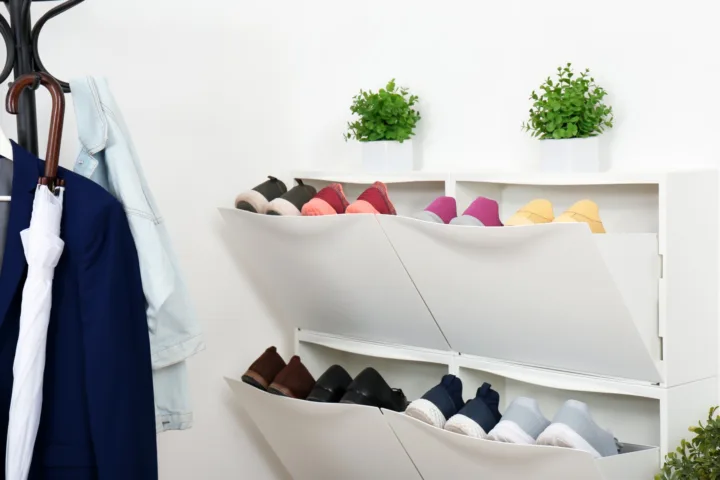
In a narrow reach-in I screwed simple floating shelves or L-brackets into the side wall. Three short shelves hold six pairs in a vertical strip that never blocks hanging clothes. I painted the brackets the same color as the wall so they disappear. The shoes become a quiet display instead of clutter.
Under-Shelf Baskets and Pull-Out Trays
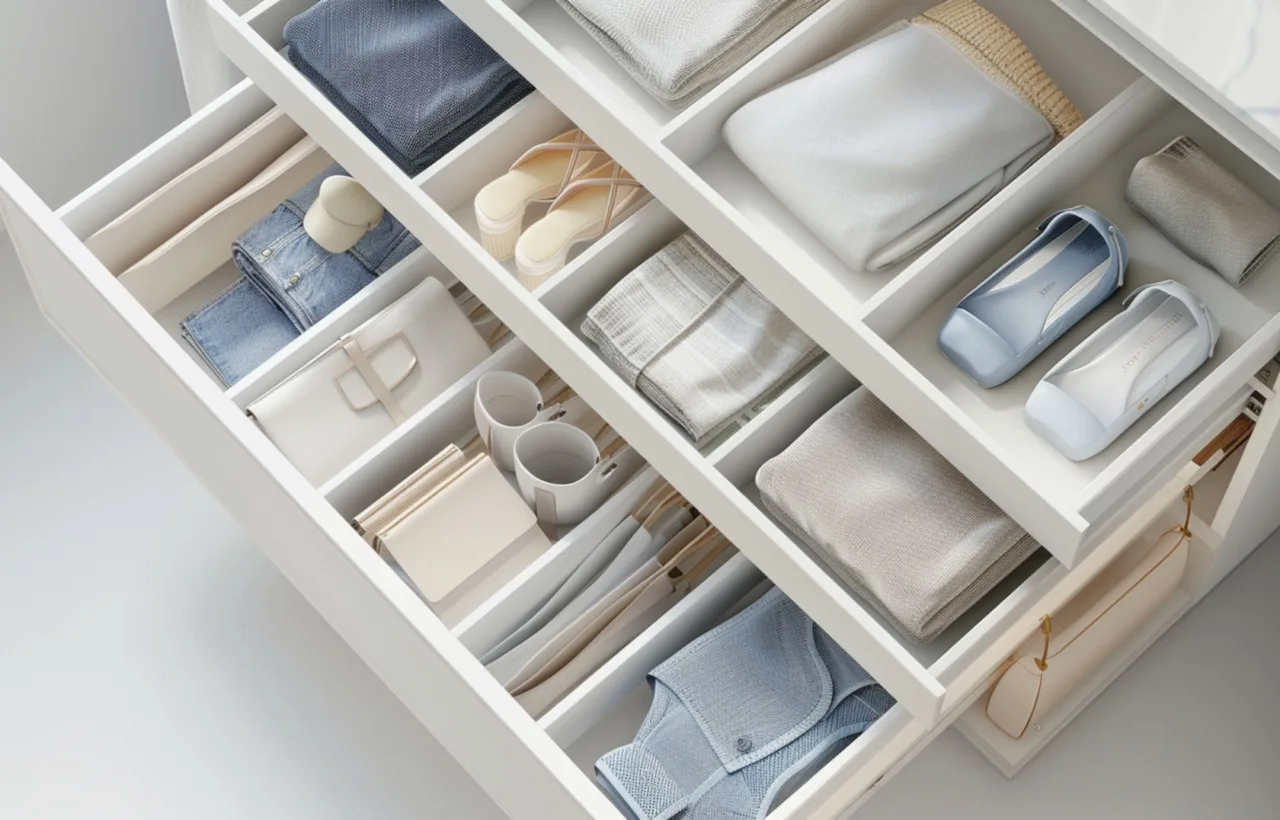
I clipped mesh baskets under existing shelves. They hold lighter pairs or shoe-care supplies. Pull-out trays on the floor slide out like drawers. I load them with the shoes I wear most and roll them back when the closet door closes. Both options use space that usually sits empty.
Label Everything Once and Be Done
I resisted labels at first. They felt fussy. Then I started labeling the clear boxes and the seasonal bins. Everyone in the house now knows where pairs belong. The system survives even when I am tired or in a rush. A simple label maker or handwritten tags do the job.
Protect and Maintain While You Organize
Organization falls apart if shoes get dusty or misshapen. I wipe pairs before they go back on the shelf. I insert shoe trees or tissue paper in dress shoes. I keep a small brush and cloth in one of the hanging pockets. Maintenance becomes part of the put-away routine instead of a separate chore.
Mix Open and Closed Storage for Balance
All open shelves look pretty but collect dust. All closed boxes hide the collection. I use open shelves for daily drivers and clear closed boxes for special-occasion pairs. The mix keeps the closet usable and still photo-ready if I ever care to share it.
Build in a Landing Zone Near the Door
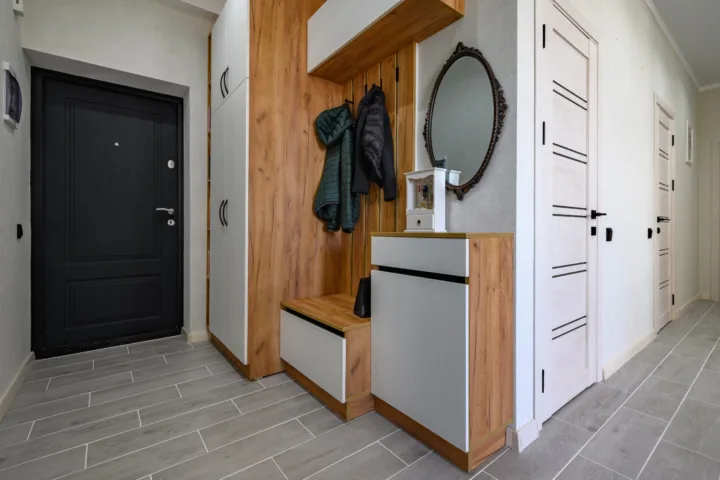
I added a small bench with cubbies just inside the closet threshold. Incoming shoes land there first. At the end of the day I sort them into their permanent spots. The landing zone stops the floor pile from starting. It also gives me a place to sit while I change shoes.
Keep a One-In-One-Out Rule Going Forward
New shoes arrive. Old ones leave. I force myself to choose which pair exits before the new ones claim shelf space. The rule keeps the total number stable. It also makes me more deliberate about what I buy. I no longer bring home pairs that will only sit.
These 18 closet organization ideas for shoes work because they start with the real shape of the closet and the real habits of the person using it. I tested most of them in a small apartment closet and later in a slightly larger one. The same principles scaled. Vertical space, clear visibility, seasonal discipline, and honest editing beat any single product.
Frequently Asked Questions
How many pairs can these 18 closet organization ideas for shoes realistically handle in a small reach-in? Most of the systems I use fit twenty to forty pairs depending on how many vertical layers and door organizers I add. Editing first matters more than square footage.
Do clear shoe boxes take up more space than open shelves? They use vertical space better than a single open row. Stacked four high they often hold more pairs in the same footprint while keeping dust away.
What is the fastest way to start if my closet already feels full? Pull everything out, edit ruthlessly, then claim the back of the door and add one riser or clear box set. Those two moves free the floor immediately.
Can I mix these ideas if my closet is shared with a partner? Yes. Assign zones by person or by shoe type. One side of the door for their everyday pairs, one set of shelves for mine. Labels keep the peace.
How often should I reorganize after the initial setup? I do a quick seasonal swap twice a year and a full edit once a year. Daily put-away keeps the system from sliding.
I still open my closet and feel a quiet satisfaction. The shoes sit where they belong. I find matching pairs in seconds. The floor stays clear. That daily ease is the real win. Pick two or three ideas that fit your space this week. Start with the edit and the door. The rest builds from there. Your future self will thank you every morning.