I spent years tripping over boots and hunting for lost gloves every single morning. My mudroom closet looked like a tornado hit it daily. That changed once I locked in these 17 mudroom closet organization ideas and actually used them. Now the space works for my family instead of against us.
I live in a house with three kids, two dogs, and a husband who tracks in half the yard every time it rains. The closet by the back door became the dumping ground for everything. Coats piled on the floor. Shoes mixed in a heap. Backpacks blocked the path. I tried the usual advice and still felt defeated. Honestly? I almost gave up and left the door open so we could just walk past the mess.
Then I started treating the closet like a real system instead of a black hole. I tested ideas one by one. Some flopped. Others stuck hard. The ones that worked made mornings smoother and kept dirt from spreading through the whole house. You can steal every single one.
Why Most Mudroom Closets Fail (And How These Ideas Fix It)
Most closets start with one rod and a shelf. That setup fails fast when wet gear, sports bags, and kids’ stuff compete for space. The real problem is lack of zones. Everything ends up in one pile because nothing has a clear home.
I fixed that by creating dedicated spots for shoes, hanging items, small gear, and seasonal stuff. The difference showed up in the first week. My kids stopped tossing coats on chairs. I stopped digging for keys. The floor stayed visible. See, organization only lasts when it matches how people actually move through the space.
Shoe Storage That Actually Works
Shoes create the worst mess. Wet soles leave marks. Tall boots tip over. Mismatched pairs hide under everything else.
Idea 1: Pull-Out Shoe Drawers
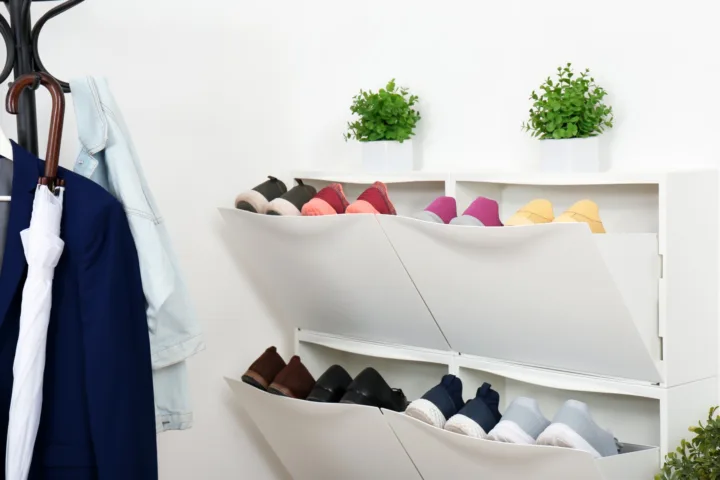
I installed two deep pull-out drawers at the bottom of the closet. Each one holds four pairs. The drawers slide out fully so I can see every shoe without kneeling. Wet boots sit on a waterproof mat inside. This one change cut my morning search time in half.
Idea 2: Built-In Shoe Cubbies
I added open cubbies right under a narrow shelf. Each cubby fits one pair of everyday shoes. I labeled the front edge with simple tape for the kids. They actually put shoes away now because the spot is obvious. Cubbies beat open shelves. Items stay separated instead of sliding into a pile.
Idea 3: Vertical Shoe Tower
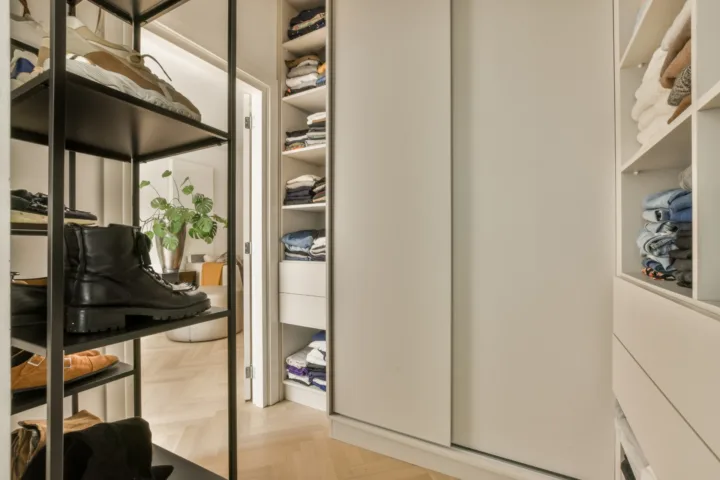
A tall, narrow shoe tower sits in the leftover corner. It holds ten pairs without eating floor space. I keep dress shoes and less-used pairs here. The tower uses height that used to sit empty. Boots stand upright on the bottom shelves so shafts stay straight.
Hanging Solutions That Keep Coats Off the Floor
Hanging space always runs out first. One rod fills up and the overflow lands on the floor or a chair.
Idea 4: Double Hanging Rods
I added a second rod halfway down the wall. Upper rod holds adult coats. Lower rod holds kids’ jackets and light bags. The lower height means my youngest can hang her own coat. Capacity doubled overnight. No more floor piles.
Idea 5: Hooks at Multiple Heights
I mounted three rows of sturdy hooks. Top row for adults. Middle for older kids. Bottom for the youngest and dog leashes. Hooks win over hangers for daily use. People grab and go faster. I chose heavy-duty ones that hold backpacks without bending.
Idea 6: Peg Rail System
A long peg rail runs across the back wall. I hang scarves, hats, and umbrellas on it. The rail flexes with seasons. Winter gear goes up. Summer stuff comes down. It looks cleaner than scattered hooks and holds more than I expected.
Personal Zones for Every Family Member
Shared space turns chaotic when no one owns their spot. Assigned areas fixed that for us.
Idea 7: Locker-Style Compartments
I divided the closet into four vertical lockers with simple plywood dividers. Each person gets one section. Shelf on top for hats. Hooks in the middle. Cubby at the bottom for shoes. Names go on the front with removable labels. Arguments over whose coat is whose dropped to zero.
Idea 8: Individual Cubby Sets
Above the bench area I added open cubbies. Each holds a backpack and a small bin for gloves or sunglasses. Kids drop their bags in the right spot without reminders. The system works because it matches the drop-and-go habit instead of fighting it.
Smart Use of Vertical and Hidden Space
Empty ceiling space and the back of the door waste potential. I claimed both.
Idea 9: Overhead Seasonal Storage
High shelves near the ceiling hold bins of winter gloves, swim gear, and holiday decorations. I use matching opaque bins so the top stays neat. A step stool lives nearby for access. Seasonal rotation keeps daily items from competing with rarely used stuff.
Idea 10: Over-the-Door Organizer
The back of the closet door holds an over-the-door rack with baskets and hooks. Keys, sunglasses, and dog treats live here. Nothing takes floor or wall space. I check the door every morning and grab what I need on the way out.
Idea 11: Pull-Out Cabinet Drawers
Deep cabinets used to hide umbrellas and flashlights forever. I swapped the shelves for full-extension drawers. Everything slides into view. I can find the umbrella in seconds even when the drawer is full.
Benches, Bins, and Flexible Extras
A place to sit while changing shoes makes the whole system more usable. Bins catch the small stuff that otherwise ends up everywhere.
Idea 12: Built-In Bench with Hidden Storage
I built a simple bench across the width of the closet. The seat lifts to reveal storage for extra scarves and rain gear. Kids sit to put on shoes. The bench also stops them from tracking mud deeper into the house. A waterproof cushion makes it easy to wipe clean.
Idea 13: Woven Storage Bins
Large woven bins sit on lower shelves. One holds sports gear. Another catches library books and school papers. Bins contain the mess without looking messy. I prefer natural textures because they hide dirt better than plastic.
Idea 14: Floor Bins for Quick Drops
Two large floor bins stand near the door. Wet shoes or muddy boots go straight in. No one has to open a drawer or reach a shelf when hands are full. I empty them every evening. This simple step keeps the rest of the closet cleaner.
Idea 15: Pegboard Wall Section
One side wall got a pegboard. I hang small baskets for keys, a mirror for last looks, and hooks for lightweight bags. The board changes as needs change. New sports season means new hooks. Flexibility keeps the system useful longer than fixed shelves.
Finishing Touches That Keep the System Alive
Organization dies without maintenance habits. These last two ideas make upkeep easy.
Idea 16: Label Everything Clearly
I labeled every bin, cubby, and shelf with large, simple words. Kids read them. Guests understand them. Labels remove the guesswork that leads to piles. I used removable vinyl so I can update when someone outgrows a zone.
Idea 17: Seasonal Rotation Routine
Every three months I pull out off-season items and store them in the overhead bins. Winter coats go up in spring. Beach towels come down in summer. The closet stays lighter and more usable year-round. The routine takes under an hour and prevents the slow creep of clutter.
How I Made These Ideas Stick in Real Life
I started with the shoes and hooks because those created the biggest daily pain. Once those worked, the rest felt easier. I avoided buying everything at once. I tested cheap versions first. The pull-out drawers and double rods paid for themselves in saved frustration.
My biggest lesson: systems fail when they demand perfect behavior. Hooks and open cubbies work better than closed cabinets for daily gear. People hang things. They rarely put things inside drawers after a long day. I designed around that truth.
The closet still gets messy on heavy sports days. That is normal. The difference is that the mess now has clear places to go. I can reset the space in ten minutes instead of an hour.
Frequently Asked Questions
What are the best 17 mudroom closet organization ideas for small spaces? The vertical ones win here. Double rods, overhead bins, over-the-door racks, and a narrow shoe tower use height instead of floor area. I used all four in my own tight closet and still fit everything for five people.
How do I keep kids using the mudroom closet system? Give them reachable hooks and labeled cubbies. When the spot matches their height and the label is clear, they put things away more often. Mine still need reminders, but the fights dropped a lot.
Should I use open or closed storage in a mudroom closet? Open for daily items. Closed for seasonal or ugly gear. Open storage keeps things visible and easy to grab. Closed cabinets hide the stuff that would otherwise make the space look chaotic.
How often should I reorganize the mudroom closet? I do a full reset every season and a quick tidy every Sunday. Seasonal changes prevent the slow build-up that turns a working system into a mess again.
Can these ideas work in a regular coat closet? Yes. Most of mine started in a standard coat closet. I removed the single rod, added the double rods and cubbies, and treated the space like a mini mudroom. The conversion took a weekend and changed how the whole entry felt.
I still catch myself smiling when I walk past the closet and see coats hanging in their spots. The floor stays clear. Mornings run smoother. The dogs even have a designated leash hook now.
Pick one idea that solves your biggest headache and start there. Install the hooks. Add the shoe cubbies. Build the bench if you have the space. Small wins build momentum. Your mudroom closet can stop being the place where chaos lives and start being the place that keeps the rest of the house calmer.