
I spent years treating my master walk-in like a dumping ground for every shirt, shoe, and random bag I owned. Clothes piled up. Shoes vanished into black holes. I wasted ten minutes every morning hunting for one clean pair of pants. Then I sat down and built a system that actually works. These 17 master walk in closet organization ideas came straight from that messy process. They turned my chaotic space into something I look forward to walking into.
Honestly? The change felt almost unfair once it clicked.
Why Most Master Walk-In Closets Fail
I used to think more square footage automatically meant better organization. Wrong. Size without a plan just gives you more room to create bigger messes. Master walk-ins carry extra pressure. Two people. Daily outfits. Seasonal swaps. Accessories that multiply overnight.
See, the real problem is not the closet itself. It is the lack of clear zones and simple rules that stick.
I learned this the hard way after one too many rushed mornings where I grabbed the wrong shoes and left the house already irritated. That frustration pushed me to tear everything out and start over with intention.
Start With a Ruthless Edit Before You Touch a Single Organizer
I emptied the entire closet. Every single item landed on the bed or floor. Then I sorted with three simple questions: Do I wear this regularly? Does it fit right now? Would I buy it again today?
Anything that failed two of those questions left the house. Donated. Sold. Tossed. The pile of keepers was smaller than I expected. That alone made the rest of the work easier.
Bold move: Keep only what earns its place. A master walk-in filled with clothes you never wear just becomes expensive storage for guilt.
Create Clear Zones Like a High-End Boutique
I divided the space into zones based on how I actually get dressed. Daily wear lived at eye level. Work clothes took one wall. Casual pieces another. Formal items went higher or farther back.
Within each zone I grouped by type first, then by color. White to black. Light to dark. The visual order made mornings faster. I stopped scanning the whole closet for a blue shirt because all the blues sat together.
This zoning approach works better than pure color coding alone. Category first keeps the logic practical.
Double Hanging Rods to Multiply Vertical Space
One of the simplest upgrades I made was installing a second rod. Short items like shirts and folded pants hang on the lower rod. Longer pieces stay on the upper one.
I measured carefully so nothing dragged on the floor. The extra rod nearly doubled my hanging capacity without buying a single new shelf. In a master closet this matters because both people usually need decent hanging space.
Floor-to-Ceiling Shelving for the Stuff That Never Fits Elsewhere
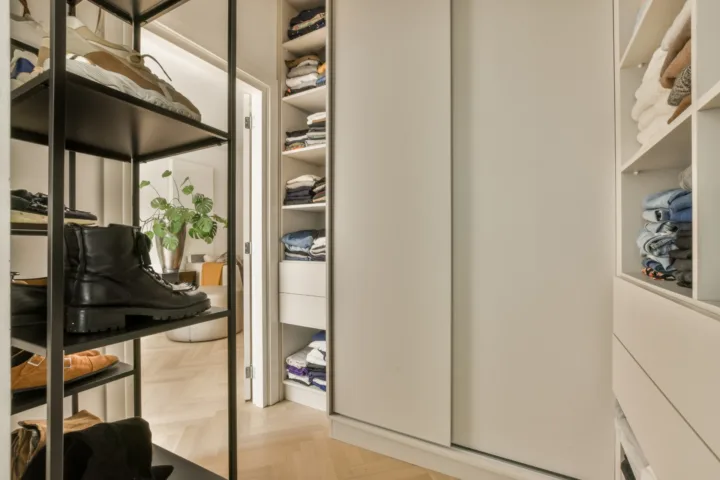
I ran open shelves all the way up. Sweaters. Jeans. Handbags. Stacked neatly with shelf dividers so the piles stayed upright instead of toppling.
The top shelves hold seasonal items and luggage. I use clear bins with labels so I do not have to climb a stool just to remember what is inside. Vertical space is free real estate in most walk-ins. Ignoring it is a waste.
Add a Center Island If Your Floor Plan Allows It
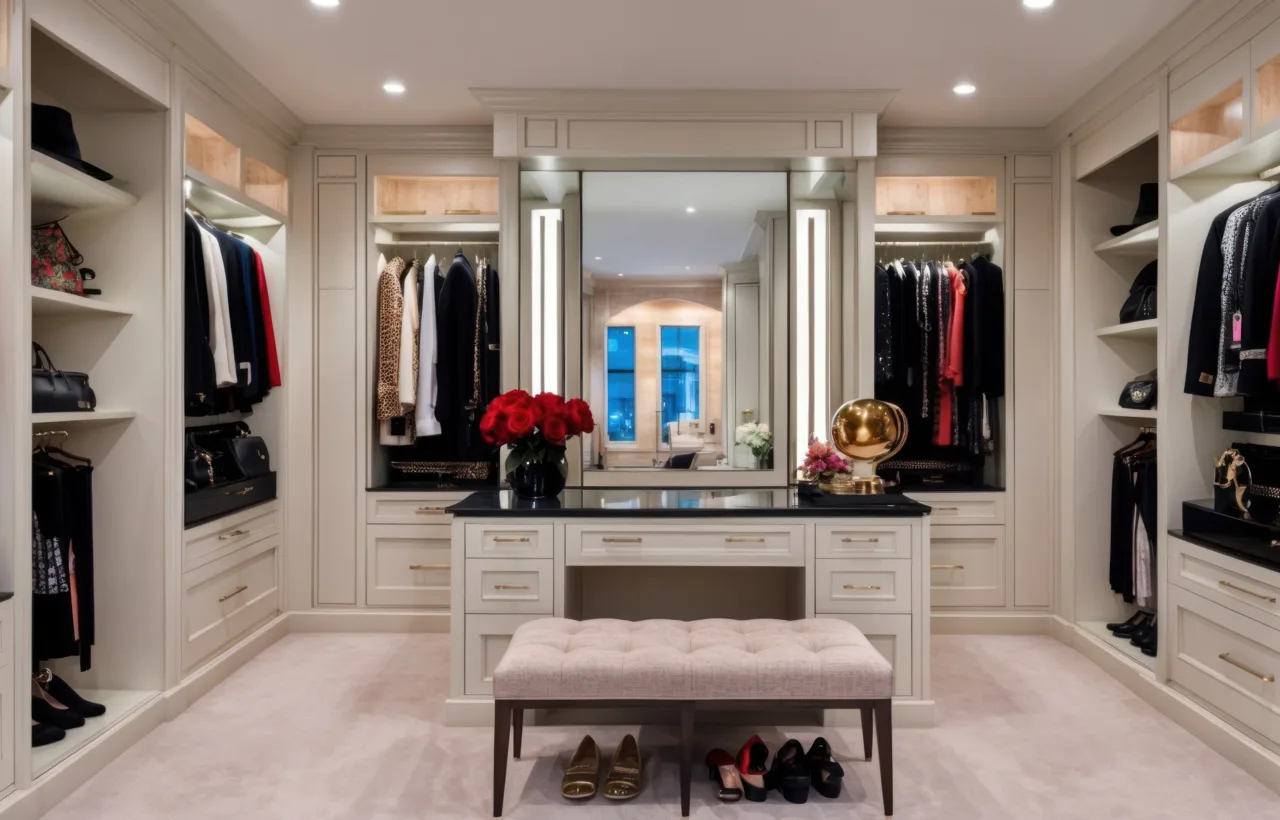
My closet is large enough for a small island. I put one in. Drawers underneath for socks, underwear, and jewelry. The top surface becomes a folding station and a place to lay out an outfit the night before.
Even a narrow island changes the feel of the room. It turns a pure storage space into a dressing area. If your footprint is tight, a bench with storage underneath does almost the same job without blocking the path.
Drawer Systems With Proper Dividers
I swapped a few open shelves for a bank of drawers. Shallow ones for jewelry and belts. Medium for tees and activewear. Deep for bulky knits.
Drawer dividers keep everything from sliding into chaos every time I open them. File-folding the clothes (standing them up instead of stacking) means I see every item at once. No more digging.
Dedicated Shoe Storage That Actually Holds Shape
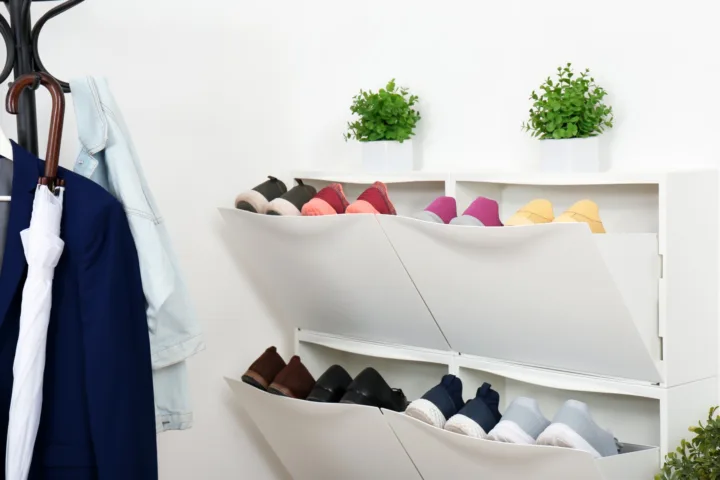
Shoes used to live in a jumbled pile on the floor. Now they sit on angled shelves or in cubbies. Clear boxes for the ones I wear less often. Boot trees for the tall pairs so they keep their form.
I keep everyday shoes at the front and lower level. The rest go higher. This one change stopped the daily shoe avalanche.
Matching Slim Hangers Across the Board
I replaced every mismatched plastic and wire hanger with the same slim velvet style. Suddenly the rods looked intentional. Clothes hang closer together without slipping. The whole closet feels calmer.
Uniform hangers cost less than a fancy dinner for two and deliver more visual impact than most people expect.
Pull-Out Racks for Ties, Belts, and Scarves
Accessories disappeared constantly until I added pull-out racks. Belts hang neatly. Ties stay wrinkle-free. Scarves no longer live in a tangled drawer.
These small dedicated spots prevent the slow creep of clutter that ruins an otherwise organized space.
Built-In Lighting That Shows True Color
Overhead lighting alone left dark corners and weird shadows. I added LED strip lights under the shelves and inside a few drawers. Warm white, not blue. Now I can tell navy from black at a glance.
Good lighting makes the closet feel finished. It also stops me from walking out of the house in mismatched tones.
A Full-Length Mirror Inside the Closet
I hung a large mirror on the back wall. Full outfit checks happen right there. No more running back into the bedroom with half the clothes still on. The mirror also bounces light and makes the space feel bigger.
Corner Solutions Instead of Dead Space
Corners used to waste square footage. A corner carousel or angled shelves fixed that. Clothes rotate into view. Nothing sits forgotten in the dark.
Master walk-ins often have awkward corners. Solving them early prevents permanent dead zones.
Built-In Hamper for Dirty Clothes
I installed a tilt-out or pull-out hamper inside a lower cabinet. Dirty clothes never hit the floor or an open basket. The canvas liner pulls out easily for laundry day.
This single addition keeps the floor clear and the visual calm intact.
Label Everything on Higher Shelves
Clear bins with simple labels live on the top shelves. Seasonal clothes. Extra linens. Rarely used formal pieces. When I need something I know exactly where to look without climbing around blindly.
Labels feel fussy until the first time they save you five minutes of searching.
Seasonal Rotation System
I keep only the current season’s clothes in the main zones. Off-season items go into labeled bins on the highest shelves or into under-bed storage. Twice a year I swap. The closet never feels overcrowded.
This habit alone cut my visual clutter in half.
One-In, One-Out Rule Going Forward
Every new item that enters requires one item to leave. No exceptions. This keeps the carefully built system from slowly inflating again. I treat the closet like a curated collection, not an archive.
How These Ideas Work Together in Real Life
I did not install everything at once. I started with the edit and the zones. Then matching hangers. Then lighting. The island came last. Each step made the next one more obvious.
The biggest surprise was how much faster mornings became. I can see what I own. I can reach what I need. I no longer dig. That mental calm is worth more than any single product.
Master walk-in closet organization is less about buying fancy systems and more about deciding what belongs where and protecting those decisions with simple rules.
Frequently Asked Questions
What is the best first step for 17 master walk in closet organization ideas? Start by emptying everything and editing hard. No organizer can fix a closet full of clothes you never wear.
Do I need a custom system or will DIY work? DIY works fine for most people. Matching hangers, extra rods, and clear bins deliver most of the benefit without a full custom install.
How do I organize a shared master walk-in without constant fights? Give each person clear zones and separate drawers. Shared space only works when both people know exactly where their own items live.
Should I organize by color or by category first? Category first, then color within each category. Pure color systems look pretty but make practical dressing slower.
How often should I reorganize? Do a light reset every season when you rotate clothes. A full overhaul once a year is usually enough if you stick to the one-in, one-out rule.
I still walk into that closet some mornings and feel a quiet sense of relief. The chaos is gone. The system holds. These ideas did not require a huge budget or a professional designer. They required decision-making and consistency. You already have the space. Now give it rules that actually match how you live.