I spent years opening my closet door and immediately regretting it. Clothes slid off hangers. Shoes formed a landslide on the floor. Folded stacks toppled the second I pulled one sweater. I needed real 15 organization ideas for the home closet that would stick, not another Pinterest fantasy that collapsed after a week.
Honestly? I tried the pretty systems first. They looked great for about three days. Then life happened. Laundry piled up. Random bags got shoved in. The whole thing went sideways again. I finally stopped chasing perfect and started building something that matched how I actually live. These fifteen ideas came out of that messy process. They work in a regular reach-in closet. They do not require a full remodel. And they keep working even when I get lazy.
See, the goal was never a magazine-ready space. I just wanted to find a shirt without digging for ten minutes. That bar felt low enough to hit.
Start With a Ruthless Purge Before You Organize Anything
I used to skip this step. Big mistake. Organizing clutter only makes neat clutter.
I pull everything out. Every single item. Then I sort into three piles: keep, donate, trash. The keep pile has to earn its spot. If I have not worn it in a year and it does not fit my current life, it leaves. Seasonal pieces stay if they still fit and I actually like them.
This process feels brutal at first. Then it feels light. Empty space makes the next steps possible.
Install a Second Hanging Rod to Double Your Space
Most closets come with one rod. That single rod wastes half the vertical real estate.
I added a second adjustable rod that hangs below the original. Top rod holds longer pieces like dresses and coats. Bottom rod holds shirts, blouses, and folded pants. The change happened in under an hour with a tension-style extender. No drilling required.
Suddenly I had twice the hanging space. Clothes stopped overcrowding. I could actually see what I owned.
Switch to Slim Matching Hangers
Bulky plastic hangers steal inches. They also look chaotic.
I replaced every hanger with slim velvet ones in the same color. They grip slippery fabrics. They take up less room. The uniform look makes the closet feel calmer even before I finish the rest of the work.
FYI, the velvet ones cost a bit more upfront. They last longer and free up so much rod space that the trade-off feels worth it.
Use Shelf Dividers to Stop the Topple Effect
Folded stacks always looked neat for about twelve hours. Then one pull turned them into a leaning tower.
Clear acrylic shelf dividers fixed that. I slide them between stacks of sweaters, jeans, and t-shirts. Each category stays upright. I can grab what I need without the whole pile collapsing.
This one change alone cut my morning frustration in half.
Claim the Back of the Door With an Over-the-Door Organizer
The door is pure wasted space until you use it.
I hung a clear-pocket over-the-door organizer. It holds scarves, belts, small bags, and even a few pairs of flats. Everything stays visible. Nothing gets lost in a drawer.
I tried the solid fabric versions first. The clear pockets win because I can see the item without unzipping or opening anything.
Create Zones by Category Instead of Color Alone
Color coding looks pretty. Category zoning works better for real life.
I group by type first: work tops, casual tops, pants, dresses, outerwear. Within each group I sometimes sort by color, but the category comes first. When I need jeans, I go straight to the jeans section. No hunting through rainbow rows.
This system matches how I actually get dressed. I pick the type of outfit first, then the specific piece.
Store Shoes in Clear Drop-Front Boxes or a Low Rack
Shoes used to live in a pile on the floor. Finding a matching pair felt like archaeology.
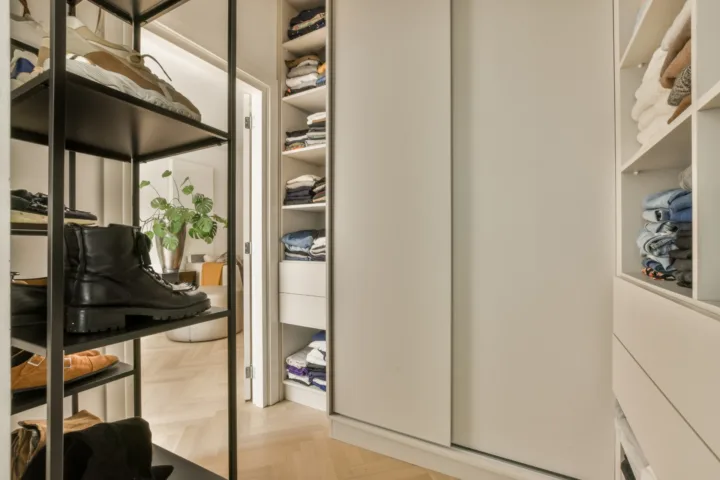
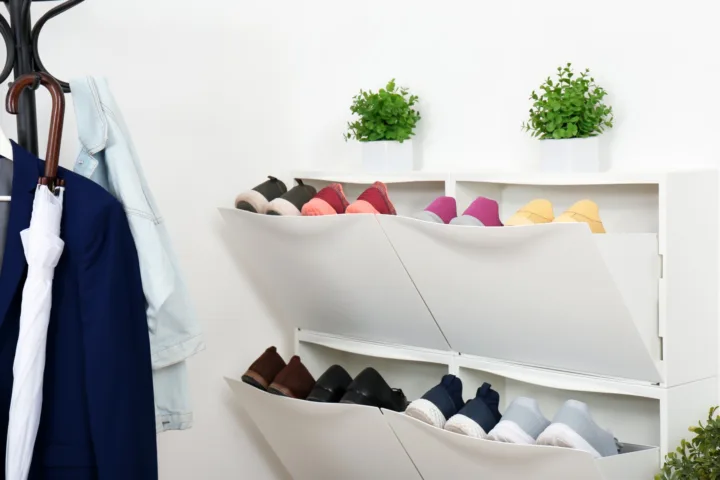
I switched to clear drop-front boxes for the pairs I wear less often. Daily shoes sit on a simple low rack at the bottom of the closet. Boots stand upright with cheap boot shapers so they keep their form.
The clear boxes let me see the shoes without opening every container. That visibility matters more than I expected.
Add Hooks for Bags, Hats, and Robes
Hooks solve problems that shelves cannot.
I mounted a few sturdy hooks on the side wall and inside the door frame. One holds my everyday tote. Another holds hats. A third holds the robe I wear while deciding what to put on. Bags keep their shape better when they hang instead of getting crushed under clothes.
Small hooks. Huge difference.
Use Baskets and Bins for the Odds and Ends
Loose items create visual noise.
I put scarves, gloves, and workout accessories into labeled fabric bins on the upper shelf. Socks and underwear go into smaller bins in a drawer unit I added later. Everything has a container. Nothing floats free.
The labels matter. I used a simple label maker so I never have to guess what lives in each bin.
Rotate Seasonal Items Out of Prime Real Estate
Winter coats do not need prime hanging space in July.
I pack off-season clothes into vacuum bags or under-bed bins and move them to a secondary closet or the top shelf. Current-season pieces stay at eye level and easy reach. The closet feels larger the moment the bulk leaves.
I do this twice a year. It takes one afternoon and pays off for months.
Add a Hanging Shelf Organizer for Folded Items
Some clothes hate hangers. Sweaters stretch. Heavy knits lose shape.
A fabric hanging shelf organizer drops from the rod and creates cubbies for folded pieces. I use it for sweaters and jeans that I prefer folded. It uses vertical space without needing wall shelves.
The organizer also keeps those items contained so they cannot migrate across the closet floor.
Keep a Donation Basket Right in the Closet
Clothes leave my life constantly. Waiting until a big clean-out means I keep wearing things I no longer like.
I keep a small basket on the floor of the closet. Anything that no longer fits or feels right goes straight into it. When the basket fills, I donate. The system stays current without requiring a full weekend project.
This habit prevents the slow creep of clutter better than any other single change.
Use Specialty Hangers for Pants and Scarves
Regular hangers do a poor job with certain items.
I switched to multi-tier pant hangers for trousers and jeans. One hanger holds four or five pairs. Scarf hangers with multiple loops keep those from turning into knots. Belts hang on a simple rack that slides onto the rod.
These specialty tools reclaim inches and keep categories tidy.
Install Simple Lighting So You Can Actually See
A dark closet hides problems.
I added battery-powered LED strip lights under the top shelf. They turn on with a motion sensor. Suddenly I could see the back of the rod and the colors of the clothes. No more pulling out the wrong black shirt because everything looked the same in the shadows.
Good light makes every other system work better.
Maintain With a Fifteen-Minute Weekly Reset
Organization dies without maintenance.
Every Sunday I spend about fifteen minutes putting stray items back, checking the donation basket, and straightening the shelves. I call it a reset, not a deep clean. The short time commitment means I actually do it. The closet never drifts too far from functional.
That weekly habit matters more than the initial setup.
Frequently Asked Questions
Do these 15 organization ideas for the home closet work in a really small space? Yes. Most of them specifically target small closets. Double rods, over-the-door organizers, and slim hangers give the biggest gains when square footage is limited.
How much money do I need to spend to get started? You can begin with under fifty dollars if you focus on hangers, a door organizer, and shelf dividers. Bigger systems cost more, but the low-cost changes already deliver real improvement.
Should I organize by color or by category? I tried both. Category first works better for daily dressing. Color within categories can look nice, but type of clothing matters more when you are rushing in the morning.
What if I rent and cannot drill holes? Tension rods, over-the-door products, and freestanding racks handle most needs without permanent changes. I lived with those solutions for years before I owned a home.
How often should I reassess the system? I do a full review every six months when I rotate seasons. Smaller weekly resets keep the system from falling apart between those bigger checks.
These fifteen changes did not create a perfect closet. They created a usable one. I can get dressed without cursing. I can close the door without shoving. The space works with my actual habits instead of against them.
Start with the purge and the second rod. Those two alone change the daily experience. The rest builds from there. Your closet does not need to look like a showroom. It just needs to stop fighting you every morning.