I used to open our shared closet every morning and feel that familiar knot in my stomach. His shirts spilled into my side. My dresses tangled with his jackets. Shoes formed a minefield on the floor. We argued more about closet space than about anything else in the first two years of living together. That changed when I started testing real systems instead of hoping things would magically stay neat. These 15 couple closet organization ideas grew out of that messy process, and they still keep our space working for both of us.
I learned the hard way that fair does not always mean equal halves. What works is clear boundaries, smart use of height, and a few habits that stick. Let me walk you through every idea that actually survived daily life in our house.
Why Shared Closets Turn Into Battle Zones
Most couples start with good intentions. You move in. You hang everything on the single rod the builder left. You tell yourselves it will be fine.
It never is.
One person owns more hanging clothes. The other folds everything. Shoes multiply overnight. Soon the closet belongs to whoever grabbed the best spots first. I watched this happen in our first apartment. I felt defeated for months. See, the problem was never the clothes. The problem was the lack of a plan that respected two different wardrobes and two different morning routines.
Once I stopped treating the closet like one big free-for-all, everything shifted. The ideas below come from that shift.
15 Couple Closet Organization Ideas That Actually Work
I grouped these by the order I added them to our space. Some cost almost nothing. Others need a weekend and a drill. All of them earned their place.
1. Claim Clear His-and-Hers Zones
I started by picking a side and sticking to it. Left side mine. Right side his. We used a slim vertical shelf unit as a soft divider so nothing drifted across the middle.
This single move cut our arguments in half. Each of us now owns a defined territory. No more “I thought that was free space” conversations. Honestly? The visual boundary matters more than the exact square footage.
2. Install Double Hanging Rods on Both Sides
One rod wastes half the height of most closets. I added a second adjustable rod on each of our sides. Top rod for longer items. Bottom rod for shirts and pants.
Suddenly we had room for everything we actually wear. His dress shirts hang high. My blouses hang low where I can reach them without climbing. The difference felt immediate.
3. Match Every Hanger
I threw out the mismatched plastic and wire hangers. We bought two packs of the same slim velvet hangers in the same color.
The closet instantly looked twice as large. Uniform hangers stop clothes from slipping and create clean lines. IMO this is the cheapest visual upgrade you can make.
4. Give Shoes Their Own Permanent Home
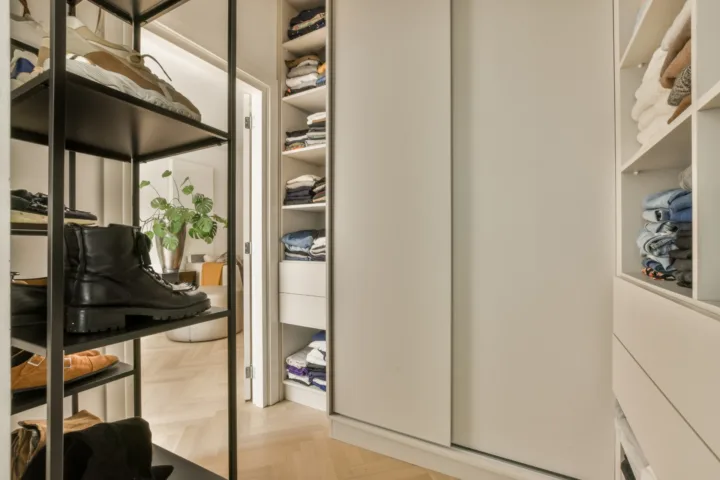
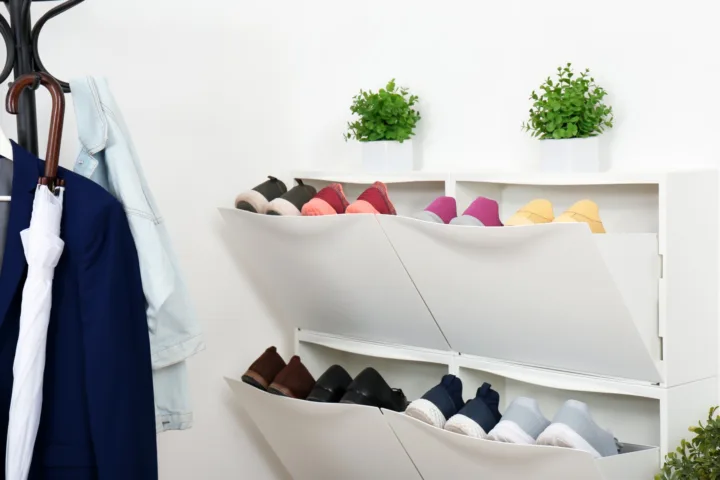
Shoes were our biggest floor problem. I installed angled shelves on the bottom of each zone and added clear plastic boxes for the pairs we wear less often.
No more tripping. No more “where are my black boots” searches at 7 a.m. We each keep our everyday pairs on the open shelves and everything else boxed and labeled.
5. Create a Neutral Shared Buffer Zone
Not everything belongs to one person. I left one middle shelf completely neutral. Travel toiletries, shared scarves, the good umbrella, and guest robes live there.
This buffer prevents the slow creep of personal items into the middle. It also gives us one spot that feels joint instead of divided.
6. Use Vertical Space Above the Rods
The top shelf used to hold random boxes and dust. I cleared it and added matching bins for off-season clothes and bulky items we only need a few times a year.
Label the bins clearly. Reach for them only when the season changes. The rest of the year they stay out of the way and out of sight.
7. Add Drawer Dividers for Small Stuff
Socks, underwear, ties, and belts used to live in a tangled drawer. I bought simple plastic dividers and gave each category its own lane.
Now I can grab what I need in the dark. He can do the same. Small items stop migrating to the floor or the top of the dresser.
8. Label Everything Once
I printed small labels for shelves and bins. His side. My side. Shared. Seasonal.
Labels remove the guesswork. They also stop the passive-aggressive rearranging that used to happen when one of us “helped” the other organize.
9. Keep a Weekly Reset Basket
I keep one small basket on the floor of the closet. Anything that needs mending, dry cleaning, or a decision goes in the basket.
Every Sunday we empty it together. Items either get fixed, donated, or put back. The basket keeps decision fatigue from building all week.
10. Store Off-Season Clothes Elsewhere
We no longer keep winter coats hanging next to summer dresses. I moved the heavy stuff to under-bed bins and the top of the guest room closet.
The main closet only holds current-season clothes. It stays lighter and easier to maintain. FYI this one change alone made the space feel twice as big.
11. Install Simple Motion Lighting
Dark closets hide mess. I stuck battery-powered motion lights under the top shelf on both sides.
Now the closet lights up when either of us opens the door. We actually see the state of things and put items back correctly more often.
12. Use Over-the-Door Storage for Accessories
Belts, scarves, and bags used to claim valuable hanging space. I hung an over-the-door organizer on the inside of the closet door and gave each of us a few pockets.
Accessories stay visible and easy to grab. The main rods stay free for clothes.
13. Sort by Category Within Each Zone
Inside my zone I hang by type then by color. Tops together. Bottoms together. Dresses at the end. He does the same on his side.
This system makes getting dressed faster. It also makes it obvious when something no longer fits or gets worn.
14. Build in a Drop Zone Near the Door
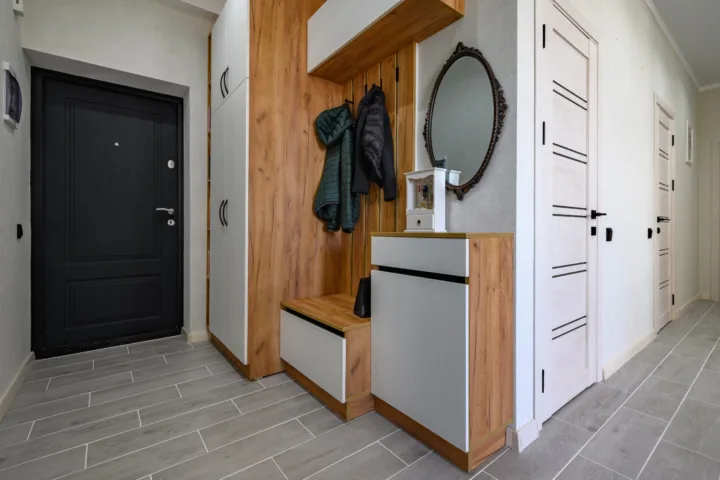
We added a small tray on a low shelf right by the closet entrance. Keys, wallet, watch, and phone land there every night.
Mornings start smoother because the small essentials never get buried under clothes.
15. Schedule a 15-Minute Monthly Audit
Once a month we stand in front of the closet together for fifteen minutes. We pull anything that has not been worn in six months and decide its fate.
No big emotional purge. Just a quick check. This habit keeps the closet from slowly filling up again.
How I Actually Implemented These Ideas Without a Fight
I did not announce a full overhaul. I started with the matching hangers and the clear zones. Those two changes showed results fast enough that he got on board with the rest.
We emptied the closet completely one Saturday morning. We sorted everything into keep, donate, and seasonal piles. Then we rebuilt one side at a time. I took photos before and after so we could see the difference. The photos helped more than any lecture.
The key was treating the process like a joint project instead of my personal mission. I asked which side he preferred. I let him choose the bin colors. Ownership made the system stick.
Common Mistakes I Made (So You Can Skip Them)
I tried color-coding hangers by person at first. It looked cute for a week and then became another thing to maintain. Neutral hangers work better.
I also tried a perfect 50/50 split by inches. That failed because our wardrobes are different sizes. Now his side has more hanging space and mine has more shelf space. Fair means functional, not identical.
Another early mistake was keeping everything in the closet “just in case.” The monthly audit fixed that habit.
Making the System Last Longer Than a Weekend
Organization fails when it demands constant willpower. These ideas work because most of them run on autopilot once set up.
Matching hangers make it obvious when something is out of place. Clear zones make it hard to invade the other person’s space without noticing. The reset basket and monthly audit catch the slow leaks before they become floods.
I still adjust things. When one of us changes jobs or seasons, we tweak the rods or the bins. The structure stays. The details flex.
Frequently Asked Questions
What if our closet is really small? Start with the zones, double rods, and matching hangers. Those three ideas give the biggest return in tiny spaces. Move seasonal items out completely.
Do we need expensive custom systems? No. Most of what I use came from basic hardware store rods, thrifted bins, and simple dividers. Custom systems look nice but are not required for these 15 couple closet organization ideas to work.
How do we handle different amounts of clothing? Give more hanging space to the person who needs it and more drawer or shelf space to the other. Equal square footage is less important than equal ease of use.
What if one person is messier than the other? Keep the zones strict and the shared buffer small. The mess stays contained to one side and becomes that person’s problem to solve.
How often should we reorganize? A full rebuild once a year is enough. The monthly fifteen-minute check keeps everything from drifting too far.
Final Thoughts From Inside the Closet
I used to dread opening that door. Now I walk in, grab what I need, and close it without a second thought. The space still belongs to both of us. It just no longer feels like a daily negotiation.
These systems did not turn us into perfect people. They just removed one reliable source of friction. That alone was worth every Saturday we spent measuring, hanging, and labeling.
Pick one idea from the list and try it this week. Start with the matching hangers or the clear zones. Watch what happens. Then add the next piece. The closet will not stay perfect forever, but it can stay usable. And usable is the real goal.