I spent years staring at the same overflowing mess in my son’s closet. Clothes on the floor. Shoes buried under last season’s jackets. Socks that seemed to multiply overnight. Then I tested a bunch of 20 boys closet organization ideas on my own kid and a few of his friends. What worked surprised me. What failed taught me just as much.
Honestly? Most advice online feels written by people who never lived with an actual boy who treats the closet floor like a laundry basket. I needed systems that survived real life. Not pretty Pinterest setups that collapsed after one busy week. These ideas come from trial, error, and more than a few deep sighs.
See, the goal was never perfection. It was getting my son to put things away without a fight. And finding his favorite hoodie in under ten seconds.
Start With a Ruthless Sort Before You Buy a Single Bin
I used to skip this step. Big mistake. I would buy organizers first and then try to force the existing pile into them. Everything stayed chaotic.
Now I empty the entire closet onto the bed. Every single item. Then I make three piles: keep, donate, and outgrow soon. The outgrow-soon pile goes into a labeled bin on the highest shelf. My son helps with the keep pile. He gets to decide what stays as long as it still fits and gets worn.
This step alone cut his wardrobe nearly in half. Less stuff means the rest of the system actually has a chance.
Create Zones That Match How Boys Actually Use Clothes
Boys do not dress the way adults do. They grab the same three shirts on rotation. Sports gear lives in a different mental category from school clothes. I set up clear zones inside the closet.
- Everyday tops on the lower rod
- Bottoms folded on middle shelves
- Sports and outdoor gear in open bins on the floor
- Dressier stuff higher up
I keep the everyday zone at his eye level. That one change stopped the morning scramble. He can see and reach what he needs without calling for help.
Double Hanging Rods Changed Everything for Me
Most standard closets come with one high rod. Useless for kids. I installed a second rod about halfway down. Suddenly he had space for shirts on top and pants or hoodies below.
I bought an adjustable tension rod first. Cheap test. It worked so well I later switched to a more permanent version. The lower rod sits low enough that he hangs his own clothes after laundry day. That independence matters more than I expected.
FYI, slim velvet hangers make a bigger difference than I thought. They take up less space and clothes stay put instead of sliding into a heap on the floor.
Folded Clothes Belong in Visible Stacks, Not Hidden Drawers
I used to shove everything into drawers. Out of sight meant out of mind until the drawer exploded. Now I prefer open shelves with vertical folds.
I taught my son the file-fold method. Shirts stand upright so he sees every option at once. No more digging. No more forgotten favorites at the bottom of a stack.
For the shelves that hold folded items I added simple dividers. Nothing fancy. Just thin boards or even cardboard covered in contact paper. They keep the stacks from toppling when he pulls one shirt out.
Use Bins for the Stuff That Never Stays Neat
Socks, underwear, and pajamas refuse to stay folded. I gave each category its own bin. Clear plastic ones work best because he can see inside without dumping everything out.
I label the bins with both words and simple pictures. My son still mixes up the sock bin sometimes, but at least the mess stays contained. When the bin fills up we know it is time to sort again.
Shoe Storage That Survives Daily Chaos
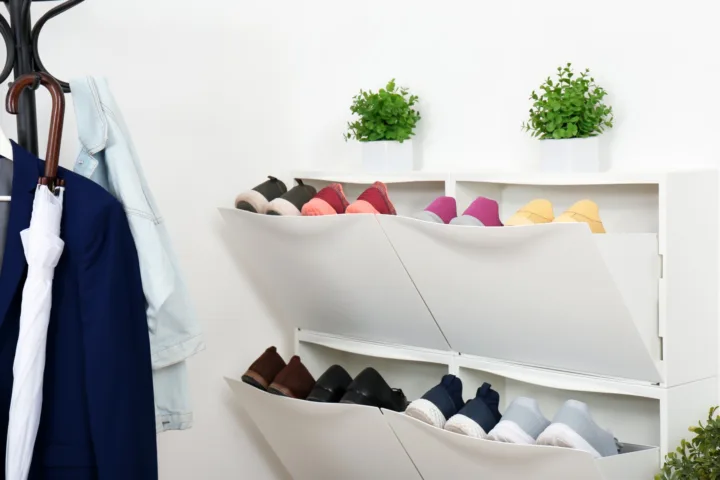
Shoes were the final frontier. They lived in a permanent pile by the door. I tried over-the-door organizers. Too many pockets. Too hard for little hands. Floor racks worked better.
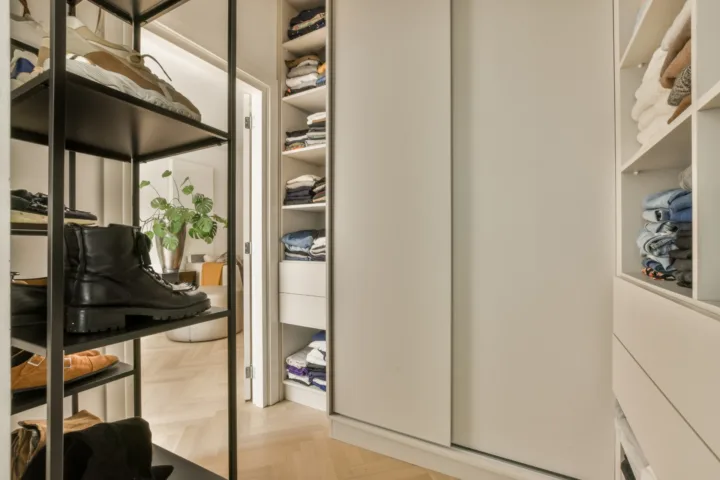
I placed a low shoe rack right inside the closet. Two tiers. Everyday sneakers on the bottom. Dress shoes and boots higher up. Seasonal shoes go in a bin on the top shelf.
One rule made the biggest difference: only the pairs he wears this season stay in the closet. Everything else leaves the room. Less visual noise means he actually puts shoes back.
Vertical Space Is Free Real Estate
I used to ignore the top shelf. Now it holds the least-used items. Extra bedding. Next-size-up clothes. Special occasion pieces.
I added a few fabric bins up there with clear labels. When seasons change I simply swap the contents of those bins with what is currently on the lower shelves. Rotation keeps the main space from overcrowding.
Hooks on the inside of the closet door handle backpacks, hats, and belts. Simple. Effective. No extra floor space required.
Color Coding Makes Mornings Faster
I grouped shirts by color within each zone. Blues together. Grays together. Reds and patterns at the end. It looks nicer, sure. More importantly, my son finds what he wants faster.
I noticed he started matching outfits on his own after I did this. Small win. But those add up.
Make Seasonal Swaps a Habit
Twice a year I pull everything out again. Spring and fall. We pack away the previous season and bring the new one forward. I keep a simple checklist on my phone so I do not forget the same items every time.
This habit stops the closet from slowly filling with clothes that no longer fit or get worn. IMO it is the single best maintenance move I make.
Label Everything Like You Mean It
Labels feel optional until you live with a kid who cannot read yet. I use picture labels for the youngest ages and switch to words as they grow. The Container Store and similar places sell printable ones, but I often just write on masking tape.
Clear labels remove the guesswork. He knows exactly where the soccer socks belong. So do I when I put laundry away.
Separate Sports Gear From Everyday Clothes
Sports equipment used to invade the entire closet. Now it has its own section. A low open bin holds cleats, shin guards, and practice shirts. Another bin takes care of the random balls and water bottles that somehow migrate upstairs.
Keeping this zone separate protects the regular clothes from mud and grass stains. It also trains him to drop gear in one place instead of scattering it.
Use Hanging Organizers for Small Accessories
Ties, belts, and the occasional formal accessory need a home. I hung a multi-pocket organizer on the side wall. Each pocket holds one category. No more digging through a drawer.
This also works for small toys or collections that refuse to stay in the bedroom. As long as the organizer stays in the closet, the clutter stays contained.
Give Him Ownership of the System
I used to organize everything myself and then get frustrated when he destroyed it. That approach failed every time. Now I involve him from the start.
He helps sort. He chooses which bin goes where. He picks the labels. When the system feels like his idea he protects it more carefully.
Some days the closet still looks rough. That is fine. Progress beats perfection.
Keep a Donation Bag Ready
I keep an empty bag on a high shelf. When something no longer fits or gets outgrown, it goes straight into the bag. No extra decision later. When the bag fills we drop it off.
This prevents the slow creep of unused clothes that used to fill every corner.
Test Cheap Solutions First
I wasted money on fancy systems that did not fit our space. Now I start with tension rods, basic bins, and command hooks. If the idea works for a month I upgrade. If it fails I toss it without regret.
Most of the best ideas in this list cost less than twenty dollars to try.
Rotate Toys Into the Closet If Space Allows
My son’s room is small. Some toys live in clear bins on the closet floor. He can see them. He can put them away. The main play area stays clearer.
I limit the number of toy bins to three. When a new toy arrives an old one leaves or goes into rotation storage. The closet becomes part of the larger system instead of a dumping ground.
Teach the One-Touch Rule
I told my son that clothes should only be touched once on the way from laundry to their proper spot. No intermediate piles on the bed or chair. It took practice. Now it happens more often than not.
This rule alone cut the daily mess in half.
Use the Door for Extra Storage
The back of the closet door holds more than I expected. Over-the-door hooks for jackets. A shoe organizer turned sideways for small accessories. Even a simple whiteboard for notes about upcoming sports days.
Every bit of vertical surface counts when the floor space is limited.
Build in Growth Room
Boys grow fast. I leave empty space on the rods and shelves. When new clothes arrive they have somewhere to go without forcing a full reorganization. I also keep a bin of next-size clothes ready to rotate in.
This forward planning saves me from scrambling every few months.
Review the System Every Few Months
Nothing stays perfect. Every three months I walk through the closet with my son. We check what still works and what needs a tweak. Sometimes a bin moves. Sometimes a zone gets redefined. The system stays flexible instead of rigid.
Frequently Asked Questions
How many of these 20 boys closet organization ideas do I need to try at once? Start with three or four that match your biggest pain points. I began with the double rod, clear bins, and shoe rack. The rest came later as needed.
Will these ideas work for a shared boys closet? Yes. I helped a friend set up zones for two brothers in one closet. Each boy got his own lower rod section and labeled bins. Clear boundaries stopped most of the fighting.
What if my son refuses to use the system? Make him part of the design process. When he chooses the bin colors or helps stick the labels he buys in more. Also keep the everyday items at his height so success feels easy.
Do I need to buy expensive organizers? No. Most of my best results came from basic bins, tension rods, and labels. Fancy systems look nice but only matter if the habits stick.
How often should I reorganize a boys closet? I do a full reset twice a year with the seasons. Light maintenance happens every laundry day. That rhythm keeps things from sliding back into chaos.
I still catch myself smiling when I open that closet and everything has a place. Not because it looks magazine perfect. Because the daily fight disappeared. My son can get dressed without drama. I can put laundry away in minutes. The system works for both of us.
Try the ideas that fit your space and your kid. Adjust the ones that do not. Keep what sticks. The goal is not a flawless closet forever. It is a space that makes mornings calmer and laundry day shorter. That is worth the effort.