I spent years tripping over boots and hunting for keys in a black hole of an entry closet. That little space by the front door held coats, shoes, bags, umbrellas, dog leashes, and every random thing my household dropped the second we walked in. It never stayed neat. I tried fancy systems and quick fixes that lasted about three days. Then I tested real 16 entry closet organization ideas that fit how I actually live. These ideas cleared the floor, cut my morning scramble, and made the whole house feel calmer. Honestly? The change started with one simple decision: stop treating the closet like a dumping ground and start treating it like a working station.
I live in a small house with a narrow entry closet that sees constant traffic. Kids, pets, guests, wet weather, sports gear. You name it, it landed there. I felt defeated every time I opened the door. See, the problem was never just the size. It was the lack of a system that matched real life. Once I shifted my approach, the same square footage suddenly held everything without the avalanche.
Why Most Entry Closets Stay a Mess
I used to blame the closet itself. Small footprint. Single rod. One high shelf. Classic setup that fails the moment more than two people live in the house. I kept buying new bins and hooks without changing the underlying habits. That approach never stuck.
The real issue is daily drop-off behavior. Coats get flung. Shoes get kicked off. Gloves vanish into corners. I needed zones that made the right action the easy action. Vertical space sat empty while the floor stayed buried. I decided to claim every inch from floor to ceiling and from side wall to door.
16 Entry Closet Organization Ideas That Actually Fit Real Life
Here is the exact list that worked for me. I tested each one in my own closet over several seasons. Some cost almost nothing. Others needed a quick hardware store trip. All of them stayed useful because they matched how my household moves.
1. Empty Everything and Sort Ruthlessly
I pulled every single item out onto the floor. Coats, scarves, shoes, bags, random tools. The pile looked ridiculous. I made three piles: keep for daily use, store elsewhere, donate. Anything I had not touched in six months left the closet. This step alone gave me breathing room. Start here every time. Without the purge, the rest of the ideas fight a losing battle.
2. Install a Low-Profile Shoe Rack on the Floor
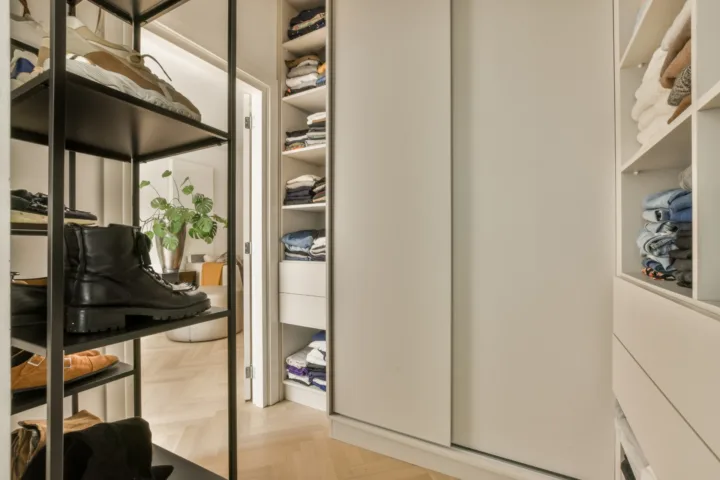
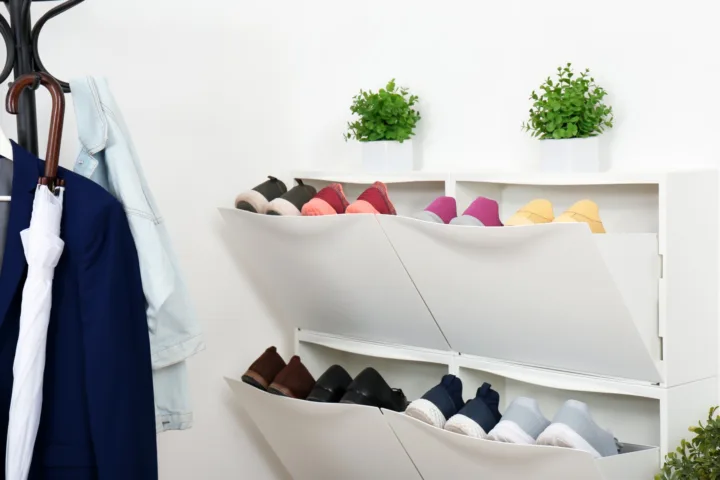
Shoes used to form a mountain. I added a slim three-tier rack that fits under the hanging coats. Pairs stay matched. Floor stays visible. I can vacuum underneath without moving a thing. For boots, I use the bottom tier and leave space for wet soles to dry. This single change stopped the daily trip hazard.
3. Add Labeled Bins on the Top Shelf
The top shelf became my seasonal and overflow zone. I bought sturdy fabric bins and labeled them clearly: Winter Gloves, Summer Hats, Guest Scarves, Dog Gear. Everyone in the house can read the labels. No more digging. I keep the bins shallow enough that I can still reach the back without a stool most days.
4. Mount Hooks at Two Heights
Adult hooks sit at standard height. Kid hooks sit lower so the little ones hang their own jackets and backpacks. I used simple wall-mounted hooks that hold weight without pulling out. Double hooks give each person two spots. Guests get the overflow row. Coats no longer pile on the floor.
5. Switch to Matching Slim Hangers
I replaced every mismatched hanger with velvet slim ones. The difference shocked me. Coats hang evenly. The rod holds more without looking crowded. Visual calm matters. When the hangers match, the whole closet feels intentional instead of chaotic.
6. Use the Back of the Door
I hung an over-the-door organizer with clear pockets and a few sturdy hooks. Gloves, sunglasses, reusable shopping bags, and a small flashlight live there now. The door became free real estate I had ignored for years. Nothing swings into the coats when I close it.
7. Create Double Hanging Space Where Possible
Long coats need height. Shorter jackets and kids’ coats do not. I added a second rod below the main one on one side of the closet. That simple extender doubled the hanging capacity for everyday pieces. Long coats stayed on the high rod. Everything else dropped down.
8. Build Vertical Shelves Along One Side
I installed narrow adjustable shelves on the left wall. They hold baskets for mail, a small charging station for keys and phones, and a bin for umbrellas. The shelves stop at the height where coats still swing freely. Vertical storage turned wasted wall into useful space.
9. Zone by Person and Category
I gave each family member a clear zone. One bin and two hooks per person. Shared items (dog leashes, guest coats) got their own section. Categories stay consistent: outerwear together, accessories together, shoes together. People put things back because the system makes sense to them.
10. Keep a Small Catch-All Tray at Eye Level
Keys, wallets, and sunglasses used to vanish. I placed a shallow tray on a mid-height shelf right inside the door. Everything lands there the moment we walk in. No more frantic searches on the way out. The tray stays visible so it never becomes a junk pile.
11. Rotate Seasonal Items Out Completely
Heavy winter coats leave the closet when spring arrives. I store them in under-bed bins or a guest room closet. The entry closet only holds what we reach for that season. This habit keeps the space from swelling beyond capacity. I do the swap twice a year and it takes less than an hour.
12. Add Soft Lighting Inside
A battery-powered puck light stuck to the ceiling changed everything. I can see the back of the shelf without turning on the hallway light. No more guessing which black coat is mine. The light turns on with a tap. Simple and effective.
13. Use Clear or Mesh Bins for High-Use Items
Opaque bins hid things I needed daily. I switched to clear plastic and mesh baskets for gloves, hats, and scarves. I can see contents at a glance. Mesh also lets air circulate so damp items dry faster. Visibility beats pretty every time in a working closet.
14. Install a Narrow Pegboard or Rail on the Side Wall
A small pegboard holds S-hooks for bags, leashes, and umbrellas. I can rearrange the hooks as needs change. It uses almost no depth and keeps long items off the floor and off the main rod. I hung it low enough for kids and high enough for adults.
15. Leave Breathing Room on Purpose
I used to fill every inch. That made the closet feel tighter and harder to use. Now I leave about twenty percent of the rod and shelf space empty. New items have a place. The system can absorb a busy week without collapsing. Empty space is part of the plan.
16. Label Everything and Refresh the Labels Seasonally
Labels fade or stop matching the contents. I reprint or rewrite them twice a year. Clear, large text works best. Even the kids can read them. Consistent labeling turns the closet into a self-managing system. People stop asking me where things live.
How These Ideas Work Together Day to Day
I did not install all sixteen at once. I started with the purge and the shoe rack. Then the hooks and bins. Each addition made the next one easier. The closet now handles wet coats, muddy shoes, and after-school backpacks without turning into a pile. Mornings feel lighter. Guests comment on how calm the entry feels. That feedback still surprises me.
The key was matching the system to actual behavior instead of some ideal magazine version. My household drops things. The new setup catches those drops in the right places. Vertical space does the heavy lifting. Labels remove the guessing. Empty space prevents overload.
Frequently Asked Questions
What are the most effective 16 entry closet organization ideas for a small space? Focus on vertical storage, labeled bins, dual-height hooks, a slim shoe rack, and the back of the door. Those five pieces deliver the biggest return in limited square footage.
How often should I reorganize my entry closet? I do a full refresh twice a year when seasons change. Quick five-minute resets happen whenever something starts drifting out of place.
Do I need expensive systems to make these ideas work? No. Most of my results came from basic hooks, bins, and a shoe rack. Spend money only on pieces that solve a specific daily frustration.
What if my entry closet has no rod or shelves? Add a freestanding rack or wall-mounted rails. Temporary solutions still create zones and keep the floor clear.
Can these ideas work for a family with kids and pets? Yes. Lower hooks and clear bins made the biggest difference for my kids and dog gear. The system only sticks when every person can use it without help.
I still open that closet door with a little relief. The chaos is gone. The system holds. Your entry closet can do the same. Start with the empty-and-sort step this weekend. Pick two or three of the ideas that match your biggest pain points. Build from there. The daily difference shows up fast.