I spent years opening my entryway closet and immediately regretting it. Coats spilled out. Shoes formed a pile that somehow multiplied overnight. Keys vanished into the void. That closet felt like a black hole that swallowed every morning plan I had. Then I decided enough was enough and tested every practical fix I could find. What follows are the 20 entryway closet organization ideas that actually worked for me. These are the ones that stuck after the initial motivation faded.
I share them here because I know that exact frustration. You walk in the door with arms full and nowhere smart to put anything. Or you rush out and waste five minutes hunting for gloves. These ideas fixed that for me. They can fix it for you too.
Start by Clearing the Deck Completely
Honestly? Most people skip this step and wonder why nothing holds. I did the same at first.
I pulled every single item out of the closet. Coats. Shoes. Random bags of batteries. That one umbrella that only appears in rainstorms. Everything sat on the floor or dining table for a full afternoon. Then I sorted ruthlessly. Keep only what belongs near the door. Donate or store the rest elsewhere.
See, an entryway closet works best when it holds only daily or near-daily items. Out-of-season coats go to a different closet. Rarely used sports gear moves to the garage. This single move gave me breathing room before I added any organizers.
Pro tip I learned the hard way: Do this on a weekend when you have time. Rushing the purge just creates another mess in a different room.
Baskets, Bins, and Labels Change Everything
Once the closet was empty, I focused on containers. Loose items always create visual noise. Bins stop that fast.
I bought a set of matching fabric bins and a few clear plastic ones. Soft bins went on shelves for scarves, hats, and dog leashes. Clear ones held items I needed to see quickly, like sunscreen or spare masks. I labeled every single one with a simple label maker. Black text on white tape. Nothing fancy.
That labeling step matters more than people admit. Without labels, family members (and guests) guess. Guessing leads to dumping. Labels create a system everyone can follow without asking me.
I also keep one open basket on the lowest shelf as a temporary drop zone. Mail, receipts, and random pocket contents land there first. I clear it weekly. This prevents the slow creep of clutter that used to take over the entire floor.
Matching Hangers Make the Space Look Twice as Big
I used to mix plastic hangers, wooden ones, and wire hangers from the dry cleaner. The closet looked chaotic even when it was half empty.
I switched to one style of slim velvet hangers in a single color. The difference shocked me. Coats hung straighter. The rod held more because the hangers took less space. The whole closet suddenly looked intentional instead of accidental.
FYI, I keep a few extra hangers on the rod for guests. That small buffer stops the “just throw it on the chair” habit when company arrives.
Shoe Storage That Actually Stays Used
Shoes were my biggest enemy. They migrated to the middle of the floor no matter what I tried.
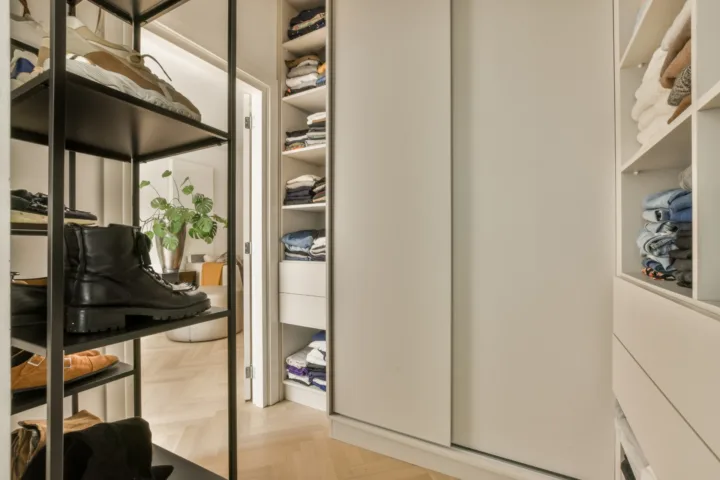
I installed a low pull-out shoe shelf that slides under the hanging coats. Each pair gets its own spot. No stacking. No digging. I can see every pair at a glance.
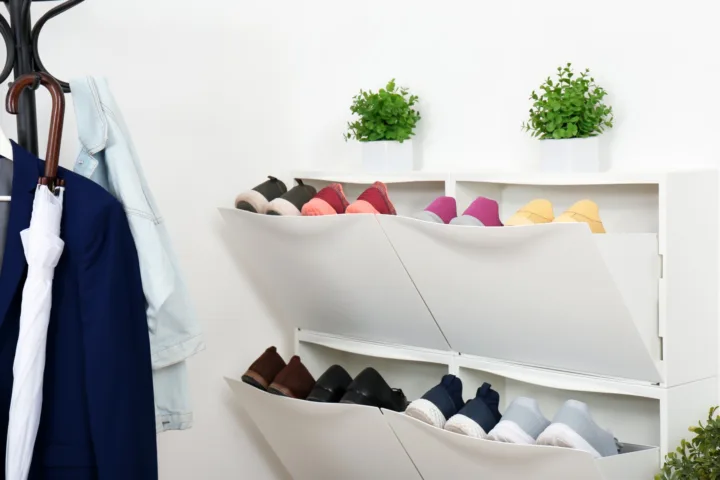
For deeper closets, slanted shelves with a small lip work even better. The angle keeps shoes from disappearing into the back. I tested a freestanding tiered rack first. It worked okay until someone bumped it. The built-in version wins for daily reliability.
I limit the closet to current-season shoes only. The rest live in under-bed boxes. This rule alone cut the shoe count in half and made the system sustainable.
Use the Back of the Door Like Real Estate
The back of the closet door used to be blank space. Now it holds more useful items than some of my shelves.
I hung an over-the-door organizer with pockets and hooks. Gloves, sunglasses, reusable shopping bags, and a small flashlight live there. Keys hang on a simple hook at eye level so I never leave without them.
Command hooks work if you rent and cannot drill. I used those for the first six months. They held fine for light items. Once I owned the place, I switched to a sturdier metal rack that screws in.
This one change recovered space I never knew I had. The door closes normally and nothing falls off when I open it.
Add Vertical Storage Wherever Possible
I used to think only the floor and the single rod counted. That mindset kept me stuck.
I installed a second hanging rod below the first for shorter jackets and kids’ coats. The upper rod now holds longer coats. This double-hang setup nearly doubled my hanging capacity without taking extra width.
Above the top rod I added a high shelf for seasonal bins. Winter hats and heavy scarves live up there in summer. The opposite happens in colder months. I use a step stool when needed. The trade-off is worth it.
Side walls got a few simple hooks for umbrellas and bags. Even the narrow strip next to the door frame now holds a small magnetic strip for scissors and a mini flashlight.
Create Zones for Each Person
I live with other humans who also need coats and shoes. Shared space without zones turns into a free-for-all.
I assigned each person a specific section. One shelf per person for their accessories. Hooks at the right height for kids so they can hang their own backpacks. Adults get the higher ones.
Labeled bins make the zones obvious. My partner’s gloves go in the blue bin. Mine go in the gray one. Kids know their names are on the lower hooks. This cut the “whose is this?” questions dramatically.
Purse and Bag Hangers Keep Soft Items Neat
Purses and tote bags used to collapse into sad lumps on shelves. Now each one hangs on its own dedicated hanger or hook.
I use purse hangers that clamp onto the rod. They keep bags upright and easy to grab. Soft totes hang from the side-wall hooks I already installed. Nothing gets crushed. Nothing gets forgotten at the bottom of a pile.
Built-In Shelving for Flexible Storage
If your closet has only one shelf, add more. I did this with adjustable track shelving that I could install myself.
The extra shelves hold the bins I already mentioned. They also create space for a small tray that holds keys, sunglasses, and lip balm. That tray is the last thing I touch before walking out the door. It ends the daily scramble.
Adjustable shelves let me change heights as needs shift. Kids grow. Seasons change. The system flexes with us.
Color Coordination for Visual Calm
This one felt optional at first. Then I tried it and kept it.
I grouped coats by color on the rod. Dark ones together. Light ones together. The same idea applied to the bins on shelves. Matching colors make the closet look calmer even when it is full. My brain relaxes faster when I open the door.
It also makes finding a specific jacket quicker. I know roughly where the navy one lives without scanning every hanger.
Keep a Small Catch-All for the Tiny Stuff
Keys. Receipts. Charging cables. Loose change. These tiny items used to vanish into coat pockets or the floor.
I added a shallow dish on the middle shelf. Everything small lands there first. Once a week I empty it into its proper homes. This single dish prevents the slow build-up that used to defeat me.
Seasonal Rotation Prevents Overload
I rotate items twice a year. Heavy coats leave the entryway closet in spring. Light rain jackets and sun hats take their place.
The high shelf holds the off-season bins. Clear lids help me see contents without opening every box. This keeps the daily-use zone lean and functional year-round.
Make It Kid-Friendly or It Will Fail
If children use the closet, design for their height and habits. Low hooks. Simple bins they can reach. Visual labels with pictures if reading is still new.
I watched my own system collapse the first week after kids arrived. Then I lowered everything that mattered to them. Suddenly they put things away without reminders. That shift saved my sanity.
Avoid Overcrowding at All Costs
Even the best system fails when the closet is stuffed. I leave empty space on the rod and on shelves on purpose.
If a new coat arrives, an old one leaves. If a bin overflows, I edit the contents. Breathing room keeps the system usable instead of frustrating.
Group Like Items Together
Gloves with gloves. Scarves with scarves. Pet supplies in their own bin. This sounds obvious. Yet most closets ignore it.
I learned that grouping cuts search time to almost nothing. I open the glove bin and grab what I need. No digging through mixed piles.
Use Clear Containers for High-Use Items
Opaque bins hide contents too well. For items I grab daily, I switched to clear plastic. I can see the extra phone charger or the spare umbrella without opening the lid.
This works especially well on the middle shelf where I store grab-and-go essentials.
Install Hooks at Multiple Heights
One row of hooks is never enough. I added a second lower row for bags and kids’ items. The upper row handles adult coats.
Different heights mean different users can reach what they need without climbing or asking for help. That independence keeps the system running when I am not home.
Add a Small Shelf for the Absolute Essentials
Near the door edge I mounted a tiny floating shelf. It holds only the things I need in the final ten seconds before leaving: keys, wallet, and a small hand lotion.
This micro-zone ends the last-minute panic. Everything else can live deeper in the closet. These three items stay right at the exit point.
Test and Tweak for a Full Month
I did not nail the perfect setup on day one. I lived with each change for a few weeks and adjusted.
Some bins moved higher. One hook relocated. The shoe shelf needed a slight angle change. The system improved because I treated it as ongoing instead of finished.
Keep Maintenance Simple or It Dies
Once a month I spend ten minutes resetting the closet. I put stray items back in their homes. I wipe the shelves. I check the labels.
That tiny habit keeps the whole system from sliding backward. Without it, even the best organization ideas fade.
Frequently Asked Questions
How do I start organizing an entryway closet if it is completely full right now? Pull everything out in one session. Sort into keep, donate, and relocate piles. Only put the keep items back after you have containers and zones ready.
What are the most important 20 entryway closet organization ideas for small spaces? Focus on the door, vertical rods, labeled bins, and shoe shelves first. Those four deliver the biggest gains in the least square footage.
Do I need to buy expensive systems to make this work? No. Matching hangers, basic bins, and a few hooks solved most of my problems. Fancy track systems help but are not required.
How do I get the rest of the household to follow the new system? Make the zones obvious with labels and heights that fit each person. Show them once. Then let the system do the teaching.
What if my closet has no shelves or rod to begin with? Install a basic adjustable rod and one shelf first. Those two pieces create the foundation for every other idea on this list.
I still open that closet every morning and feel a quiet sense of relief. The chaos is gone. The system holds because it matches how we actually live. Pick three or four of these ideas and try them this weekend. Adjust as you go. Your future self will thank you every single time you walk out the door without hunting for anything.