
I spent years staring at my double door closet in defeat. Clothes spilled over rods. Shoes vanished under piles. Mornings felt like a scavenger hunt I always lost. Then I tested a set of practical 15 double door closet organization ideas in my own small bedroom setup and the difference hit hard. Now I open those doors and everything sits where it belongs. I grab what I need fast and close them without that familiar wave of guilt.
See, double doors give you full access once they swing open, but they also create two separate zones that turn messy fast if you treat them like one big free-for-all. I learned that the hard way after three moves and more than a few rushed outfit changes. These ideas come straight from what I actually used and kept using. No fancy custom build required. Just smart tweaks that respect the way double doors work.
Why Double Door Closets Fight Back Harder
Double doors open wide and feel generous at first. Then the middle gap becomes a dead zone. Items slide toward the center. One side ends up as the overflow dump while the other stays half empty. I watched this happen in every place I lived.
The real issue is access and symmetry. You can reach both sides at once, yet most people still stuff everything onto one rod and hope for the best. I did that for years. It never worked. The fix starts with treating each side as its own space while still making the whole closet feel like one system.
Honestly? Once I stopped fighting the doors and started using their natural split, everything got easier.
15 Double Door Closet Organization Ideas That Worked for Me
Here is the full list I landed on after trial and plenty of error. I group a few together where they connect, but each one stands on its own.
1. Match Every Hanger Across Both Sides
I used to mix plastic, wood, and wire hangers without thinking. The result looked chaotic even on good days. Switching to one style of slim velvet hangers on both doors changed the visual noise overnight. Clothes hang straighter. You fit more on each rod. The whole closet suddenly looks intentional instead of random.
I bought two matching packs and replaced everything in one afternoon. The difference felt bigger than the money spent.
2. Create Clear Left-and-Right Zones
One side became my everyday clothes. The other side held special pieces and seasonal extras. A simple wooden divider in the middle keeps the boundary obvious. I stop hunting through formal jackets when I just need a T-shirt.
This single move cut my morning search time in half. FYI, the divider does not have to be permanent. A cheap tension rod with a hanging sign works if you rent.
3. Install a Second Hanging Rod on Both Sides
Single rods waste so much vertical space. I added a lower rod on each side at about 40 inches from the floor. Shirts and pants go on the bottom. Longer items stay up top where they have room. The clearance between rods stays around 36 to 40 inches so nothing drags.
I measured twice before drilling. The extra capacity felt like getting a second closet for free.
4. Dedicate One Full Side to Long Hang Only
Dresses, coats, and long skirts used to crumple against shorter items. Now one entire side holds only long pieces. The other side runs double rods for everything else. Hems stay smooth. I no longer tug clothes free from a tangled mess.
This works especially well if you share the closet. Give the long-hang side to the person who owns more dresses or coats.
5. Cover Both Door Backs with Organizers
The inside of each door is pure free real estate. I hung clear pocket organizers on both. Scarves, belts, socks, and even a few pairs of flats live there now. Nothing blocks the doors from closing. I see every item the second I open them.
Over-the-door hooks handle bags and tomorrow’s outfit. I never leave the house still deciding what to wear.
6. Add Matching Baskets on the Top Shelves
High shelves used to collect dust and forgotten sweaters. I placed identical woven baskets on both sides and labeled them by season. Off-season clothes and bulky extras stay out of sight but easy to pull down. The matching look keeps the top line clean when the doors stand open.
I prefer baskets with handles. Lifting them feels less awkward than wrestling with loose stacks.
7. Color-Code Within Each Zone
Once the zones existed, I sorted each side by color from light to dark. Finding a blue shirt no longer means sliding past every other shade. The closet looks calmer even when it is full. I can build an outfit in seconds because similar tones sit together.
This step took one focused evening. The payoff lasts every single morning after.
8. Place a Slim Drawer Unit in the Center Gap
The space where the two doors meet often sits empty. I slid a narrow vertical drawer unit right there. Socks, underwear, and workout gear live in the drawers. It acts like a mini dresser without eating floor space. I open the doors, pull a drawer, and grab what I need without digging.
Measure the gap first. Some units fit perfectly. Others need a slight shift to one side.
9. Label Every Bin and Basket
I used to open boxes just to remember what lived inside. Clear labels fixed that. I write the category on the front of each basket in simple block letters. Seasonal storage, accessories, linens. No more mystery containers. Even guests can find an extra towel if needed.
Reusable labels let me change the system as my wardrobe shifts.
10. Keep Floor Space Clear with Low Bins
Shoes and random bags used to claim the entire floor. I added low rolling bins under the lower rods. Workout clothes, flip-flops, and small bags slide in and out easily. The floor stays open enough to vacuum. Nothing sits in a permanent pile.
Choose bins with lids if you want the space to look finished when the doors close.
11. Hang Hooks Along the Side Walls
The narrow walls next to the doors rarely get used. I screwed in a few sturdy hooks on each side. Robes, hats, and tote bags hang there now. They stay visible and never crowd the rods. I reach for them without stepping fully inside the closet.
Space the hooks so the doors still swing free.
12. Use Shelf Dividers for Folded Stacks
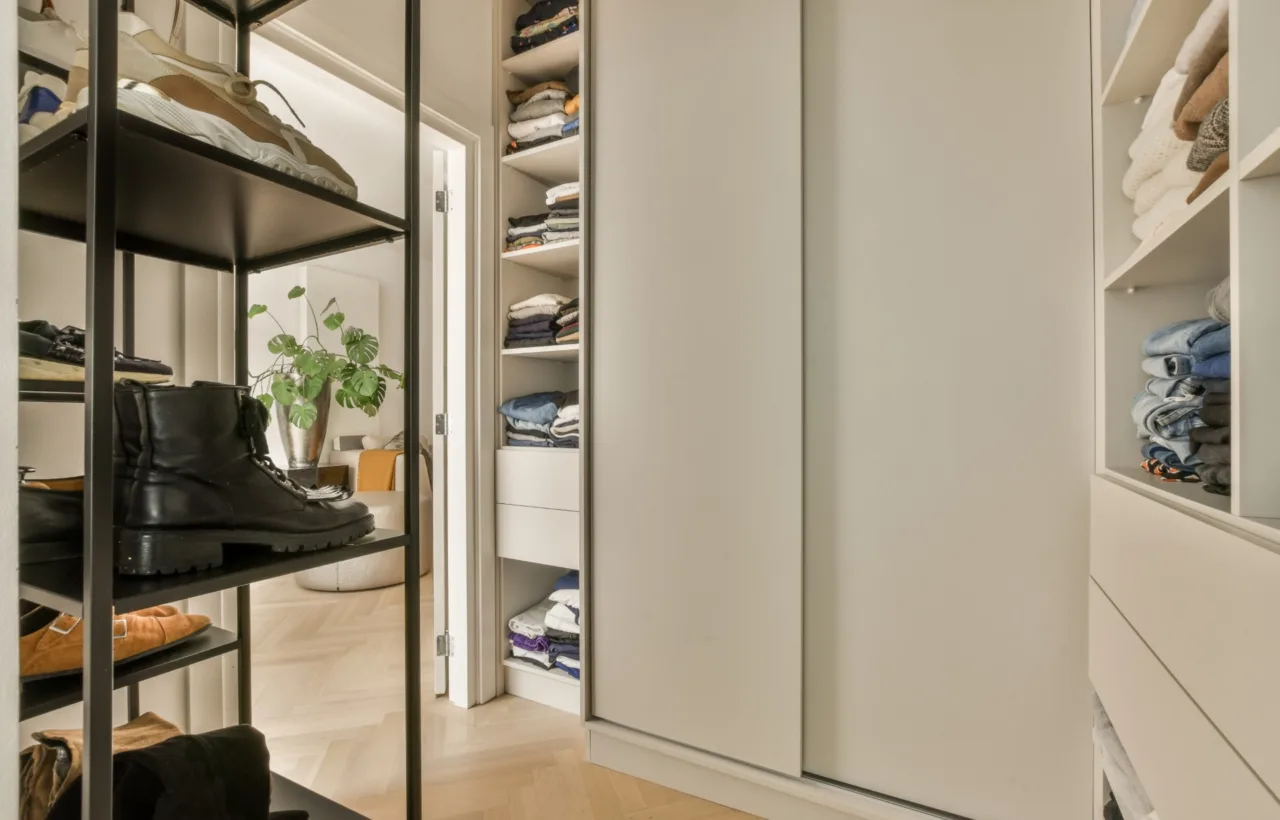
Sweaters and jeans used to topple into messy heaps. Vertical shelf dividers keep each stack upright and separate. I can pull one item without collapsing the whole pile. The shelves look neat even when I am in a hurry.
These cheap plastic or wood dividers pay for themselves the first time you avoid a clothing avalanche.
13. Add Simple LED Strip Lighting
Deep double closets stay dark in the corners. I stuck battery-powered LED strips along the top shelf edge on both sides. Suddenly I see every hanger and every bin. No more guessing what hides in the back. The lights turn on with a small remote or motion sensor.
Bright light makes the whole system feel more intentional.
14. Rotate Seasonal Items Twice a Year
I used to keep everything accessible year-round. That only created clutter. Now I pack winter coats and heavy sweaters into the highest baskets during summer. Summer dresses move up high when the weather turns cold. The active rods stay focused on what I actually wear that month.
The rotation takes less than an hour and keeps the daily zones lean.
15. Audit the Closet Every Three Months
Even the best system drifts. Every three months I empty both sides, check for clothes I no longer wear, and reassign space. I donate or store what no longer fits my life. The zones stay accurate. The doors open to a space that still works for me.
This habit prevents the slow return of chaos more than any product ever could.
How These Ideas Fit Together in Real Life
I did not install every change in one day. I started with matching hangers and the left-right zones. Those two alone made the closet feel under control. Then I added the second rods and the door organizers. Each step built on the last. The final result feels personal rather than staged for photos.
IMO the biggest win sits in the mornings. I open both doors, see everything clearly, and leave the house without that tight feeling in my chest. The system works because it respects how double doors actually function instead of fighting them.
Frequently Asked Questions
How do I start with 15 double door closet organization ideas if my closet feels completely overwhelmed? Empty both sides completely first. Sort into keep, donate, and store piles. Then rebuild one zone at a time rather than trying to perfect the whole closet in a single afternoon.
Will double hanging rods work if my ceiling is low? Measure carefully. Keep at least 36 inches between the rods and enough clearance above the top rod for hangers to slide freely. If space is tight, use the lower rod only on one side and keep the other side single for long items.
What is the best way to share a double door closet with a partner? Assign one full side to each person. Match the hangers and bins so the visual look stays calm. Give the person with more long garments the long-hang side. Clear boundaries stop the daily tug-of-war over rod space.
Do over-the-door organizers work on double doors that swing inward? Yes, as long as the organizers sit thin enough that the doors still close fully. Test the clearance before loading them with heavy items. Slim pocket styles usually clear without issues.
How often should I reorganize after setting up these systems? A light reset every three months keeps everything current. A deeper seasonal switch twice a year handles the bigger wardrobe shifts without turning into a full project.
Final Thoughts
My double door closet used to stress me out every single day. These 15 ideas turned it into a space that supports my routine instead of fighting it. Start with the zones and matching hangers. Add the rest as you need them. The doors will open to calm instead of clutter, and that quiet win shows up every morning after.