
I spent years staring at a playroom closet that looked like a toy explosion had permanently settled in. Every time I opened the door, something fell out. My kids could never find what they wanted. I felt defeated more days than I care to admit. Then I started testing real 15 playroom closet organization ideas that stuck, and the whole space finally made sense. These are the ones that worked for me after plenty of trial and error.
I want to walk you through exactly what I did. No theory. Just the practical moves that turned my closet from a black hole into something my kids can actually use and clean up.
Start by Emptying Everything Out
I used to rearrange the same piles over and over. That never fixed anything. The only way this works is to pull every single item out of the closet first. I spread everything across the floor and sorted it into keep, donate, and trash piles right away.
Broken toys went straight into the trash bag. Outgrown items went into donation boxes. I grouped the rest by type: building sets, pretend play, vehicles, art supplies, games, and dress-up. Seeing the categories laid out made the next steps obvious. I finally understood how much space each group needed. Honestly? That single afternoon of sorting saved me months of frustration later.
Build a Flexible Shelf System
A standard closet rod and one high shelf do almost nothing for toys. I installed an adjustable track system so I could change shelf heights whenever my kids’ interests shifted. Low shelves hold everyday toys. Higher shelves hold the less-used stuff.
I kept shelf depth around 12 to 14 inches whenever possible. Deeper shelves just bury toys in the back. For any deep spots that remained, I used long bins that slide out like drawers. Vertical spacing mattered too. I left tighter gaps for puzzles and board games and taller gaps for big bins of trucks or dolls. Floor clearance stayed at least 18 inches so rolling carts and oversized items could slide under.
This setup grows with the kids. I can move shelves up or down in minutes. That flexibility is the real win.
Use Clear Bins for Everyday Toys
Opaque containers hide the mess, but they also hide the toys. My kids dumped everything looking for one specific piece. Clear bins fixed that. I filled them with building blocks, action figures, and doll accessories. Kids see exactly what is inside and grab what they need without creating a new pile on the floor.
I never fill any bin more than about 80 percent. Overstuffed bins just encourage shoving. Open-front styles work best for items they reach for constantly. Clear plastic also wipes clean fast when something sticky appears. FYI, these bins became the backbone of my whole system.
Label Everything with Pictures or Simple Words
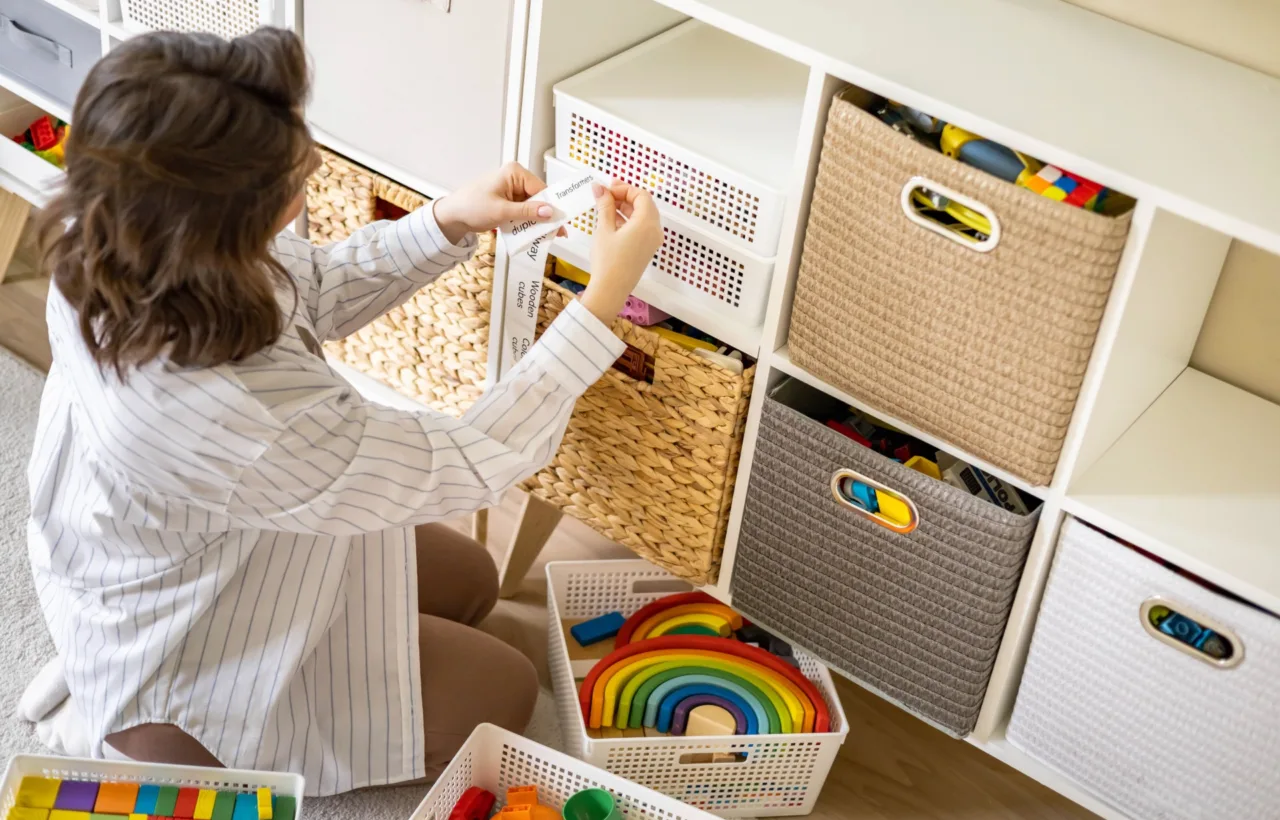
Labels turned cleanup from a battle into a habit. For the younger years I used photo labels. I took a picture of the toy category, printed it, and stuck it right on the bin. Once they started reading, I switched to short text labels like “Cars” or “Blocks.”
Broad categories work better than super specific ones. Kids remember “Building Sets” faster than “Red Legos Only.” I walk them through the system once, then step back. Most days they put things back without a fight.
Claim the Back of the Closet Door
The door is free real estate. I hung a pocket organizer on the inside and filled the pockets with art supplies, small accessories, and dress-up shoes. Mesh versions let me see everything at a glance. Hooks hold bags of extra pieces or costumes that need to hang.
This one change alone freed up an entire shelf. Small items that used to scatter now live in one vertical strip of space. Cleanup takes seconds instead of minutes.
Add Vertical Dividers for Games and Books
Stacking board games creates towers that always topple. Vertical dividers keep the boxes upright and visible. I placed them on a middle shelf so the kids can pull a game without the whole stack sliding. The same setup works for puzzles and picture books.
I measured the tallest game box and set the shelf height just above it. No wasted air. Games stay neat and kids stop digging through piles.
Install a Short Hanging Bar for Dress-Up
Dress-up clothes refuse to stay folded. I added a narrow hanging bar at kid height (around 36 to 40 inches) on one side of the closet. Costumes hang freely. A soft basket underneath catches crowns, wands, and shoes.
This section is only about 18 inches wide, but it holds everything they need for pretend play. No more costumes stuffed into bins where they get wrinkled and forgotten.
Create Pull-Out Storage for Deep Shelves
Deep shelves used to swallow toys. I added long bins that act like drawers and a couple of actual pull-out units. Kids slide them out, grab what they want, and push them back. Nothing gets lost in the dark corners.
For heavier items I chose sturdy plastic that can take daily use. These pull-outs turned the back half of the closet into usable space again.
Leave Room for Rolling Carts on the Floor
I keep the bottom 18 inches clear on purpose. A rolling cart lives there with the current set of vehicles or building toys. Kids roll it out to play and roll it back when they finish. Oversized items like a dollhouse or big truck collection fit underneath without blocking the shelves above.
This floor zone stops the closet from feeling cramped. It also makes cleanup feel more like a game.
Rotate Toys on the Highest Shelf
I keep only about 20 to 30 percent of the toys accessible at any time. The rest sit in opaque bins on the top shelf. Every few weeks I swap a couple of bins down and put the current ones up high.
The kids treat the newly rotated toys like brand-new gifts. The floor stays clearer because fewer options sit out. I used to think more toys equaled more fun. I was wrong. Rotation keeps interest high and mess low.
Try Numbered or Color-Coded Baskets
Sometimes labels feel too wordy. I numbered a set of baskets and assigned each number to a category. Kids match the number instead of reading. Color-coding works the same way. Blue bins hold vehicles. Green holds building sets.
Both systems give a quick visual cue. They also look cleaner when the closet door stands open. IMO, numbered baskets win for younger kids who still mix up colors.
Keep Heavy Items Low and Light Items High
Books, wooden blocks, and big bins of trucks sit on the bottom two shelves. Stuffed animals and lighter accessories go higher. This keeps the structure stable and stops kids from pulling heavy things down on themselves.
I also made sure nothing heavy sits above shoulder height. Safety first, always.
Use Shallow Drawers for Tiny Pieces
Legos and small action-figure accessories used to live in deep bins. Digging through them felt endless. Shallow drawer units changed that. I sorted pieces into broad groups: people, wheels, bricks. Kids open a drawer and see everything at once.
No more frustration. No more dumping the whole bin on the floor just to find one piece.
Add Motion-Sensor Lights Under Shelves
Dark corners hide toys and encourage mess. I stuck battery-powered motion-sensor lights under a few shelves. The light turns on the second someone opens the door or reaches in. Suddenly the whole closet feels usable instead of mysterious.
This small addition made a bigger difference than I expected. Kids actually put things back when they can see the empty spot clearly.
Make Cleanup a One-Touch Habit
The final idea ties everything together. I designed every bin and shelf so putting a toy away takes one motion. Open the bin. Drop the toy. Close nothing if the lid slows them down. Daily-use bins stay lid-free.
I taught the kids the system once and then stepped back. Most evenings the closet looks decent because the path of least resistance leads to the right spot. That is the real test of any organization plan.
Frequently Asked Questions
How do I start with 15 playroom closet organization ideas if my closet feels completely hopeless? Empty it completely first. Sort into keep, donate, and trash piles on the floor. Once you see the actual categories you need to store, the rest of the ideas fall into place much faster.
Do clear bins really work better than pretty woven ones? Yes for everyday toys. Kids find what they want without dumping everything. I keep woven or opaque bins only for the high rotation shelf where looks matter more than visibility.
What if my kids refuse to put toys away even after I organize? Make every storage spot reachable and obvious. Labels with pictures help a lot. Keep the system simple enough that putting something away takes less effort than leaving it out.
How often should I rotate the toys on the top shelf? Every two to four weeks works well in my house. The kids stay interested and the floor stays clearer. Adjust the timing based on how quickly they lose interest in the current set.
Can these ideas work in a small closet or a rental? Most of them can. Focus on over-the-door organizers, adjustable freestanding units, clear bins, and labels. You do not need a full custom system to see a big improvement.
I still open that closet door some days and feel a quiet sense of relief. The mess never disappears completely. Kids are kids. But the system holds. Toys have homes. Cleanup takes minutes instead of an hour. You can build the same thing in your space. Start with the empty-out. Then pick the ideas that match your closet and your kids. The rest follows.