I spent years staring at a huge walk-in closet that still felt too small. Clothes piled up. Shoes disappeared. Accessories lived in a permanent state of chaos. That changed when I committed to testing real 18 large walk in closet organization ideas that actually fit the scale of a spacious room. I stopped treating the space like a giant reach-in and started treating it like a personal dressing studio. The difference was immediate. Mornings got calmer. I stopped buying duplicates. And I finally felt proud of the room every time I walked in.
Honestly? The breakthrough came after one particularly bad morning where I nearly left the house in mismatched socks because I could not find a single matching pair. That was my low point. From there I rebuilt the system piece by piece. What follows is every idea that stuck, written the way I would tell a friend who just inherited a big closet and has no idea where to start.
Why Large Walk-In Closets Need a Different Approach
Most advice I found online was written for standard closets. A large walk-in is different. You have floor space that can hold an island. You have wall height that can support double rods and high storage. You also have more places for clutter to hide. The volume works against you if you do not claim every zone deliberately.
I learned this the hard way. My first attempt used the same bins and single rods I had in my old apartment. It looked empty and messy at the same time. Big space needs big structure. Once I accepted that, the rest of the plan fell into place.
My Favorite 18 Large Walk In Closet Organization Ideas
Here is the full list I still use today. I grouped a few related ones for flow, but each one earned its spot through real use.
1. Zone Everything by Frequency of Use
I divided the closet into daily, weekly, and seasonal zones. Daily clothes live at eye level and arm reach. Weekly pieces sit one shelf higher or lower. Seasonal items go on the top shelves or in labeled bins.
This single change cut my morning search time in half. I no longer dig past winter coats to find a summer shirt.
2. Install a Center Island When Space Allows
My closet is big enough for a modest island. I chose one with drawers on both sides and a flat top for folding. The surface doubles as a place to lay out outfits. The drawers hold socks, underwear, and jewelry trays.
Without the island the middle of the room felt wasted. With it the whole space functions like a boutique.
3. Double the Hanging Rods
I replaced every single rod with two levels. Short items (shirts, jackets, pants) hang on the upper and lower rods. Long items get their own dedicated section.
This move alone recovered more usable hanging space than any other upgrade. FYI, matching slim velvet hangers made the rods look twice as organized and actually held more clothes.
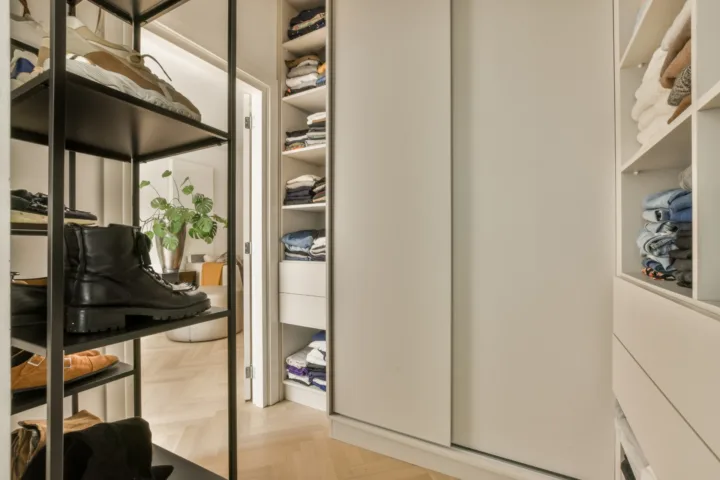
4. Build Floor-to-Ceiling Shelving on One Wall
I dedicated an entire wall to adjustable shelves. Sweaters, jeans, and handbags live here. The highest shelves hold luggage and off-season storage in clear bins.
Vertical space is the most underused asset in large closets. I used every inch from floor to ceiling and never looked back.
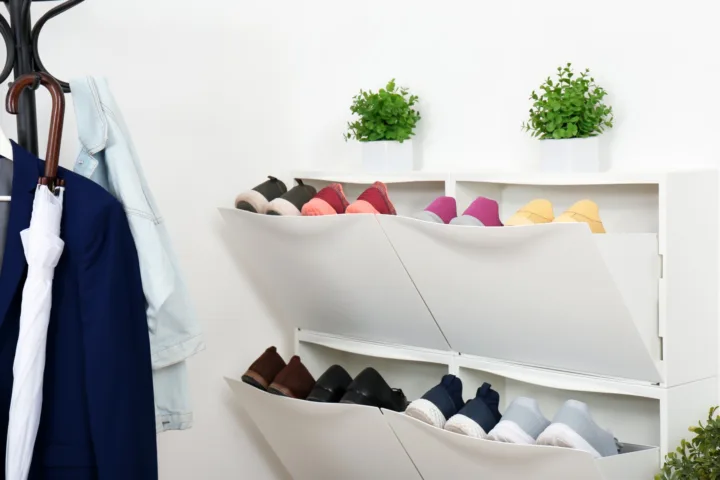
5. Create Dedicated Shoe Cubbies
Piles of shoes on the floor were my biggest visual stress. I installed open cubbies along the lower third of one wall. Each pair gets its own spot. Tall boots stand in deeper cubbies at the end.
I can see every pair at a glance. No more crushed toes or lost mates.
6. Add an Accessory Wall with Hooks and Rails
Belts, scarves, hats, and bags used to live in a tangled drawer. I mounted a continuous rail with hooks on one narrow wall. Acrylic shelves above hold purses.
Everything is visible. Everything is grab-and-go. This wall became my favorite part of the closet.
7. Use Pull-Out Drawers Instead of Fixed Shelves
Fixed shelves hide things in the back. Pull-out drawers solve that. I installed a bank of them for folded tees, workout clothes, and accessories. Drawer dividers keep categories separate.
I reach the back of every drawer without rearranging the front. That alone saved me from buying things I already owned.
8. Build in a Laundry Hamper
Dirty clothes used to land on the floor or in a freestanding basket that always tipped over. I added a tilt-out hamper inside a lower cabinet. It stays closed and looks intentional.
The closet stays cleaner because the dirty pile has a proper home.
9. Solve the Corner Problem
Corners in U-shaped and L-shaped layouts waste space. I installed a corner carousel for hanging clothes. It spins so nothing gets stuck in the dead zone.
Before the carousel those corners collected forgotten jackets. Now they earn their keep.
10. Switch to Matching Slim Hangers Across the Board
I threw out every plastic and wooden hanger. Slim velvet hangers took their place. They take less rod space and stop clothes from sliding off.
The visual uniformity makes the entire closet look intentional. IMO this is the cheapest high-impact change you can make.
11. Color Code Within Categories
Once everything lived in zones I sorted each zone by color. Whites to blacks, left to right. Finding a navy blouse takes seconds instead of minutes.
It looks polished. It works. I never went back to random order.
12. Reserve the Highest Shelves for Seasonal Storage
The space above the top rod used to sit empty. I added a second shelf line and filled it with labeled bins for winter coats, holiday clothes, and rarely worn formal pieces.
Out of sight does not mean out of reach. A step stool handles the occasional need.
13. Include a Small Vanity or Dressing Surface
I tucked a narrow vanity against the far wall. It holds a mirror, a jewelry tray, and a couple of drawers for makeup. Getting ready no longer requires leaving the closet.
This turned the space from pure storage into a real dressing room.
14. Layer the Lighting
Builder-grade single bulbs leave dark corners. I added LED strip lighting under shelves and a soft overhead fixture. Motion sensors mean the lights come on when I walk in.
I can actually see the true color of every garment. Mornings feel less rushed.
15. Mount a Full-Length Mirror
A large mirror on the end wall lets me check full outfits without leaving the closet. It also makes the space feel larger and brighter.
I used to run back and forth to the bedroom mirror. That trip is gone.
16. Use Clear Bins with Labels for Small Items
Socks, scarves, and seasonal accessories live in clear bins on shelves. Labels face outward. I know exactly what each one holds without opening it.
Opaque bins hide things. Clear ones keep me honest about what I own.
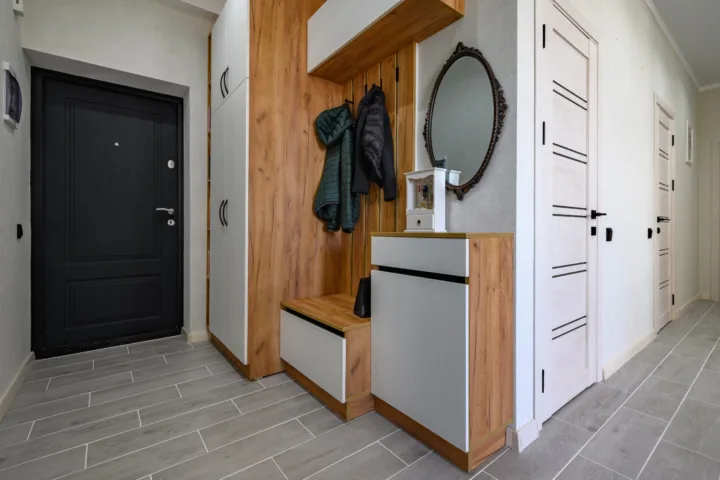
17. Create a “Grab and Go” Station Near the Door
Right inside the entrance I placed a small shelf and a couple of hooks. Everyday bags, keys, and the jacket I wear most often live here.
This station ends the last-minute scramble. I walk out the door faster.
18. Choose a Modular Closet System That Can Grow
I started with a modular system that lets me move shelves and rods as my wardrobe changes. Fixed built-ins would have locked me into one layout. The modular approach keeps the system flexible.
Clothes change. Life changes. The closet should be able to change too.
How I Actually Put These Ideas Into Practice
I did not install everything in one weekend. That would have been overwhelming. I started with the zones and the matching hangers. Those two steps alone made the space feel manageable. Then I added the island and the shoe cubbies. Each upgrade made the next one easier to justify.
See, the biggest mistake I made early on was trying to buy every product at once. The closet still felt chaotic because the system had no logic. Once the zones existed, every new piece had a clear job. That sequence matters more than any single product.
I also measured everything twice. A large closet can hide awkward dimensions. I sketched the walls, noted door swings, and left walking clearance around the island. Those measurements prevented expensive returns.
Common Mistakes I See (and Made Myself)
People treat a large closet like a smaller one and just add more of the same. That creates visual noise. Another frequent error is ignoring the floor. Shoes and bags end up in piles that slowly expand. I fixed that by giving every pair a permanent cubby.
Over-organizing is real too. I once bought so many specialty dividers that daily use became annoying. I simplified. Function beat perfection every time.
Frequently Asked Questions
How do I start organizing a large walk-in closet without getting overwhelmed? Pull everything out and sort by keep, donate, and relocate. Then create zones before you buy a single organizer. That order keeps the process manageable.
Do I really need an island in a large walk-in closet? Only if the footprint allows clear walking space around it. My island works because the room is wide enough. In a narrower large closet a peninsula against one wall can give similar surface space without blocking traffic.
What is the best way to store shoes in a spacious walk-in? Open cubbies or angled shelves beat stacked piles. I can see every pair and nothing gets crushed. Clear boxes work for the pairs I wear less often.
Should I use a professional closet system or build my own? I mixed both. A modular system gave me the structure. Custom shelves and the island filled the gaps. Pure DIY can work if you measure carefully and stay flexible.
How often should I reorganize a large walk-in closet? I do a full reset twice a year when seasons change. Quick weekly tidies keep the system from sliding. The 18 large walk in closet organization ideas I use make those resets fast because everything already has a home.
Final Thoughts
A large walk-in closet only becomes a gift when you claim every inch with intention. The ideas above turned my chaotic space into a room I actually enjoy using. I still adjust shelves as my wardrobe shifts, but the core system holds.
Start with the zones and the matching hangers. Those two moves create momentum. Then add the features that solve your specific daily frustrations. The goal is not a magazine-perfect room. The goal is a closet that makes getting dressed easier and more pleasant.
I walk into mine now and feel calm instead of defeated. That feeling alone was worth every hour of work. Your large closet can deliver the same result.