
I used to dig through a mountain of graphic tees every morning like I was searching for buried treasure. My closet looked like a laundry explosion most days. After years of frustration I tested every storage trick I could find and landed on 20 closet tshirt organization ideas that actually work in real life. These methods freed up space, kept my shirts looking sharp, and cut my get-ready time in half.
Honestly? The chaos used to stress me out more than I admitted. One weekend I pulled every single T-shirt out and started over. What follows is the exact system I use now. No fancy renovations required. Just practical moves that fit a regular closet.
Start by Decluttering Before You Organize Anything
I always begin here now. You cannot organize what you refuse to edit.
I dump every T-shirt onto the bed. Then I make three piles: keep, maybe, and donate. The keep pile only holds shirts I have worn in the last year or ones that still fit and feel good. Sentimental concert tees go in a separate box if I cannot part with them yet.
See, this step alone can cut your collection by a third. I once found seventeen shirts I had forgotten I owned. Once the volume drops, every other idea works better.
File Folding Is My Number One Everyday Method
This is the technique that changed everything for me.
I lay the shirt face down. Fold both sides in so the sleeves meet the center. Then fold the bottom up into a neat rectangle that stands on its own. I stand the folded shirts upright in the drawer like files in a cabinet.
Why it works: I see every graphic and every color at a glance. No more pulling three shirts out to reach the one I want. The pile never topples. IMO this beats stacking every single time.
I keep my daily wear tees this way in the top drawer. It takes practice for the first ten shirts. After that muscle memory kicks in.
How I Keep File Folds Looking Uniform
I fold everything to roughly the same height. Shelf dividers help if the drawer is deep. I group by color inside the drawer so navy sits next to black and bright graphic tees stay together.
Rolling T-Shirts for Tight Spaces and Travel
When drawer space runs low I switch to rolling.
Lay the shirt face down. Fold the bottom hem up a few inches to create a pocket. Fold the sides in. Roll tightly from the collar down and tuck the roll into that pocket.
Rolled shirts fit more into the same space. I use this for workout tees and thinner cottons. They stand in a bin or drawer without crushing each other.
I pack the same way for trips. The rolls stay neat and I fit more in the suitcase.
Hanging T-Shirts the Right Way (When Folding Is Not Enough)
I used to hang everything and watched the shoulders stretch into sad little points. Not anymore.
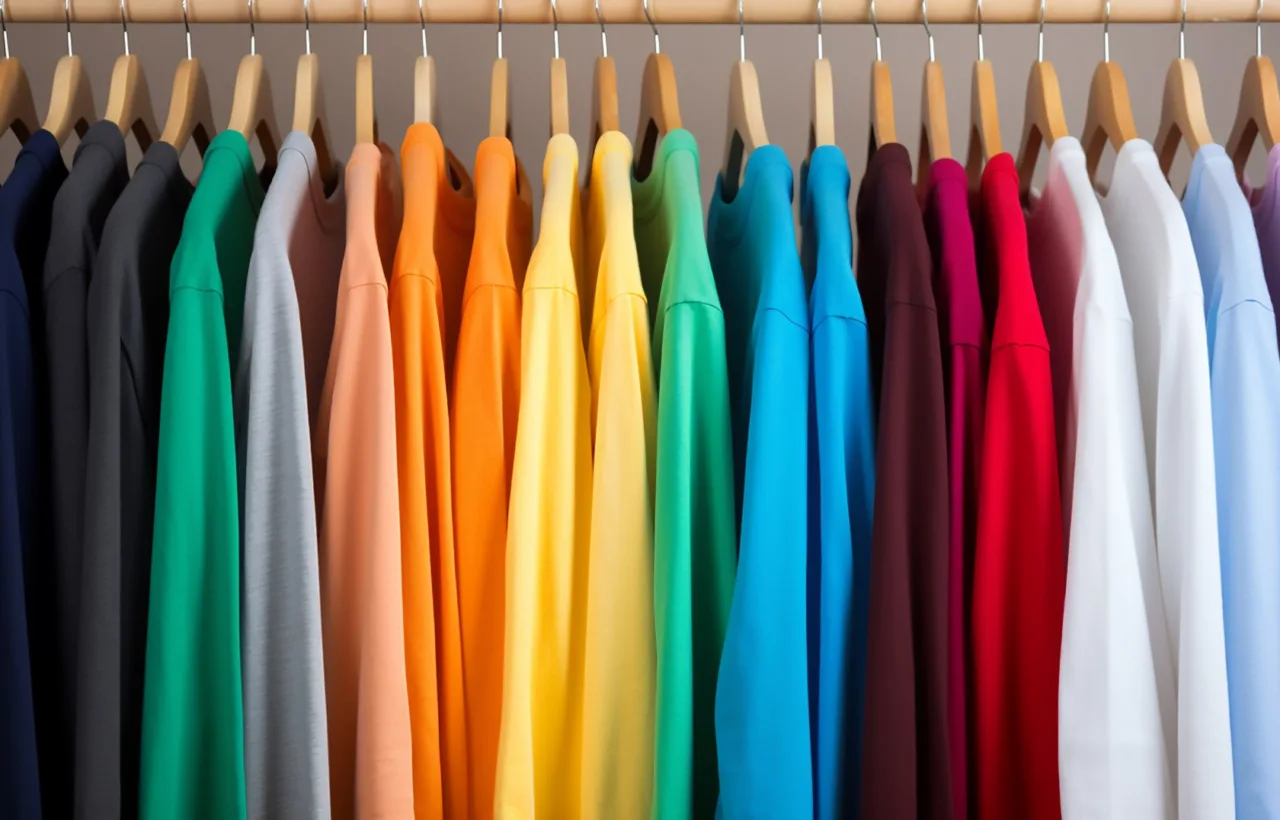
I only hang the heavier graphic tees or ones that wrinkle easily. I use slim velvet hangers with rounded edges. Wire hangers stretch the fabric. Wide plastic ones create bumps.
I hang them by category: plain basics on the left, graphic tees in the middle, long-sleeve on the right. Color order inside each group makes the rod look intentional.
Key rule I follow: Never hang damp shirts. They stretch more.
Shelf Storage with Open Bins
My closet has one solid shelf above the hanging rod. I turned it into T-shirt headquarters.
Clear open-front bins hold file-folded shirts standing upright. I label the front of each bin with simple tags: daily, weekend, workout. Pulling one shirt does not disturb the rest.
If the shelf is deep I use two rows of bins. The back row holds less-used shirts. Shelf dividers keep the stacks from sliding into each other.
Drawer Dividers for Instant Order
I bought adjustable drawer dividers after one too many toppled piles. They create individual lanes for each category of T-shirt.
I set them so each lane holds about six to eight file-folded shirts. Colors stay sorted. The dividers stop the whole drawer from becoming a landslide when I grab something from the middle.
Cheap plastic ones work fine. I prefer the ones that expand to fit the exact drawer width.
Color Coding the Entire Collection
Once the shirts are folded or hung I sort by color. Whites and light grays first. Then blues, greens, reds, blacks.
This is not about looking pretty for Instagram. It is about speed. I know exactly where the charcoal tee lives. Matching outfits takes seconds instead of minutes.
I keep the color order the same in every location: drawers, shelves, and the hanging rod. Consistency removes decision fatigue.
Seasonal Rotation Keeps the Closet Light
I do not keep every T-shirt in the main closet year-round.
Summer graphic tees stay front and center from May through September. Heavier long-sleeve tees move to a labeled bin on the top shelf or under the bed for the colder months. When the season flips I swap the bins.
This single habit prevents the closet from feeling stuffed. I only see what I actually wear right now.
Over-the-Door Organizers for Extra Capacity
The back of the closet door used to be dead space. Now it holds a hanging mesh organizer with cubbies.
I roll thin workout tees and drop one into each pocket. They stay visible and accessible. This works especially well in small closets with limited shelf space.
I keep the top rows for shirts I grab most often. Bottom rows hold the ones I wear less.
Cubbies and Open Shelving Units
I added a small freestanding cubby unit inside the closet on one side. Each cubby holds a stack of file-folded shirts or a small bin of rolled ones.
The open design means I never forget what lives where. I assigned one cubby to plain white tees, one to band shirts, one to athletic. It looks like a mini clothing store.
If your closet is narrow, look for slim units that fit beside the hanging clothes.
Vertical Space with Hanging Shelf Organizers
These fabric shelves hang from the main rod and create extra levels.
I use them for the overflow of rolled or folded tees. Each shelf holds a neat stack. Because they hang, they take zero floor space.
I reserve the top fabric shelf for shirts I wear weekly and the lower ones for seasonal extras.
Label Everything So the System Survives Busy Weeks
I used to think labels looked fussy. Then I skipped labeling for a month and the whole system drifted.
Now every bin, every drawer section, and every shelf has a simple label. I write in clear block letters: Daily Tees, Weekend Graphics, Gym Only.
When I am tired or in a rush the labels keep me honest. The system stays intact instead of collapsing into a pile again.
Use the Floor Smartly with Baskets
I keep one large open basket on the closet floor for the shirts I wear most this week. After laundry day I drop the clean ones straight into it.
This acts like a temporary landing zone. It stops me from stuffing clean shirts randomly into drawers. Once the basket fills I file-fold and put them away properly.
A second smaller basket holds the donate pile so those shirts leave the closet fast.
Group by How You Actually Wear Them
I stopped organizing purely by color years ago. Now I group by use first.
Workout tees live together. Soft lounge tees have their own section. Graphic tees I wear out sit in another. Basics for layering go in the easiest-to-reach spot.
Frequency of use decides the location. The shirts I grab three times a week sit at eye level. Rare ones go higher or farther back.
Keep a “Maybe” Box for Sentimentals
Concert tees and gifts I cannot quite part with go into a clear plastic bin on the top shelf. I label it and give myself six months.
If I have not reached for one in that time, it moves to the donate pile. This stops the closet from becoming a museum of old memories while still respecting the shirts that matter.
Maintain the System with a Weekly Reset
Every Sunday night I spend ten minutes resetting. I fold any loose shirts, straighten the bins, and move anything that drifted out of place.
This tiny habit prevents the big overhaul. The closet stays usable instead of sliding back into chaos.
I treat it like brushing my teeth. Non-negotiable and quick.
Choose Breathable Storage Over Plastic When Possible
I avoid sealed plastic for everyday tees. Fabric bins and open baskets let air circulate. Cotton shirts stay fresher longer.
For long-term seasonal storage I do use plastic totes with lids, but only after the shirts are completely clean and dry. A cedar block inside keeps things smelling good.
Test What Fits Your Exact Closet Layout
Not every idea works in every space. My closet is average width with one high shelf and a single rod. Yours might be deeper or narrower.
I tried hanging everything once and hated the stretched necks. I tried pure stacking and hated the digging. File folding plus bins won for me.
Try two or three methods for a week each. Keep what feels natural when you are half-awake in the morning.
Pair Organization with a Simple Laundry Habit
I fold T-shirts the same day they come out of the dryer. Leaving them in the basket overnight turns into a wrinkled mess by morning.
I keep a folding board nearby for consistency. The board makes every shirt the same size so the file folds stand evenly.
This one habit supports every other idea on the list.
Accept That Perfection Is Not the Goal
My closet still has days when a couple of shirts end up tossed on the shelf. I do not panic.
The system is flexible enough that I can restore order in under fifteen minutes. That is the real win. A rigid system that requires constant perfection fails the first busy week.
I aim for functional and mostly tidy. That is enough.
Frequently Asked Questions
How many of the 20 closet tshirt organization ideas should I try at once? I recommend starting with file folding and one storage tool like bins or dividers. Add color coding and seasonal rotation after those feel automatic. Trying everything at once usually leads to overwhelm.
Is hanging or folding better for most T-shirts? Folding wins for everyday cotton tees because it protects the neck and shoulders. I only hang the ones that wrinkle badly or have special graphics I want to see easily.
What if my closet has almost no shelf space? Use the hanging rod with fabric shelf organizers and the back of the door with a mesh unit. Rolling the shirts helps them fit into those vertical pockets.
How often should I reorganize the whole collection? I do a full pull-out twice a year with the seasons. Weekly ten-minute resets keep the day-to-day mess under control without major effort.
Do expensive organizers make a big difference? Not really. Simple adjustable dividers and clear open bins from a basic store worked just as well for me as the pricier versions. Focus on the method first.
I still open my closet some mornings and feel a quiet satisfaction. The shirts stand in neat rows. I grab what I need in seconds. The old frustration is gone.
Pick two or three of these ideas this weekend. Fold a few shirts the new way. Slide in one set of dividers. Notice how much calmer the space feels. That small win usually motivates the rest.
Your T-shirts do not need a perfect Pinterest closet. They just need a system you will actually maintain. Start simple and build from there. You will wonder why you waited so long.