I spent years staring at a walk-in that looked more like a storage unit gone wrong than a place to get dressed. Clothes piled on the floor. Shoes scattered. Accessories vanishing into the void. That changed when I tested 19 walking closet organization ideas over a few messy weekends and kept only what actually worked for my space and habits. These are the ones that stuck. They cut my morning scramble in half and made the whole room feel usable again.
Honestly? The biggest shift came from treating the closet like a small store instead of a dumping ground. I stopped waiting for the perfect custom build and started with simple moves anyone can do. Here’s exactly what I did, in the order that made the biggest difference for me.
Start With a Ruthless Edit Before You Organize Anything
I pulled every single item out. Every shirt, every pair of jeans, every bag I had forgotten about. The floor disappeared under the pile. It felt overwhelming at first. Then I sorted into four clear groups: keep, donate, store elsewhere, trash.
I only put back pieces I wore in the last year or truly needed. The rest left the house that same day. This single step freed up more space than any shelf ever could. FYI, if you skip the edit, every other idea just rearranges the same mess.
See, most people jump straight to buying organizers. I think that’s the wrong way to go about it. Space isn’t the real problem. Stuff is.
Create Clear Zones by How You Actually Live
I divided my walking closet into simple zones based on daily life, not just clothing type. Everyday wear sat at eye level near the door. Work clothes got their own section. Formal pieces moved to the back. Seasonal items went high or in bins.
This setup means I reach for the same area every morning without thinking. Zones beat random piles every time. I tested grouping only by color first. It looked pretty but slowed me down. Frequency of use won.
Install Double Hanging Rods to Double Your Capacity
One of the highest-impact 19 walking closet organization ideas I used was adding a second rod. I hung short items on both levels: shirts and folded pants below, more shirts above. Long dresses and coats kept their single high rod.
The top rod sits around 80 inches. The bottom one sits near 40 inches. Suddenly I had twice the hanging space without touching the floor. My old single-rod setup wasted half the height. This fixed it overnight.
Maximize Every Inch of Vertical Space
I looked up. Really looked. Most closets leave the top third empty. I added floor-to-ceiling shelves and a couple of overhead bins for luggage and off-season coats. Everything stays visible if I use a step stool once a season.
Vertical storage turns dead air into useful real estate. I keep daily items lower and archive pieces higher. The floor stays clear. That alone makes the room feel twice as big.
Switch to Uniform Slim Hangers
I tossed every mismatched plastic and wire hanger. Slim velvet ones took their place. All the same color. All facing the same direction.
The difference is immediate. Clothes slide closer together without bunching. I gained several inches of rod space per section. Plus the whole closet looks calmer. Matching hangers cost less than a dinner out and deliver results you notice every day.
Add Drawers With Dividers for Small Items
Socks, underwear, belts, and scarves used to live in a single chaotic drawer. I installed a simple drawer unit and dropped in cheap dividers. Each category got its own square.
Now I open one drawer and see everything. No digging. No lost pairs. Drawers keep small stuff contained better than open shelves ever did for me. I tried baskets first. They spilled. Dividers held the line.
Build a Dedicated Shoe Gallery
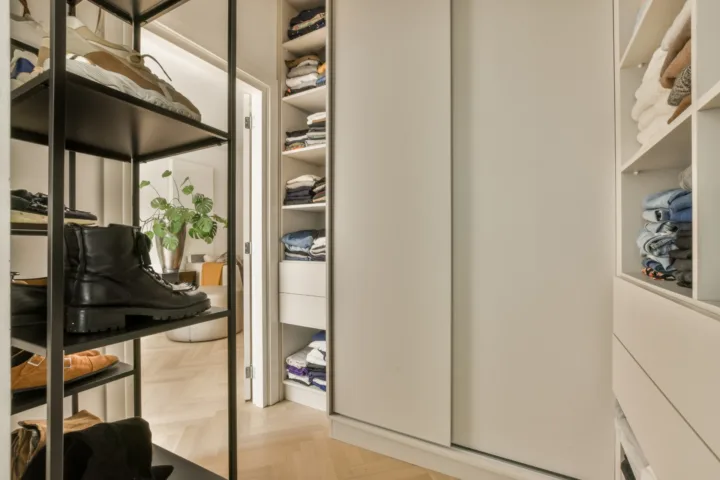
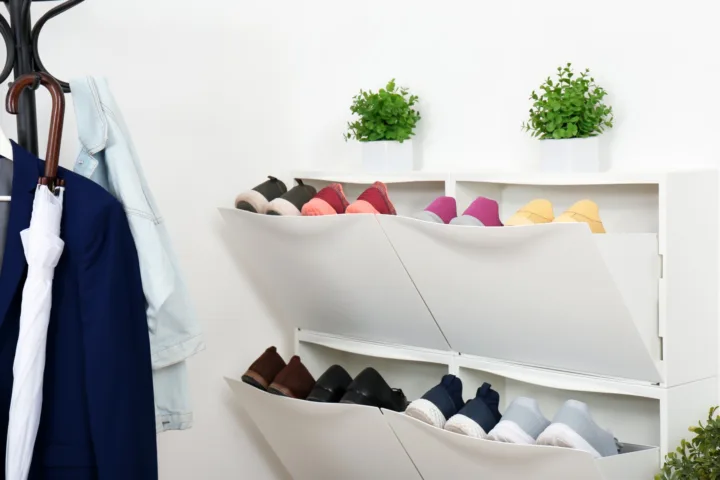
Shoes owned the floor for years. I cleared them completely. Slanted shelves along one wall let me see every pair at a glance. Boots stand upright on a separate low shelf. Flats and sneakers stack in clear boxes higher up.
No more kicking through piles. No more flattened toes. If your closet is tight, an over-the-door organizer works almost as well. I use both. The floor stays open for walking and vacuuming.
Use Woven Baskets and Labeled Bins for Accessories
Scarves, hats, and gloves used to vanish. I grabbed a few woven baskets and clear bins, labeled each one, and assigned them to shelves. Winter accessories in one. Summer in another. Everyday bags in a third.
Labels remove the guesswork. I can grab what I need without opening three containers. Baskets also soften the look of all that shelving. Plastic alone felt cold. Texture helped.
Mount Hooks for Bags, Belts, and Hats
Wall space was pure gold. I screwed in a row of sturdy hooks at different heights. Handbags hang open so I can see them. Belts loop over shorter hooks. Hats rest on the top ones.
This keeps bulky pieces off shelves and off the floor. Everything stays in view and ready to grab. I used to stack bags. They toppled. Hooks fixed that permanently.
Consider a Closet Island If You Have the Room
My walking closet is wide enough for a small island in the center. I added one with drawers underneath and a flat top for folding or laying out outfits. It also holds jewelry trays and a small mirror.
The island became my favorite surface. I fold laundry right there. I plan outfits the night before. If your space is narrower, skip it. A folding table against one wall can do similar work without blocking the path.
Light the Space Properly
Dark corners hide clutter. I installed simple LED strip lights under the top shelves and a motion-sensor bulb near the door. Suddenly every item showed up clearly.
Good lighting makes organization stick because you actually see the mess forming. I used to ignore the back wall. Now I notice when something needs a home. Light changes everything.
Add a Full-Length Mirror and Keep It Clear
I hung a full-length mirror on the back of the door. It doubles the sense of space and lets me check outfits without leaving the closet. I keep the area in front of it empty so I can step back.
A mirror turns the room into a real dressing area instead of just storage. I catch outfit problems early this way. No more changing three times after I walk out.
Color Coordinate Within Each Zone
Inside each zone I sorted by color from light to dark. Whites and creams first, then neutrals, then brighter shades. It takes ten extra minutes the first time. After that the system maintains itself.
Finding a specific blue shirt became automatic. The closet also looks intentional. I tried pure category sorting without color. It worked but felt less calm. Color added the visual rest I needed.
Rotate Seasonal Pieces Out of Prime Space
I keep only current-season clothes in the main hanging and drawer areas. Off-season items move to high bins or a guest closet. Every few months I swap them.
This prevents the closet from choking on things I won’t touch for months. The daily zone stays lean and useful. I used to keep everything out “just in case.” That created constant visual noise. Rotation cut it.
Solve the Dead Corner Problem
Corners wasted space in my L-shaped layout. I added a simple angled rod and a corner shelf unit. Now coats hang through the corner instead of leaving a void.
Corners can eat 10 to 15 percent of usable area if you ignore them. A cheap carousel or angled shelf turns the dead zone into storage. I measured first so nothing stuck out into the walkway.
Choose a Modular System You Can Adjust Later
I started with a basic wall-mounted system that lets me move shelves and rods as my wardrobe changes. Fixed built-ins look custom but lock you in. Adjustable ones grow with you.
I can raise a shelf for tall boots one season and lower it for stacked sweaters the next. Flexibility beats perfection. IKEA-style units or track systems both work if you measure carefully before buying.
Create an Accessory Display Wall
One short wall became pure display. Acrylic shelves hold sunglasses and jewelry. Pegs hold a few favorite bags. A shallow tray holds daily perfume and watches.
Seeing these pieces reminds me to wear them. Hidden accessories stay unused. Display makes the closet feel like a boutique instead of a storage room. I keep only the items I actually reach for here. The rest stay in drawers.
Integrate a Laundry Solution
Dirty clothes used to land in a corner pile. I added a tilt-out hamper inside a lower cabinet. Canvas liners make it easy to carry straight to the washer.
Keeping laundry inside the closet stops the spill into the bedroom. I empty it every few days. The habit stuck because the bin sits right where I undress.
Maintain With a Five-Minute Nightly Reset
The last idea is the simplest. Every night I spend five minutes putting stray items back in their zones. Hangers face the same way. Shoes line up. Baskets get a quick straighten.
Without this, even the best system slides back into chaos. Five minutes protects all the work I put in. I set a phone timer the first week. Now it happens automatically.
Frequently Asked Questions
What are the most effective 19 walking closet organization ideas for a small space? Double rods, vertical shelves, uniform hangers, and clearing the floor give the biggest return in tight walk-ins. Zones and seasonal rotation keep the limited square footage working hard.
How often should I reorganize my walking closet? I do a full edit twice a year when seasons change. A quick nightly reset keeps everything functional between those bigger sessions.
Do I need a custom system or can budget options work? Budget modular units and basic hardware solved most of my problems. Custom looks nicer but isn’t required for real results.
Should shoes stay on the floor or go on shelves? Shelves or over-door organizers win every time. Floor space is too valuable for walking and cleaning to waste on shoes.
How do I keep the system from falling apart after a month? Stick to the five-minute nightly habit and only bring in new items that have a clear home. If it doesn’t fit the zones, it doesn’t stay.
I started this project feeling defeated by my own closet. The pile on the floor used to greet me every morning like a silent judgment. Now I walk in, grab what I need, and walk out in under two minutes most days. These 19 walking closet organization ideas didn’t require a full renovation or a huge budget. They required honesty about what I actually wear and a willingness to give every item a real home.
Try the edit first. Then pick three of the structural changes that fit your space. Build from there. Your mornings will thank you. And if a few pieces still refuse to stay put, well, that’s just more reason to donate them next season.