I used to dread opening our closet every single morning. Clothes spilled onto the floor. My partner’s shirts mixed with mine. We argued over whose space got invaded this time. That chaos ended when I tested 19 shared closet organization ideas that actually stick in real life. These came from years of trial, error, and more than a few late-night rearrangements. I share them here because I know the frustration of sharing limited space with someone who folds differently, hangs differently, and somehow always needs the exact same shelf you just claimed.
See, shared closets force you to confront habits you never noticed living alone. The good news? A few deliberate choices change everything. I started with a full purge, then built systems that respect both of our stuff without constant negotiation. What follows is the exact approach that works for us now. No perfect Instagram setups. Just practical moves that keep the peace and free up time.
Why Shared Closets Turn Into Battlegrounds So Fast
Most people try to split the closet down the middle and call it fair. I tried that first. It failed within a week. One of us had more shoes. The other had longer dresses. The middle line became a daily argument.
Honestly? Equal halves ignore real life. What matters is matching the space to how each person actually lives. I learned to look at volume of hanging items, shoe count, and daily grab frequency before drawing any boundaries. That shift alone cut our morning friction in half.
You need clear ownership zones. You need vertical height working harder. You need matching tools so the closet looks intentional instead of chaotic. And you need a system both of you can maintain without a weekly summit meeting.
My Core Approach Before the 19 Ideas
I emptied everything onto the bed one Saturday. We sorted into keep, donate, and seasonal piles together. No silent resentment. Just honest decisions. Items neither of us had worn in a year left the house that day.
Then I measured. Height, width, depth. I marked zones with painter’s tape first so we could test the layout before committing. That temporary map revealed problems early. The early-riser side needed easier access to work clothes. The night-owl side needed more shoe real estate. We adjusted before buying a single organizer.
FYI, this purge-and-measure step prevents buying containers that never fit.
19 Shared Closet Organization Ideas That Work
Here are the exact 19 shared closet organization ideas I settled on after testing far more. I group them so you can pick what fits your space.
Zone Division That Actually Holds
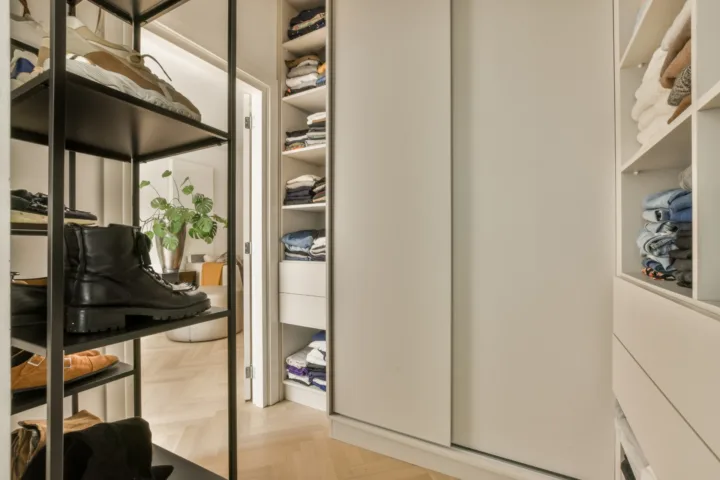
1. Vertical person zones from floor to ceiling. I assigned left side to me, right side to my partner, running the full height. No horizontal split that forces one person to reach higher every day. Each of us owns a complete column. Boundaries stay obvious.
2. Needs-based space instead of strict 50/50. My partner owns more shoes. I own more hanging dresses. I gave the shoe-heavy person extra lower shelves and took extra rod space myself. Fair beats equal every time.
3. A neutral buffer shelf in the center. One mid-height shelf holds only shared items: guest towels, travel bags, extra hangers. Nothing personal lives there. This single shelf stops the slow creep of one person’s stuff into the other’s zone.
4. Color-coded hangers by person. I bought two sets of slim velvet hangers in different neutral tones. Mine stay on my side. Theirs stay on theirs. At a glance you know who owns what. No more mystery shirts.
Vertical Space Hacks
5. Double hanging rods on each side. I installed a second rod lower on both zones for shirts, pants, and folded bottoms. The top rod holds longer pieces. This one change roughly doubled our hanging capacity without widening the closet.
6. High shelves for seasonal rotation only. Anything out of season goes up top in labeled bins. We pull those bins down twice a year. Daily clothes stay at eye level. The closet feels lighter immediately.
7. Over-the-door organizers for accessories. Hooks and clear pockets on the inside of the door hold belts, scarves, and bags. Floor space stays clear. No more tripping over shoes while hunting for a scarf.
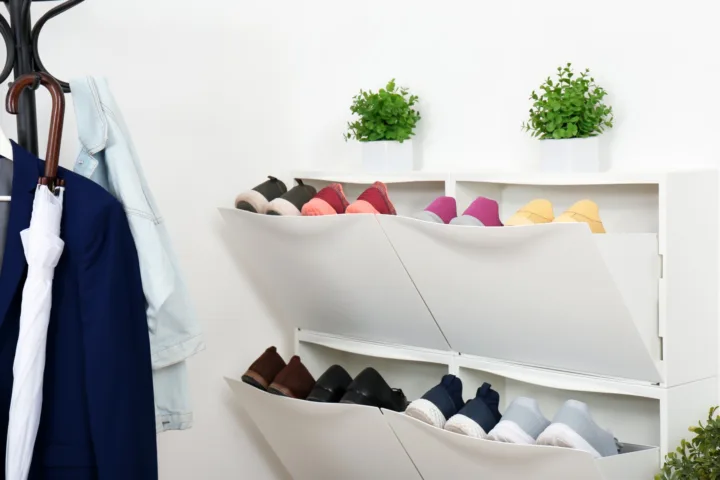
8. Floor-to-ceiling shoe shelves on one side. I dedicated the lower third of one zone to angled shoe shelves. Clear boxes stack above for off-season pairs. Shoes no longer live in a pile by the door.
Containers and Dividers That Stick
9. Uniform slim hangers across the whole closet. Bulky plastic hangers waste inches. I switched everything to the same slim velvet style. Clothes slide less. The rod holds more. The whole space looks calmer.
10. Shelf dividers for folded stacks. I added vertical dividers on the shelves so sweaters and jeans stay upright instead of toppling. Each person gets their own section of dividers. No mixed stacks.
11. Drawer organizers for small items. Socks, underwear, and jewelry each get their own divided tray. I labeled the fronts with simple initials. Morning searches dropped to nearly zero.
12. Matching bins for everything else. I chose one style of fabric bin in two sizes. Hats, workout clothes, and miscellaneous pieces live inside. Labels face forward. Mystery piles disappeared.
Daily Flow and Maintenance Moves
13. Category grouping within each zone. Inside my column I hang work clothes together, then casual, then formal. Same pattern on the other side. You grab what you need without scanning the entire rod.
14. A “maybe” box for six weeks. Anything we hesitate on goes into a sealed box on the top shelf. If neither of us opens it in six weeks, it leaves. This rule removed the guilt of letting go.
15. Hooks at different heights for daily grab items. I mounted hooks at shoulder height for bags and lower for robes. Each person gets two. Nothing sits on the floor waiting to be tripped over.
16. A shared laundry hamper system outside the closet. We keep two labeled hampers just outside the door. Dirty clothes never re-enter the clean zone. This simple boundary keeps the closet itself cleaner longer.
17. Motion-sensor LED strips under the top shelf. Dark corners hide clothes. I added battery-powered strips that turn on when the door opens. Finding the right shirt takes seconds instead of minutes.
18. Quarterly photo check. Every three months we stand back and take a phone photo of the open closet. We look at the image together. If one zone looks messier, we reset it that same day. No blame. Just a visual reset.
19. One shared “style bridge” section for neutrals. A small middle rod holds only basic pieces both of us wear: black tees, gray sweaters, white shirts. These items move freely. Everything else stays strictly zoned. This bridge prevents arguments over common pieces.
How I Keep These Ideas Alive Month After Month
Systems fail when they demand constant willpower. I built ours to need almost none. The color hangers do the ownership work for us. The photo check replaces lectures. The seasonal bin rotation happens on the first weekend of spring and fall. We put it on the calendar like any other appointment.
I also learned to leave a little empty space on purpose. A packed closet looks chaotic even when everything has a home. Leaving 10 to 15 percent of rod and shelf space free makes the whole system feel breathable.
IMO the biggest mindset shift was treating the closet as shared infrastructure rather than two competing territories. Once we both owned the success of the system, maintenance became automatic.
Real Adjustments When Life Changes
New job means more formal clothes. New hobby means more casual gear. The zones flex because I used adjustable rods and modular bins from the start. When my partner started running more, we simply expanded the workout bin section and moved one shelf divider. No full redesign required.
Kids or roommates change the math further. Color coding still works. You just add more colors or switch to initial labels. The core ideas scale.
Frequently Asked Questions
How do I start with 19 shared closet organization ideas if our closet is tiny? Start with the vertical zones, slim hangers, and double rods. Those three alone reclaim the most space in a small footprint. Add bins and hooks only after the basics are in place.
What if one person has way more clothes than the other? Skip equal halves. Measure actual volume and assign space by need. The person with fewer items still gets a complete vertical zone so the system stays clear.
How often should we declutter a shared closet? I do a full pull-out twice a year at season changes. A lighter visual check every three months keeps small messes from growing.
Do matching hangers really matter that much? Yes. Uniform hangers make the rod look intentional and free up inches. Mixed hangers create visual noise that makes the whole closet feel messier than it is.
Can these 19 shared closet organization ideas work for roommates instead of couples? Absolutely. The same zone, color, and label principles apply. Just agree on the buffer shelf rules so no one claims shared items as personal.
Final Thoughts From Someone Who Lived the Chaos
I spent years thinking a shared closet had to mean daily compromise and mild resentment. That turned out to be wrong. Clear zones, vertical thinking, and a few consistent tools turned our closet into something we both actually like using. Mornings run smoother. Arguments over space nearly vanished.
Pick three or four of these ideas this weekend. Test them for two weeks. Adjust what does not fit your exact habits. Then add more. The goal is not a magazine-ready closet. The goal is a system both of you can maintain without thinking about it every day.
Your closet can stop being the source of friction and start being the quiet background that lets the rest of the day run better. I still smile a little every time I open ours and everything is exactly where it belongs. That small win compounds.