My closet used to feel like a daily ambush. I would open the door and immediately lose track of half my clothes. Socks vanished. Shirts slid off hangers. Shoes piled up in a sad heap. I tried the usual fixes and quit more times than I care to admit. Then I collected these 19 organization ideas for closet spaces that actually stuck for me. They turned the mess into something I can manage without a full weekend of drama.
Honestly? The turning point came after one particularly rough morning when I wore mismatched socks to a meeting. I decided enough was enough. I cleared everything out and started testing real solutions one by one. Some cost almost nothing. Others required a small spend. All of them work because they match how people actually live.
See, the goal is not perfection. It is a system you can maintain on a Tuesday night when you are tired.
Clear the Clutter Before You Buy a Single Thing
I used to skip this part. Big mistake. You cannot organize what you no longer want.
I pulled every single item onto the bed. Then I sorted into three piles: keep, donate, and maybe. The maybe pile got a two-week test. If I did not reach for it, it left.
This step alone frees up surprising space. I donated three bags of clothes I had not worn in over a year. Suddenly the closet looked bigger before I added a single organizer.
Do the same. Be ruthless with the items that no longer fit your life. Your future self will thank you.
Swap Every Hanger for Slim Velvet Ones
I started here because it felt doable. Thick plastic hangers eat rod space. Clothes slide off them constantly.
I replaced every hanger with slim velvet ones. The difference hit me immediately. Clothes stay put. I gained about a third more room on the rod. Everything looks uniform and calm.
Matching hangers create visual order fast. I chose black because they disappear against most clothes. FYI, the cheap multipacks work fine. No need for the expensive ones.
This single change made me feel like I had already won half the battle.
Add a Second Hanging Rod
Most closets waste the lower half of the wall. I measured the space under my existing rod and installed a tension rod.
Now shirts and pants hang on the bottom level. Longer pieces stay up top. I doubled my hanging capacity without touching the walls.
Double rods turn wasted air into usable storage. I keep everyday tops and bottoms on the lower rod so I can grab them without stretching. Seasonal coats stay higher.
If your closet is tall enough, try this first. It costs little and changes everything.
Use Shelf Dividers Like Your Life Depends on It
Folded stacks used to collapse the second I pulled one sweater. I bought clear acrylic shelf dividers and slid them between piles.
Now jeans stay upright. Sweaters stay stacked. Bags no longer lean into each other.
Shelf dividers stop the topple effect cold. I label the front of each section so I know exactly where the workout tops live. It takes five seconds and saves me minutes every morning.
Claim the Back of the Door
The inside of the closet door sat empty for years. I hung a clear over-the-door shoe organizer there.
It holds twelve pairs of flats and sneakers. I also slip belts and scarves into the top pockets. Floor space opened up overnight.
Door real estate is free storage. I prefer the clear plastic version so I can see everything at a glance. No more digging through a shoe pile on the floor.
Organize by Category First
I used to mix everything together. Shirts next to dresses next to jackets. Finding anything took forever.
I grouped by type: tops, bottoms, dresses, outerwear. Within each group I further sorted by sleeve length or fabric weight.
Category zones cut decision time in half. When I want jeans, I go straight to the jeans section. No hunting required.
This method beats random hanging every time. IMO, it is the foundation the rest of the system rests on.
Then Sort Each Category by Color
Once categories were set, I arranged each group from light to dark. Whites and creams first, then pastels, then brights, then neutrals, then black.
The visual flow makes outfit planning almost automatic. I can pull a blue top and immediately see the matching bottoms nearby.
Color order turns the closet into a quick reference. It also looks intentional, which makes me more likely to keep it tidy.
Install Simple Hooks for Bags and Accessories
Handbags used to live in a heap on the shelf. They lost their shape and took forever to find.
I screwed a few sturdy hooks into the side wall. Each bag hangs by its handle. I can see them all and grab the right one in seconds.
Hooks protect bag shape and free shelf space. I use the same idea for scarves and hats. Everything stays visible and ready.
Bring in Baskets and Bins for the Small Stuff
Loose socks, underwear, and workout clothes used to create chaos in drawers. I switched to fabric bins and clear plastic boxes.
Each bin gets one job. One holds socks. Another holds belts. A third keeps seasonal accessories.
Labeled bins stop the scatter. I write the category on a simple tag and stick it to the front. Shared closets especially need this. Everyone knows where things belong.
Add Drawer Dividers for the Tiniest Items
Even with bins, my sock drawer still felt messy. I dropped in adjustable spring-loaded dividers.
Now each pair has its own slot. The same works for bras, underwear, and jewelry.
Drawer dividers create instant order in tight spaces. I can open the drawer and see everything without moving a single item. Mornings feel less frantic because of this one upgrade.
Maximize Vertical Space with Hanging Organizers
I had empty air above the rod. I hung a fabric shelf organizer from it.
It holds folded sweaters, jeans, and even a couple of pairs of shoes. The compartments keep categories separate.
Hanging shelves turn dead space into storage. I keep the most-used folded items in the middle compartments for easy reach.
Store Seasonal Items Out of Sight
Winter coats and heavy sweaters used to crowd the main rod year-round. I moved them into vacuum storage bags and tucked the bags on the top shelf or under the bed.
The main closet stays focused on current-season clothes. When the weather changes, I rotate everything in one afternoon.
Seasonal rotation keeps the daily zone lean. I label each bag clearly so I never have to guess what is inside.
Create a Shoe Zone That Actually Works
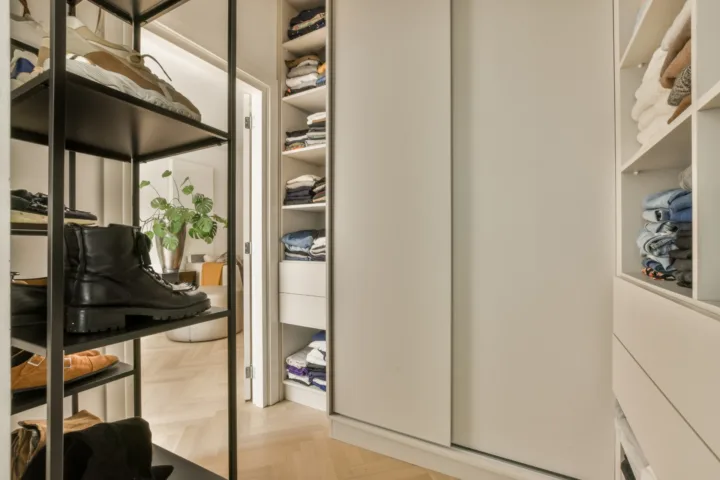
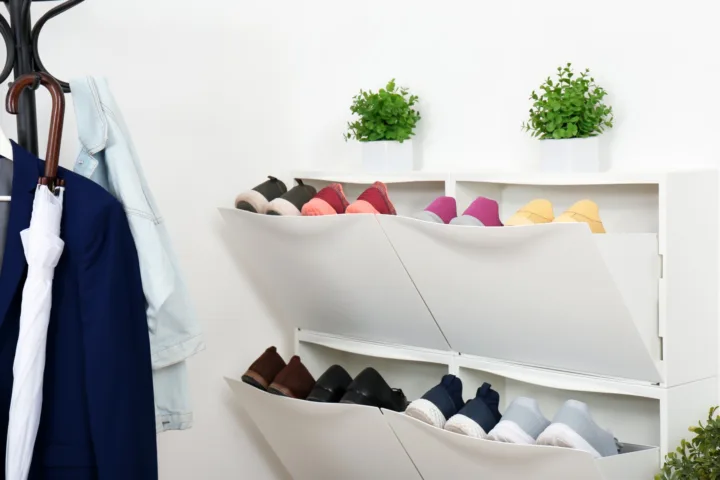
Shoes used to occupy the entire floor. I added a simple two-tier rack and kept only the pairs I wear most often there.
The rest live in the over-the-door organizer or in clear boxes on a high shelf. Boots stand upright with cheap shapers inside so they keep their form.
Dedicated shoe storage ends the floor pile. I can find matching pairs in seconds instead of kicking through a mess.
Use Clear Containers for Visibility
Opaque bins hid too much. I switched the ones on open shelves to clear plastic.
Now I see the contents without opening anything. Scarves, hats, and small bags stay neat and easy to grab.
Clear storage removes the guessing game. I still label the front because habits die hard, but the visibility alone reduces clutter.
Label Everything That Moves
I used to rely on memory. That failed fast. Now every bin, basket, and shelf section gets a simple label.
I use a basic label maker or just write on masking tape. Shared spaces need this more than anything else.
Labels turn good intentions into lasting systems. Guests or family members can put things back correctly without asking.
Add a Small Bench or Ottoman If Space Allows
I found a low storage ottoman that fits under the hanging clothes. It gives me a place to sit while putting on shoes. The inside holds extra scarves or off-season shoes.
A seating spot makes the closet feel finished. I use it every morning and it keeps the floor clear.
Light the Space Properly
My closet was dark. I stuck battery-powered LED lights under the top shelf.
Suddenly I could see colors accurately and find items in the back. No more guessing whether two blacks actually matched.
Good lighting supports every other idea. It is one of the cheapest upgrades with the highest daily payoff.
Keep a Donation Bag Ready
I hang a small bag on a hook near the door. Any time I try something on and decide I no longer love it, it goes straight into the bag.
When the bag fills, I drop it off. No big purge sessions required.
Ongoing editing prevents future overload. This habit keeps the system from collapsing under new purchases.
Review and Adjust Every Season
I set a calendar reminder for the start of each season. I spend one hour rotating clothes, checking labels, and rearranging anything that no longer works.
The system stays useful because I treat it as living rather than finished.
Regular check-ins lock in the progress. I no longer face a complete disaster every few months.
Frequently Asked Questions
What are the most effective 19 organization ideas for closet spaces when money is tight? Start with the free or nearly free moves: purge, category sorting, color order, and using what you already own as bins. Slim velvet hangers and tension rods cost little and deliver the biggest space gains.
How do I maintain these organization ideas for closet systems long term? I keep a donation bag hanging and do a quick seasonal rotation. The daily habit of putting things back in their labeled spots does most of the work.
Do these ideas work for very small closets? Yes. The vertical moves (double rods, door organizers, hanging shelves) matter even more in tight spaces. I tested them in a reach-in closet first and they still delivered.
Should I organize by color or by category first? Category first. Then color within each category. That order keeps similar items together so color sorting stays useful instead of scattered.
How long does it take to set up all 19 organization ideas for closet? I spread the work over two weekends. The big purge and hanger swap took one day. The rest I added gradually so nothing felt overwhelming.
I still open my closet some mornings and smile at how calm it feels. The chaos used to set the tone for the whole day. Now the system supports me instead of fighting me. Pick one or two of these ideas this week and try them. You will feel the difference almost immediately. Then keep going. Your mornings will thank you.