
I spent too many mornings kicking piles of shoes out of the way just to reach the ones I actually wanted. My walk-in closet looked decent enough until the footwear took over. Then I started testing real solutions. These 18 walk in closet shoe organization ideas fixed the mess for me, and they can do the same for you if your collection keeps growing faster than your storage.
Honestly? I almost gave up and started leaving shoes by the front door. That lasted about a week. The dust and the constant search for matching pairs drove me nuts. So I got serious. I measured every shelf. I tried cheap racks that wobbled. I bought clear boxes that stacked wrong. I learned what works and what just looks pretty in photos.
See, the goal is not a magazine closet. The goal is finding the right pair in under ten seconds without tripping. That is what these ideas deliver.
Why Shoe Storage in a Walk-In Needs Its Own Plan
Most people treat shoes as an afterthought. They dump them on the floor under the hanging clothes and call it done. I did that for years. It fails every time.
A walk-in gives you walls and height. Use both. Daily sneakers belong near the entrance at waist level. Heels and statement pairs can sit higher or on angled shelves where you can see the shape. Boots need extra vertical space so they stay upright. Seasonal pairs go in bins or higher shelves.
I sorted my collection by frequency first. The pairs I wear three times a week sit front and center. Everything else gets secondary real estate. That single decision cut my morning search time in half.
Open Shelving and Angled Displays
Open shelves give you instant visibility. I started here because I hate digging through boxes when I am already late.
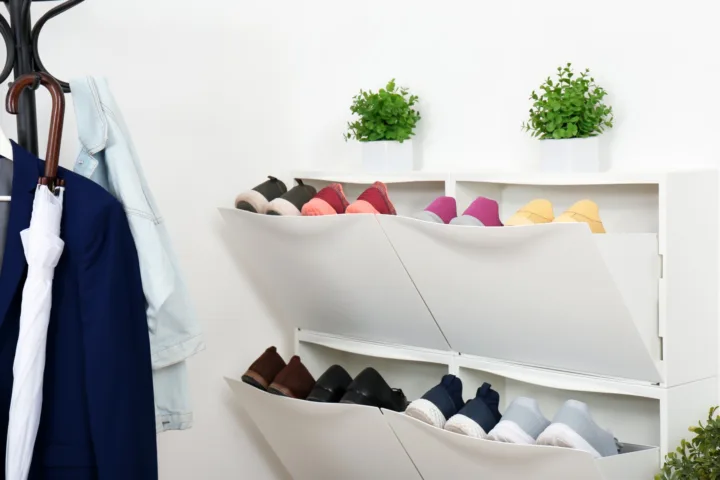
Idea 1: Install angled shelves for heels and flats. The slight tilt shows the toe and color right away. I can scan a whole row without pulling anything forward. Flat shelves hide the back pairs. Angled ones do not. I mounted three rows at different heights and suddenly every pair felt reachable.
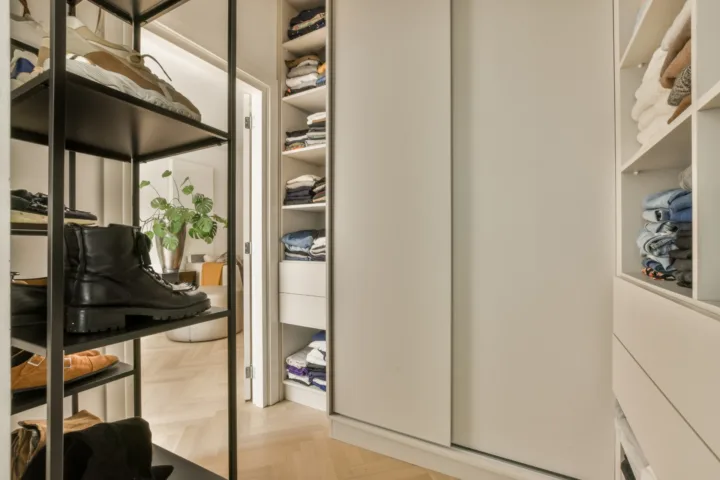
Idea 2: Build a dedicated shoe wall. I cleared one full wall and filled it with adjustable shelves. Boots live at the bottom. Everyday shoes sit in the middle. Fancy pairs go higher. The wall became the first thing I see when I walk in. It feels intentional instead of chaotic.
Idea 3: Alternate toe-to-heel on every shelf. This simple trick doubles the pairs per row. One shoe faces forward, the next faces back. The heels nest into the open space. I fit six extra pairs on the same shelf length. FYI, this works best with similar heights so nothing tips.
I compared flat versus angled in my own closet. Angled won for daily use. Flat works fine for bulky sneakers if you add risers.
Clear Boxes and Stackable Systems
Dust is the silent enemy. Open shelves look great until you realize half your collection needs a wipe-down every month.
Idea 4: Switch to clear stackable shoe boxes. I bought a set of the front-opening kind. I can see the pair without lifting the lid. They stack neatly and protect against dust. I labeled the short side with the color and style so I never open the wrong one twice.
Idea 5: Use acrylic boxes only for the pairs you wear less often. Daily shoes stay open. Special occasion heels go in boxes on the upper shelves. This keeps the high-traffic zone clean and the fancy pairs protected.
Idea 6: Add risers inside existing shelves. A simple plastic riser turns one shelf into two levels. I placed them under my sneakers and instantly gained space for another row of flats. Cheap and effective.
I tried fabric boxes first. They looked soft but I could never remember what lived inside. Clear won because visibility matters more than matching the decor.
Cubbies, Pull-Outs, and Built-In Solutions
If you like the boutique look without the custom price tag, cubbies deliver.
Idea 7: Install open cubbies sized to your shoes. Measure your largest pair first. Most women’s flats need about 10 by 6 inches. Sneakers need a bit more height. I built a column of cubbies along one side and assigned each pair its own spot. No more stacking that collapses when you pull one out.
Idea 8: Add pull-out drawers for flats and sandals. These slide forward so you see the whole collection at once. I use two drawers under a hanging rod. They hold all my summer sandals and keep them off the floor. The closed look also hides visual clutter when the closet door is open.
Idea 9: Try a rotating shoe tower if floor space is tight. I tested a tall lazy-susan style unit in the corner. It holds about twenty pairs in a small footprint. Spin it and every pair comes into view. Great for small walk-ins or shared spaces.
I compared fixed cubbies to pull-outs. Pull-outs feel more luxurious but cost more and need careful measuring. Cubbies are simpler and still keep pairs separated.
Vertical and Door Space Hacks
Most people ignore the door and the high shelves. That is free real estate.
Idea 10: Hang an over-the-door organizer for lightweight pairs. Mesh pockets hold flats, sandals, and kids’ shoes if you share the space. I put one on the inside of the closet door and freed an entire lower shelf. It is not pretty, but it is practical.
Idea 11: Use a tall bookcase as a shoe tower. I had an old IKEA Billy sitting in the garage. I moved it into the walk-in and adjusted the shelves for boots and sneakers. It holds more pairs than most commercial shoe racks and costs almost nothing if you already own one. IMO this is the smartest budget move I made.
Idea 12: Install floor-to-ceiling shelving on one wall. Go as high as the ceiling allows. Use the top third for off-season pairs in labeled bins. The middle stays for current season. The bottom holds boots upright. I added a small step stool so the high shelves stay usable.
Vertical storage changed everything for me. Suddenly the floor stayed clear and I could walk the full length of the closet without obstacle courses.
Boot Care and Seasonal Rotation
Boots collapse. They take up weird space. They need their own rules.
Idea 13: Keep boots upright with simple inserts. I cut pool noodles to length and dropped them inside tall boots. They stay standing and keep their shape. No more sad, floppy pairs leaning against each other.
Idea 14: Create a seasonal swap system. Twice a year I move winter boots to higher shelves or bins and bring summer sandals down. Clear bins with labels make the switch fast. I keep a small notebook in the closet so I remember what lives where.
Idea 15: Store rarely worn boots in their original boxes or clear bins on high shelves. This frees the prime lower space for the pairs I reach for daily. Dust stays out and the closet feels lighter.
I used to leave boots on the floor all year. They collected dust and got stepped on. Now they stay protected and I actually wear them more because they are easy to grab.
Style and Visibility Upgrades
Function first. Then make it look good enough that you want to keep it that way.
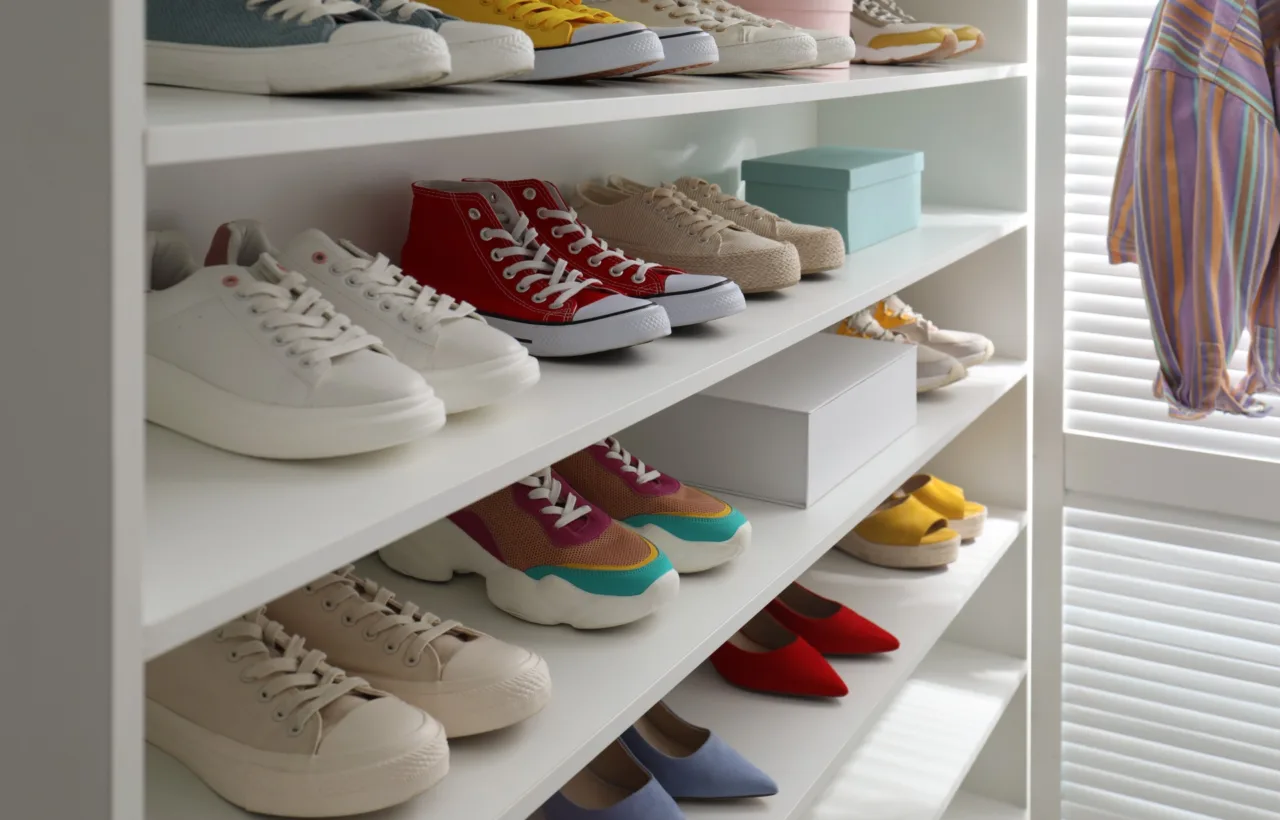
Idea 16: Color-coordinate the open shelves. I lined my everyday shoes from light to dark. Finding a black pump takes three seconds now. It also looks calm instead of random. You do not need designer pairs for this to work. Any collection benefits.
Idea 17: Add simple LED strip lighting under the shelves. I stuck battery-powered strips under the angled shelves. The shoes pop. I can see colors accurately even on dark mornings. No electrician required.
Idea 18: Zone the entire closet around shoes. I gave shoes their own wall and kept clothing on the other two. Accessories live in drawers nearby. Everything has a home. When I add a new pair I already know where it belongs.
These last three ideas turned the practical system into something I actually enjoy using. The closet no longer feels like storage. It feels like a small shop that belongs to me.
Practical Tips I Learned the Hard Way
Measure before you buy anything. Shelf depth of 12 to 14 inches works for most shoes. Boots need closer to 18 inches. Leave walking space in the middle so you can actually move around.
Start with what you already own. That old bookcase or those clear bins from last year’s move can become shoe storage overnight. Buy new only after you know the gaps.
Keep daily pairs at eye or waist level. Everything else can go higher or deeper. Your future self will thank you when you are rushing out the door.
Clean the shoes before they go back on the shelf. Dirt travels. A quick wipe keeps the whole system looking intentional.
Frequently Asked Questions
What are the best 18 walk in closet shoe organization ideas for a small space? Focus on vertical options first: over-the-door organizers, tall bookcases, and angled shelves that hold more pairs per foot. Clear stackable boxes and rotating towers also pack a lot into limited square footage without blocking the walkway.
How do I keep boots from collapsing in a walk-in closet? Insert pool noodles or dedicated boot shapers and give them taller shelf space. Store them upright on the lowest shelves or in tall cubbies so gravity works with you instead of against you.
Should I use open shelves or closed storage for shoes? Open shelves win for pairs you wear often because you can see them instantly. Closed boxes or drawers protect special pairs from dust. Most people do best with a mix of both.
How often should I rotate seasonal shoes? Twice a year works for most climates. Move the current season to the easy-reach shelves and send the rest higher or into labeled bins. A five-minute swap keeps the system from overcrowding.
Can I organize shoes without spending a lot of money? Yes. Start with what you already have. A spare bookcase, clear bins from other rooms, and pool noodles cost almost nothing. Add one or two inexpensive risers or an over-the-door unit only after you see the real gaps.
I still adjust the setup every few months as my collection changes. The core system stays the same. The shoes stay findable. The floor stays clear. That is the real win.
You do not need a perfect closet. You need a system that works on busy mornings. Pick three of these ideas and try them this weekend. Start with the ones that match the pairs you reach for most. The rest will fall into place once the daily chaos disappears.