
I spent weeks staring at a half-empty closet and a mountain of tiny onesies before my first baby arrived. The clothes looked adorable in their packages. Once I dumped them all in, the space turned into pure chaos. I needed real 18 baby closet organization ideas that worked for late-night changes and constant size jumps. These are the systems I landed on after plenty of trial and error.
Honestly? I almost gave up and just shoved everything into drawers. Then I started treating the closet like a working tool instead of a pretty backdrop. Everything changed.
Why Baby Closets Need Their Own Rules
Adult closets forgive a little mess. Baby closets do not. Clothes arrive in every size from newborn to 18 months before you even leave the hospital. Most of them stay folded or hanging for only a few weeks. You reach for the same five sleepers over and over at 2 a.m. while the rest of the inventory sits unused.
I learned this the hard way. My first attempt left me digging through piles with one hand while holding a crying baby with the other. The second attempt worked because I built zones and stuck to them.
See, the goal is not perfection. The goal is grabbing what you need in under ten seconds without waking the whole house.
Start With a Clean Sweep and Clear Zones
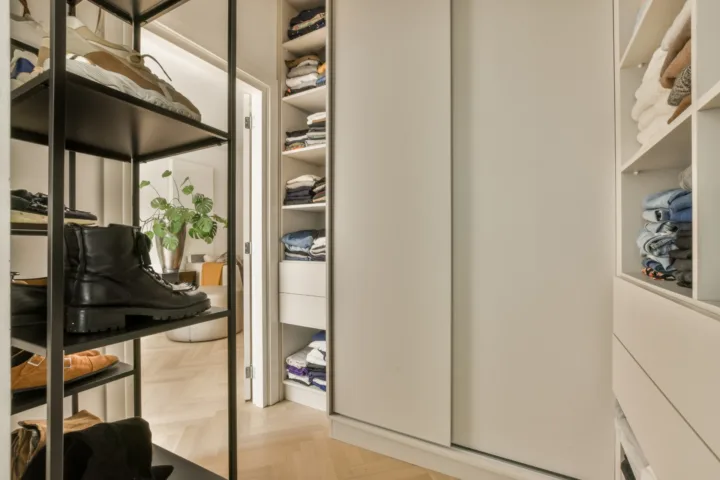
I empty the closet completely every time I reset it. Wipe the shelves. Vacuum the floor. Measure the height and width so I know exactly what fits.
Then I create three simple zones:
- Current size and season lives at eye level and within easy reach.
- Next size up goes higher or in labeled bins.
- Extras and bulk (diapers, blankets, outgrown pieces) occupy the top shelf or floor.
This single step cut my morning search time in half. You will feel the difference the first night you need a clean sleeper in the dark.
18 Baby Closet Organization Ideas That Actually Stick
Here is the full list I use and still recommend to every new parent who asks. I group them so the ideas build on each other instead of feeling random.
Hanging Space Solutions
1. Install a second lower rod. Baby clothes are short. A single high rod wastes half the vertical space. I hang a tension rod or a closet doubler about 30 inches below the top one. Daily onesies and sleepers go on the lower rod. Special outfits stay up high. The lower rod doubles my hanging capacity overnight.
2. Switch to slim velvet hangers. Plastic hangers take up too much room and let tiny sleeves slip off. Velvet hangers grip the fabric and sit close together. I bought one pack of 50 and never went back. Everything stays put even when I yank a sleeper out fast.
3. Use size dividers on the rod. I slide labeled dividers between each size group. Newborn, 0-3, 3-6, and so on. No more mixing. When laundry day hits I drop the clean clothes straight into the right section. FYI, these little plastic tabs cost almost nothing and save hours of sorting later.
4. Hang matching outfits together. I clip a top and bottom on the same hanger with a small clothespin or hang them as a set. Grabbing a complete look at 6 a.m. becomes automatic. No more hunting for the matching pants that somehow migrated three feet away.
Shelf and Bin Systems
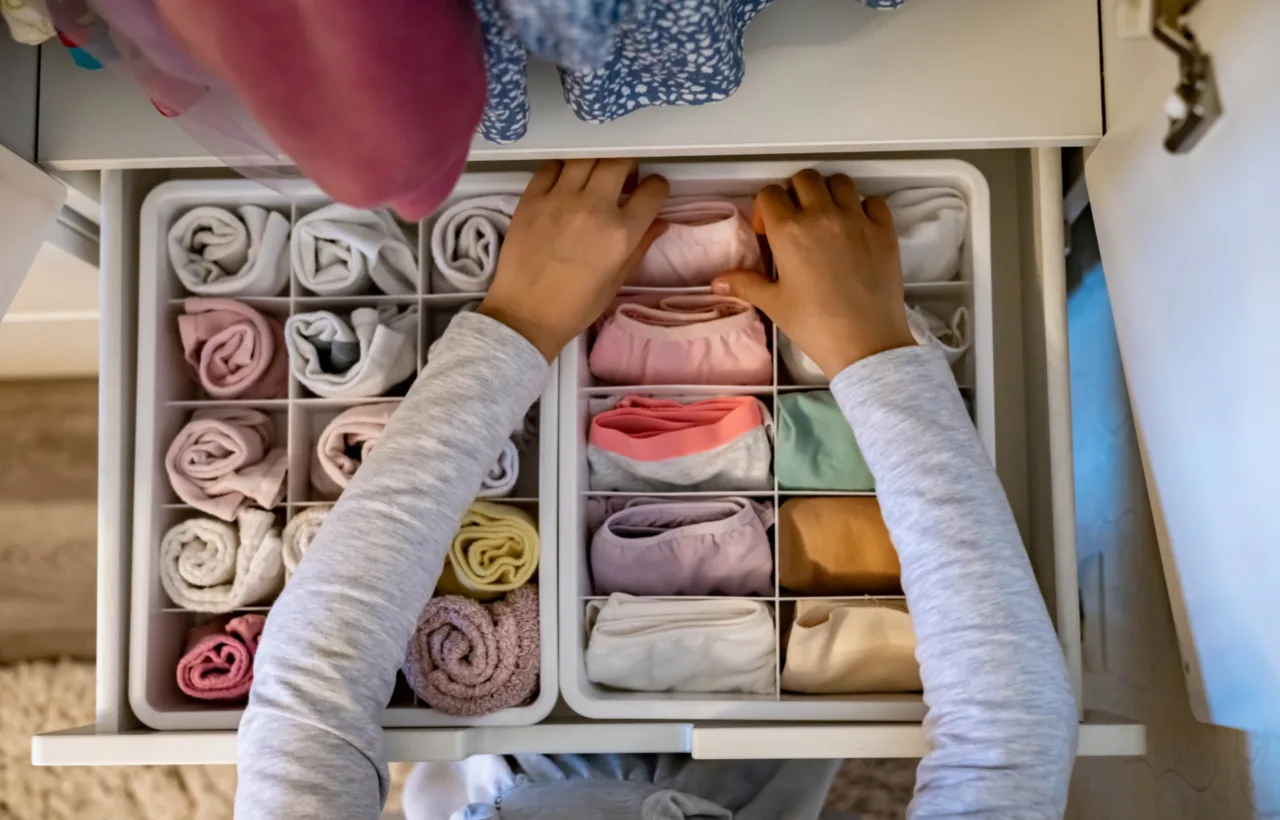
5. File-fold everything you can. I stopped stacking onesies flat. Now I fold them the KonMari way so they stand upright in the drawer or bin. I see every single item the moment I open the space. Stacks hide things. File folds show them.
6. Add matching woven baskets. Clear plastic looks clinical. Matching rope or seagrass baskets hide the clutter and still look soft. I keep one for socks and hats, one for bibs, one for spare swaddles. Label the front with a simple tag so anyone can put things back.
7. Use clear bins for future sizes. I store the next two sizes in clear plastic bins on the top shelf. Bold black marker labels say “6-9 months” and “9-12 months.” When the current size starts feeling tight I pull the next bin down and the cycle continues. No surprise piles later.
8. Install shelf dividers. Folded stacks of pants and sweaters used to tip over. Acrylic or wire shelf dividers keep each category in its lane. I can pull one stack without collapsing the rest.
Floor and Vertical Tricks
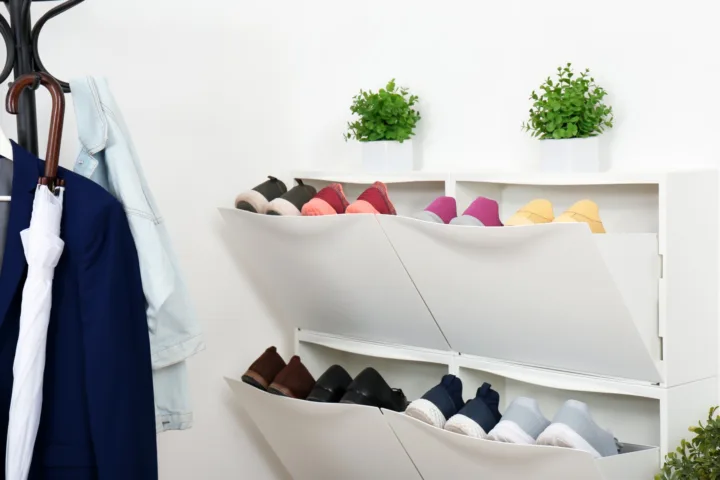
9. Place a cube organizer on the floor. The floor under the hanging clothes often sits empty. I slide a three- or four-cube unit in there. Baskets inside hold shoes, soft toys, or extra diapers. It turns dead space into useful storage without looking messy.
10. Mount an over-the-door organizer. The back of the closet door is prime real estate. I hang a clear shoe organizer and fill the pockets with socks, headbands, pacifiers, and small toiletries. Everything stays visible and off the shelves.
11. Add a hanging fabric organizer. These multi-shelf fabric units hang from the top rod. I use one for blankets and another for out-of-season clothes. They take advantage of the empty air under the high rod and keep bulky items contained.
12. Keep a small laundry hamper inside. Dirty onesies used to land on the floor or get mixed with clean clothes. A slim hamper in the corner solves it. I empty it every other day. Simple rule: dirty goes straight in.
Accessibility and Daily Flow
13. Create a grab-and-go shelf. I reserve one middle shelf for the five most-used items: two sleepers, two onesies, and a pair of pants. Whatever I reach for most often lives right there. Everything else can wait.
14. Store diapers and wipes in the closet. If your changing table runs low at night you will thank yourself. I keep a week’s supply of diapers and a wipe pack in a low basket. No more trips down the hall in the dark.
15. Use drawer dividers for tiny accessories. Socks, mittens, and hair clips disappear without dividers. I bought inexpensive expandable dividers and gave every small category its own slot. Finding a matching pair of socks stopped being a scavenger hunt.
16. Label every single container. I print simple labels or write with a paint pen. “Current sleepers.” “Spare hats.” “Next size.” Labels remove the guessing game for partners, grandparents, or anyone else who helps. IMO this step matters more than most people admit.
Long-Term and Growth Tips
17. Rotate seasonally without drama. Twice a year I pull the out-of-season bins down and swap them. Winter sleepers go up high. Summer rompers come forward. Because everything already sits in labeled bins the swap takes twenty minutes.
18. Leave 20 percent empty. I used to pack every shelf full. Then new gifts arrived and the system broke. Now I leave breathing room on purpose. New clothes have a place without forcing a full reorganization.
How I Maintain the System Without Losing My Mind
I do a five-minute reset every Sunday. Put laundry away. Check the current-size zone. Move anything that no longer fits into the next bin. That is it.
When my baby jumped two sizes in one month I did not panic. The future-size bins were already ready. I just swapped the labels and kept going.
The biggest mindset shift for me was accepting that the closet will never stay perfect. Babies grow. Clothes multiply. The system only has to work well enough that I can function on three hours of sleep.
Frequently Asked Questions
How many of these 18 baby closet organization ideas do I actually need to start? Start with the second rod, size dividers, and file-folding. Those three alone fixed most of my daily frustration. Add the rest as you feel the need.
What if my closet is tiny? Focus on vertical solutions first. Second rod, over-the-door organizer, and hanging fabric shelves give you the most return in a small space. Skip the floor cubes if they block the door.
Should I hang or fold baby clothes? I hang the outfits I want to keep wrinkle-free and the ones I grab most often. Everything else gets file-folded. Tiny clothes do not need the full hanging treatment adults use.
How often should I reorganize? I do a full reset when my baby outgrows a size range, roughly every two to three months in the first year. Quick Sunday resets keep it from sliding back into chaos between those bigger changes.
Do matching baskets really matter? They do for visual calm. Mismatched containers make the closet feel busier even when it is organized. Matching ones let your eye rest.
Final Thoughts From Someone Who Has Been There
I used to think a perfect nursery closet required a big budget and a professional organizer. It does not. These 18 baby closet organization ideas cost me under a hundred dollars total and saved me countless minutes of frustration.
You will still have days when the system feels messy. That is normal. The point is having a place for everything so the mess never takes over.
Start with one or two ideas this week. Watch how much easier the next midnight change becomes. Then add the next piece when you are ready. Your future self will thank you every single time you open that closet door and find exactly what you need.