
My closet used to swallow every pair of trousers I owned. Piles of jeans, dress pants, and chinos created a daily scavenger hunt that left me frustrated before the day even started. After years of that nonsense, I tested dozens of approaches and settled on 17 trousers organization closet ideas that actually stick in a real home with limited space and a full wardrobe.
I still remember the morning I nearly quit and shoved everything into a laundry basket. Honestly? That low point forced me to get practical. These methods come from my own trial and error, not some perfect Pinterest fantasy. They work whether your closet is a tiny reach-in or a modest walk-in. Let’s walk through them together.
Starting Fresh Before You Organize
I always clear the deck first. Pull every pair of trousers out. Sort what stays, what goes to donation, and what needs repair. This step alone cut my collection by nearly a third the first time I did it.
See, holding onto pants that no longer fit or feel right just creates visual noise. Once the keepers sit in a clean pile, the rest of the process feels lighter. I group them loosely by type at this stage: denim, casual chinos, dress trousers, and anything seasonal. That simple sort makes the next decisions easier.
Hanging Methods That Protect Fabric and Save Space
Hanging keeps wrinkles down and makes selection faster for me. I prefer it for anything with a crease or delicate fabric. Here are the approaches that earned permanent spots in my closet.
Slim Clip Hangers at the Waistband
I switched to slim clip hangers after too many pairs slid onto the floor. Clip them right at the waistband so the legs hang straight. The pants stay crease-free and take up far less rod width than bulky plastic hangers.
This change freed up noticeable space in my small closet. I can now see every pair at a glance. FYI, the rubber-coated clips protect the fabric better than metal ones that leave marks.
Multi-Tier and Cascading Hangers
These let me hang four or five pairs in the footprint of one regular hanger. I hang heavier jeans on the lower levels and lighter chinos higher up. The vertical drop uses height I used to waste.
I tested a few brands. The sturdy metal ones with non-slip coating hold up best under daily use. My mornings got quicker because I no longer shuffle hangers around to reach the back.
The Savile Row Fold on Regular Hangers
This tailor trick changed how I hang dress trousers. Fold one leg through the hanger until the hem sits near the crotch. Then fold the second leg over the first in the opposite direction. The fabric locks in place.
No special equipment needed. Gravity does the work and even helps pull out minor wrinkles. I use this on wooden hangers for my wool pants. They stay put even when I bump the rod.
Double-Hang Rod Setup
Most closets waste the space below a single high rod. I added a lower rod around 40 inches high for trousers while keeping shirts up top. For renters, a simple hook-on double-hang rod works without drilling.
This nearly doubled my hanging capacity. Pants hang at a comfortable height for grabbing, and the upper rod stays free for longer items. I wish I had done this years earlier.
Under-Mount Pull-Out Pants Racks
If your closet has shelves, an under-mount pull-out rack slides out smoothly and holds multiple pairs on arms. I can see the whole collection without digging. The double-sided arms keep fabric wrinkle-free.
This feels more permanent than hangers. I installed one under a mid-level shelf and it became my go-to for dress trousers. Access is fast and the visual order feels satisfying.
Non-Slip Bar Hangers and Open-Ended Styles
A simple bar with non-slip coating lets me fold pants once and drape them evenly. Open-ended versions make removal even easier. I slide the pants on and off without lifting the whole hanger off the rod.
These keep the closet looking uniform. I pair them with the Savile Row fold for extra security on slippery fabrics.
Folding and Shelf Solutions for Everyday Pants
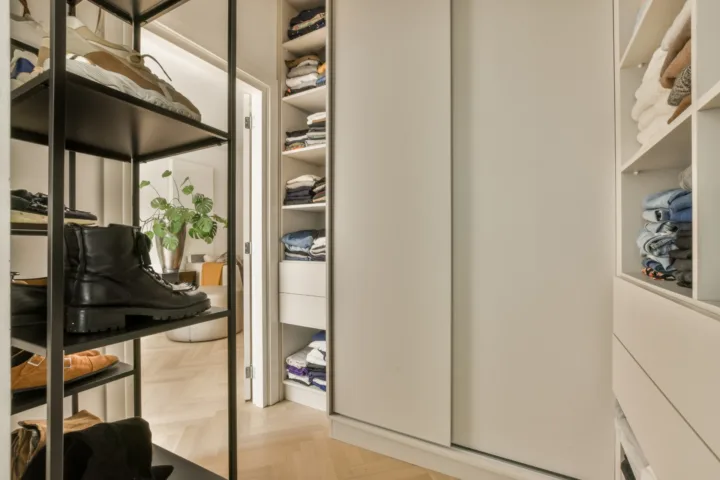
Not everything needs to hang. Jeans and sturdy casual pants fold well and free up rod space. I reserve hanging for pieces that wrinkle easily.
Shelf Cubbies with Dividers
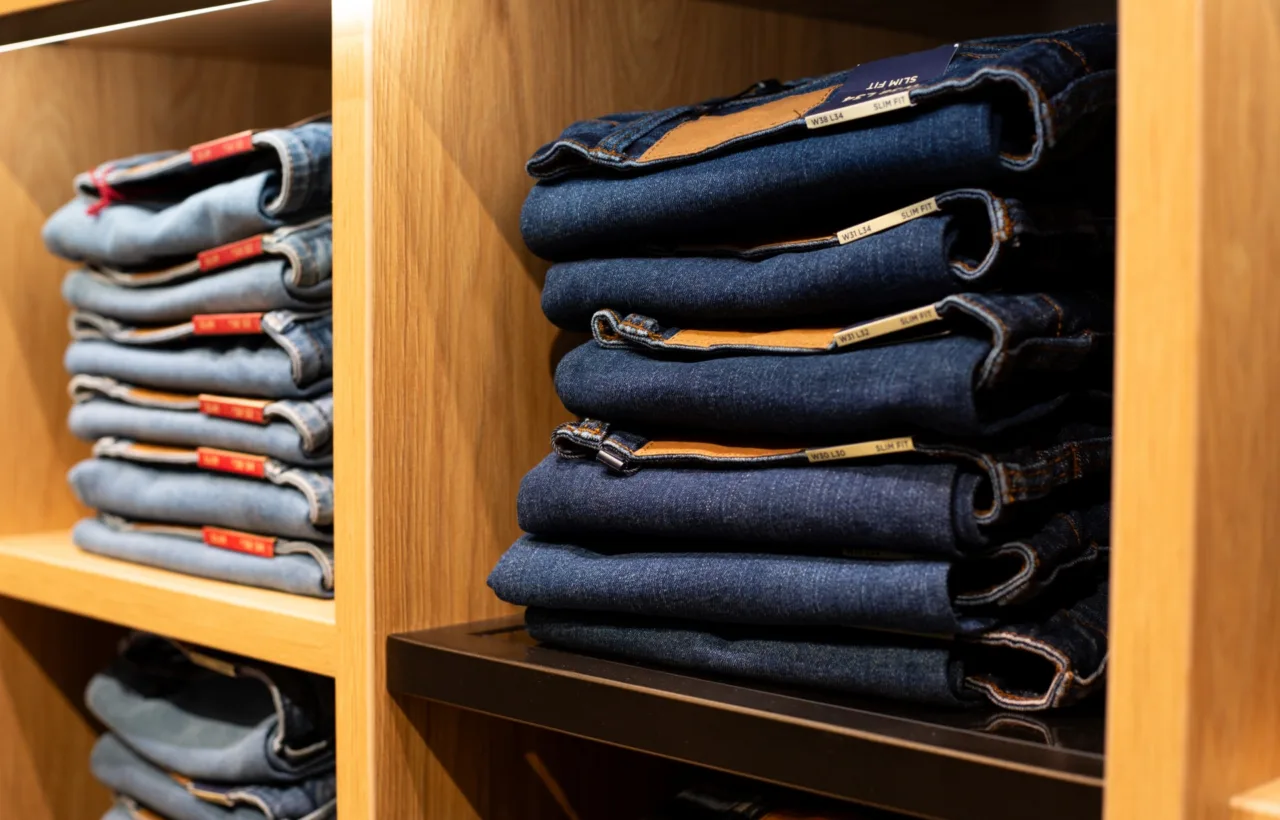
I stack folded denim in cubbies created by shelf dividers. Each pile stays upright instead of toppling into a messy heap. The dividers give clear boundaries so I can pull one pair without disturbing the rest.
This works especially well on open shelves. I keep darker washes on one side and lighter on the other for quick visual scanning.
File Folding in Drawers
For leggings, joggers, and softer pants, I file-fold them so they stand upright in the drawer. Drawer dividers keep the rows neat. I can see every option without digging through a stack.
This method turned a chaotic bottom drawer into something useful. I reach in, grab what I need, and the rest stay orderly.
Vertical Stacking on Shelves
Fold jeans in half lengthwise, then into thirds. Stand them on the shelf with the folded edge facing out. Shelf dividers prevent leaning towers.
I use this for my most-worn denim. Visibility is excellent and the stacks stay compact. Compared to flat piles, this uses height instead of width.
Hanging Closet Organizer Shelves
A fabric hanging organizer with multiple shelves drops from the rod and creates instant cubbies. I fill the shelves with folded casual pants. It works in the space of a few hangers.
This was a quick win in my smaller closet. No tools required and it moves easily if I rearrange later.
Creative Space-Savers for Tight Closets
Small closets demand creative thinking. These ideas use doors, nooks, and vertical drops that I previously ignored.
Over-the-Door Pants Rail
I hang a rail on the inside of the closet door for pants that are clean enough to wear again but not ready for full storage. No more chair piles in the bedroom.
This keeps the “almost dirty” category contained. I check it every few days and either hang properly or wash.
Bins for Off-Season Storage
Bulky winter trousers or summer linens go into fabric bins on high shelves. I label them clearly and rotate with the seasons. Prime lower space stays free for current favorites.
This habit alone stopped my everyday pants from getting crushed. I pull the bins down twice a year and the swap feels manageable.
Tension Rod Side Rack
In a narrow side nook, I installed a tension rod and added clips. It creates extra hanging space where a full rod would never fit. Perfect for a few pairs of dress pants.
Renters love this because it leaves no marks. I adjust the height as needed and it stays solid under normal use.
Curtain Rings with Clips
Slide curtain rings onto a wooden dowel or existing rod, then clip pants to the rings. Each pair hangs independently and flips easily for browsing.
I tried this when I ran short on hangers. The display looks intentional and access feels smooth.
Color and Type Sorting
I arrange all hanging trousers from light to dark within each category. Jeans go dark to light. Dress pants follow the same rule. This creates a calm visual flow and helps me spot duplicates I no longer need.
The first time I sorted this way, I found three nearly identical navy pairs. One went to donation immediately. IMO, this step prevents impulse buys later.
Cascading Hanger Chains
A chain of connectors lets hangers drop vertically from one main hook. Heavier jeans sit lower. This multiplies capacity on a single rod spot.
I use this in the tightest section of my closet. It keeps everything accessible without spreading sideways.
Kids’ Hangers for Better Grip
Smaller hangers grip trousers more securely in some cases. The shorter arms reduce slipping on narrower waistbands. I keep a handful for lighter chinos and summer pants.
They look a bit different but function well. The trade-off in aesthetics is worth the reliability.
Building a System That Lasts
I combine several of these ideas rather than relying on one. Hanging for dress trousers, folding for denim, bins for seasonal, and a door rail for in-between pieces. The mix matches how I actually dress each week.
Maintenance stays simple. Once a month I do a quick scan and re-fold or re-hang anything that has drifted. The system holds because it respects the way I live instead of fighting it.
One honest comparison: multi-tier hangers save the most rod space, but clip hangers win for speed of access. Shelf dividers beat open stacks every time for stability. I tested both approaches side by side and kept the winners.
Frequently Asked Questions
How do I choose between hanging and folding trousers? I hang anything that wrinkles easily or has a crease. I fold sturdy denim and casual pants to free rod space. Test one pair each way and keep the method that leaves the fabric looking better after a week.
What is the best way to prevent pants from sliding off hangers? The Savile Row fold locks them in place on almost any hanger. Non-slip coatings and clip hangers also help. I use both approaches depending on the fabric.
Can these 17 trousers organization closet ideas work in a very small closet? Yes. Focus first on double-hang rods, multi-tier hangers, over-the-door rails, and vertical folding. Those four alone transformed my tiniest closet.
How often should I reorganize my trousers? I do a full sort twice a year with the seasons. A five-minute weekly tidy keeps things from drifting. Consistency beats big overhauls for me.
Do I need expensive organizers to make this work? No. Tension rods, basic dividers, and smart folding cost little and deliver most of the benefit. I started with what I already owned and added pieces only where the gap was obvious.
These methods turned my daily frustration into a system I barely think about. The closet now supports the way I get dressed instead of fighting it. Pick two or three ideas that match your space and try them this weekend. Once they stick, add more. Your mornings will thank you.