
I spent months staring at my tiny walk-in closet in the master bedroom and feeling defeated every single morning. Clothes piled on the floor. Shoes kicked into corners. Bags shoved wherever they fit. The space felt smaller than it was. I needed real 16 small walk in closet organization ideas diy master bedrooms solutions that did not require a contractor or a second mortgage. So I tested them myself. Some failed. Most worked. Here is exactly what stuck and why.
Honestly? The chaos started the day we moved in. That closet looked decent on paper. In real life it swallowed everything and gave nothing back. I tried the usual advice first. It fell short. Then I shifted focus. I stopped asking how to make the closet look perfect. I started asking how to make every single inch earn its keep.
See, small walk-ins force hard choices. You cannot waste vertical space. You cannot leave the floor open for random piles. You have to claim every surface. I learned that the hard way. Now the same closet holds more than it ever did. And it stays tidy longer than I expected.
Start With a Ruthless Clear-Out Before Any DIY Project
I emptied the entire closet one Saturday. Everything went on the bed. I touched every item. If I had not worn it in a year I put it in a donate bag. No exceptions. That single step cut the volume by almost a third. Suddenly the space felt workable.
I sorted what remained into three piles: hang, fold, store. Hanging items got priority. Folded items went into bins later. Seasonal pieces left the room completely. FYI, keeping winter coats in a master bedroom walk-in during July is pure waste.
This purge changed the rest of the process. Without it every other idea would have failed. The closet still felt tight, but now it had room to breathe.
Double Hanging Rods Give Instant Capacity
I installed a second rod below the original one. Tops hang on the upper rod. Pants and skirts hang on the lower. The difference hit me immediately. I gained nearly double the hanging space without adding a single shelf.
The hardware cost under twenty dollars at the hardware store. I measured carefully so the lower rod sat high enough for pants to clear the floor. My taller dresses stayed on one side with a single higher rod. That mix works better than forcing everything into one height.
Honestly? I should have done this on day one. The floor stayed clearer. Morning decisions got faster. I no longer dug through stacked clothes to find a shirt.
Floor-to-Ceiling Shelving Claims the Dead Air
Most small walk-ins waste the top third of the wall. I fixed that with simple shelf brackets and plywood boards cut to fit. I painted them the same color as the walls so they disappeared visually.
Top shelves hold bins of seasonal clothes and rarely used accessories. Middle shelves hold folded sweaters and jeans. Lower shelves hold everyday items I grab constantly. The system keeps weight distributed and prevents the top-heavy mess I used to create.
I left one narrow section open from floor to ceiling for longer dresses and coats. That single open column stops the space from feeling boxed in.
Over-the-Door Shoe Storage Clears the Floor Fast
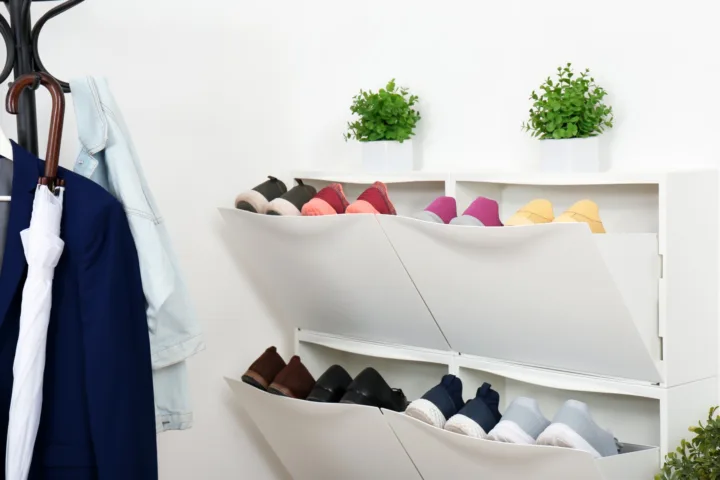
Shoes used to live in a heap near the entrance. I hung a simple over-the-door organizer on the inside of the closet door. Each pocket holds one pair. Boots go in larger lower pockets.
The floor opened up overnight. I could walk in without kicking footwear aside. The door still closed normally. No permanent installation needed. If I ever move I take the organizer with me.
IMO this ranks among the highest-impact low-effort moves for any small master bedroom walk-in.
Slim Velvet Hangers Free Up Rod Space
Bulky plastic hangers steal inches. I switched every hanger to slim velvet ones. The difference on a full rod is dramatic. Clothes sit closer together without looking jammed.
Velvet also stops shirts from sliding onto the floor. I spent less time picking up fallen items. Matching hangers make the whole closet look intentional even when it is full.
I bought them in bulk. The cost paid for itself in recovered space within a week.
Wall Hooks for Bags and Belts Keep Accessories Visible
I screwed sturdy hooks into the side wall at different heights. Handbags hang from the higher ones. Belts and scarves hang lower. Everything stays visible and off the shelves.
Before this change bags occupied entire shelves or sat on the floor. Now those shelves hold clothes instead. The hooks cost almost nothing. Installation took fifteen minutes.
I leave one hook empty for the bag I use that day. It stops the morning search.
Clear Bins and Labeled Baskets for Folded Items
I bought clear plastic bins for the middle shelves. Socks, underwear, and workout clothes live in separate bins. I can see the contents without opening lids.
Larger fabric baskets go on the top shelves for seasonal storage. Labels face forward. No more mystery boxes. When the season changes I swap the entire basket in one move.
This system keeps folded stacks from toppling. It also forces me to put things back in the right place because the bins have fixed homes.
A Simple Shoe Rack Against the Back Wall
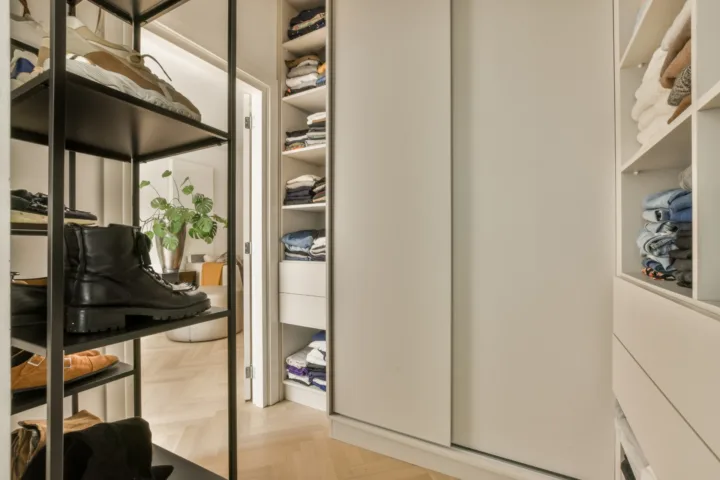
I placed a narrow freestanding shoe rack against the back wall. It holds everyday shoes in two rows. Boots stand beside it. The rack keeps pairs together and lifts everything off the floor.
I measured the depth carefully so the rack does not block the walkway. That small detail matters in a tight walk-in. Now I can see every pair at a glance.
Create Clear Zones Instead of Random Placement
I divided the closet into four zones. Everyday clothes live at eye level and within easy reach. Work clothes sit slightly higher. Workout gear has its own corner. Accessories claim the door and side wall.
Zones remove decision fatigue. I no longer dig through everything to find one item. Putting laundry away became faster because each piece has a known home.
See, the wrong question is how to fit more stuff. The right question is how to make the stuff you already own easier to use.
Add Soft Lighting So You Actually See What You Own
I stuck battery-powered LED strip lights under the top shelves. They turn on with a remote. Suddenly the back corners stopped feeling like a black hole.
Good light changes behavior. I notice wrinkles. I notice duplicates. I notice items I forgot I owned. The closet stays cleaner because nothing hides in shadow.
A Small Stool or Ottoman for Practical Reasons
I tucked a low stool just inside the door. It gives me a place to sit while putting on shoes. It also doubles as a temporary landing spot for the outfit I plan to wear the next day.
When I do not need it I push it against the wall. The footprint is tiny. The convenience is huge.
Color Coordination Makes Everything Easier to Find
I arranged hanging clothes by color within each category. Blues together. Blacks together. Neutrals in the middle. The visual order calms the eye and speeds up selection.
I do the same with folded items in the bins. Matching colors sit side by side. The system looks intentional even on rushed mornings.
Seasonal Rotation Keeps the Active Closet Lean
Twice a year I pull everything that does not match the current weather. Those pieces go into labeled bins stored under the bed or in a hallway closet. The walk-in only holds what I actually wear right now.
This single habit prevents the closet from choking on unused volume. It also forces a regular edit so outdated pieces leave the house instead of lingering.
DIY Shelf Dividers Stop Stacks From Collapsing
I cut thin plywood strips and stood them vertically between stacks of sweaters and jeans. The dividers keep each pile upright. No more avalanche when I pull one item from the bottom.
The cost is almost zero if you have scrap wood. The effect is permanent order.
A Pull-Out Valet Rod for Tomorrow’s Outfit
I added a small pull-out rod near the entrance. At night I hang the next day’s clothes on it. In the morning I grab the whole outfit without searching.
The rod slides back flush when not in use. It occupies almost no permanent space. It ends the chair pile that used to live in the bedroom.
Mirror on the Back of the Door or Side Wall
I hung a full-length mirror on the inside of the closet door. It makes the small space feel larger and gives me a last check before I leave the room. Light reflects and brightens the corners.
If the door cannot hold a mirror I place a slim one on a side wall. Either way the visual expansion helps.
Why These 16 Ideas Work Better Together Than Alone
I did not install everything at once. I started with the purge and double rods. Then I added the door organizer and slim hangers. Each addition built on the last. The closet improved in stages instead of one overwhelming weekend.
The real win is maintenance. Because every item has a clear home I put things away faster. The space stays usable longer between deep cleans. That matters more than any single product.
I still edit twice a year. I still rotate seasons. But the daily friction dropped hard. Getting dressed no longer starts with frustration.
Frequently Asked Questions
How do I start with 16 small walk in closet organization ideas diy master bedrooms if my budget is tiny? Begin with the free steps. Empty and purge. Switch to slim hangers if you can find an inexpensive pack. Add over-the-door storage. Those three moves create the biggest early gains without spending much.
Can these ideas work in a closet shared with a partner? Yes. Split the space down the middle or by zones. Give each person a double-hang section and a set of shelves. Shared accessories go on the door or a common wall. Clear boundaries stop the daily turf war.
What if my walk-in has almost no wall space left for shelves? Focus on the door, the rods, and the floor. Over-door organizers, double rods, and a slim shoe rack still deliver major capacity. Vertical hanging space remains your strongest asset.
How often should I reorganize after the initial setup? I do a full seasonal swap twice a year. Quick weekly resets keep bins and rods tidy. The system only collapses if you stop returning items to their zones.
Do I need power tools for most of these DIY ideas? No. Many solutions use existing hardware, over-door products, or simple screw-in hooks. The double rod and shelf brackets require a drill and level, but the rest stay tool-light.
I still open that closet door some mornings and feel a quiet satisfaction. The same small footprint now holds everything I need and nothing I do not. The chaos stopped because I stopped treating the space like a dumping ground and started treating it like valuable real estate.
Pick one idea this week. Install the double rod or hang the shoe organizer. Watch how the rest of the closet responds. Small wins stack. Before long the master bedroom walk-in feels like it finally works for you instead of against you.