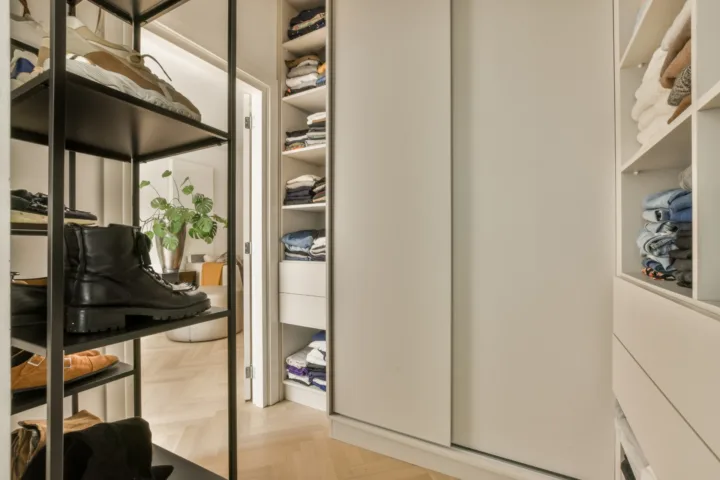

I spent years tripping over shoes every morning in my tiny closet. Pairs stacked in wobbly towers. Boots shoved sideways. Sandals buried under sneakers. The floor vanished under a shoe avalanche I never planned. Then I started testing real 16 small closet shoe organization ideas that actually fit my space and my life. What follows is everything that worked for me after too many failed attempts and one very stubborn collection of footwear.
See, I live in a place where the closet is basically a glorified hallway with a door. No walk-in luxury. No extra square footage. Just me, a rod, a couple of shelves, and whatever floor I can reclaim. I needed solutions that used height, doors, and leftover corners without making the closet feel even tighter. These ideas delivered.
The Mess That Started It All
My breaking point came on a rainy Tuesday. I needed the one pair of boots that would keep my feet dry. They were at the bottom of a pile that had somehow grown overnight. I pulled everything out. The closet looked worse. Honestly? I sat on the floor and stared at the chaos for a full minute.
That night I decided the pile had to go. Not by buying a bigger closet (impossible). By treating every vertical inch and every unused surface like precious real estate. I tried things. Some flopped. Others stuck. The ones that stuck form the list below.
16 Small Closet Shoe Organization Ideas That Actually Fit
I ranked these by how much floor space they saved me and how easy they were to keep up with. You will notice a pattern: almost everything goes up, not out.
1. Clear Stackable Shoe Boxes
I started with these because I could see every pair without opening anything. The clear plastic lets me spot the black loafers in two seconds. Stack them three or four high along the back wall. Boots go on the bottom tier. Flats sit higher. Dust stays out. Access stays easy. My favorite part: they stack tight enough that the whole tower takes less floor space than the old messy pile.
2. Over-the-Door Mesh Organizer
The back of the closet door used to be dead space. Now it holds eighteen pairs. Mesh pockets keep sneakers and sandals upright. Heavier shoes go in the lower rows so the door still closes smoothly. Installation took me four minutes with the included hooks. No tools. No holes. FYI, I rotate the contents every season so the door never feels overloaded.
3. Shoe Slots That Double Shelf Capacity
These little plastic risers sit on existing shelves and let me stack one shoe on top of another at an angle. One shelf that used to hold four pairs now holds eight. I bought a twenty-pack and lined every shelf. The difference is immediate. Suddenly the closet feels twice as deep without moving a single wall.
4. Slim Vertical Tower in the Corner
Corners are the most ignored spots in small closets. I slid a narrow eight-tier tower into the back corner. It holds twelve pairs and takes up less than a square foot of floor. Adjustable shelves mean boots and high-tops fit without forcing. I keep everyday sneakers at eye level and dress shoes higher up.
5. Hanging Fabric Shelves from the Rod
I sacrificed six inches of rod space for a hanging organizer with ten fabric shelves. Each shelf holds one or two pairs depending on size. The whole unit hangs free so I can still reach clothes behind it. Lightweight shoes live here: flats, slip-ons, and the occasional pair of heels. Heavy boots stay elsewhere.
6. Seasonal Rotation with Under-Bed Bins
I no longer keep every shoe in the closet year-round. Winter boots go into flat under-bed bins once spring hits. Summer sandals disappear under the bed when temperatures drop. The closet only holds what I wear this month. That single habit cut my visible collection in half and made the remaining shoes easier to grab.
7. Alternating Heel-to-Toe Placement
This costs nothing. On any shelf or rack I place shoes heel to toe instead of side by side. The staggered pattern removes the wasted gap between pairs. I gained two extra pairs per shelf just by flipping the direction. Simple. Effective. Zero money spent.
8. Low Profile Floor Baskets for Daily Shoes
I keep three pairs I wear most often in a shallow open basket right at the front of the closet floor. No digging. No stacking. I step in, grab, and go. The basket is low enough that hanging clothes still clear it. Everything else stays off the floor.
9. Wall-Mounted Floating Shelves
Above the hanging rod I added two floating shelves. They hold the shoes I wear least but still want visible: special-occasion heels and the one pair of dress boots. The shelves sit high enough that I do not bump my head. Mounting them took a Saturday afternoon and a stud finder.
10. Expandable Wire Rack Under Hanging Clothes
A three-tier expandable rack slides under the hanging clothes and stretches to fit the exact width of the closet. Wire shelves let air circulate so sneakers dry overnight. I load it with the pairs I reach for two or three times a week. The expandability means it grows or shrinks when I rearrange.
11. Labeled Clear Bins for Off-Season Overflow
Any shoes that still do not fit after rotation go into clear bins with labels. “Fall boots.” “Beach sandals.” “Work flats.” The bins stack on the top shelf where I rarely look. Labels mean I never have to open three boxes to find one pair. Visibility plus labels equals zero guesswork.
12. Door-Mounted Metal Rack for Heavier Shoes
Mesh works for light pairs. For boots and chunky sneakers I switched to a metal over-the-door rack with rigid shelves. It holds fewer pairs than the mesh version but supports more weight. The door still closes. The boots stay upright and off the floor.
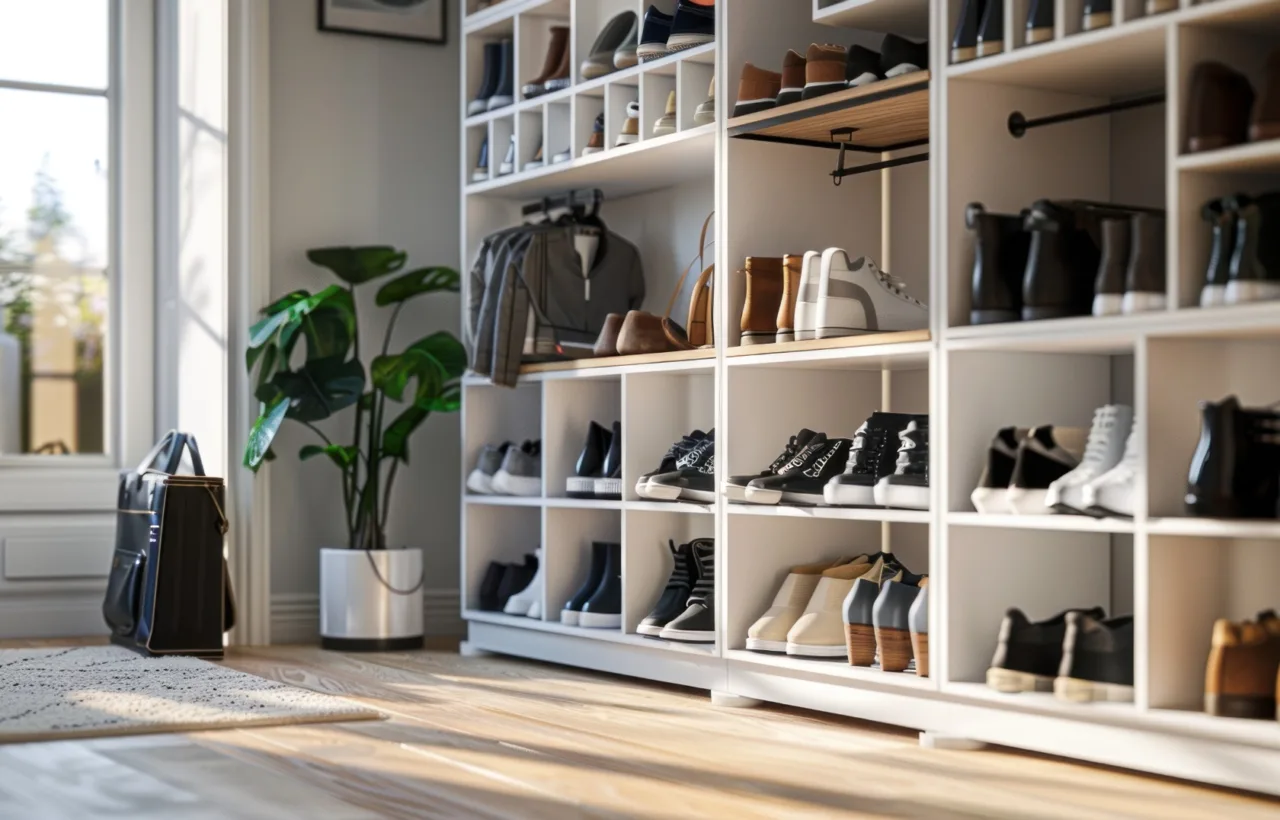
13. Bookcase Converted to Shoe Storage
I had an old narrow bookcase collecting dust in the hallway. I moved it into the closet and turned every shelf into shoe real estate. Risers on each shelf doubled the capacity again. The bookcase stands against the side wall and looks intentional rather than makeshift. Bonus: the top surface holds a small tray for keys and wallets.
14. Fabric Cubbies Hung from Hooks
Command hooks on the side wall hold a fabric cubby unit. Each cubby fits one pair of flats or sandals. The unit is soft so it does not scrape the wall. I use it for the shoes I wear to the gym or for quick errands. Soft storage means the closet still feels calm instead of industrial.
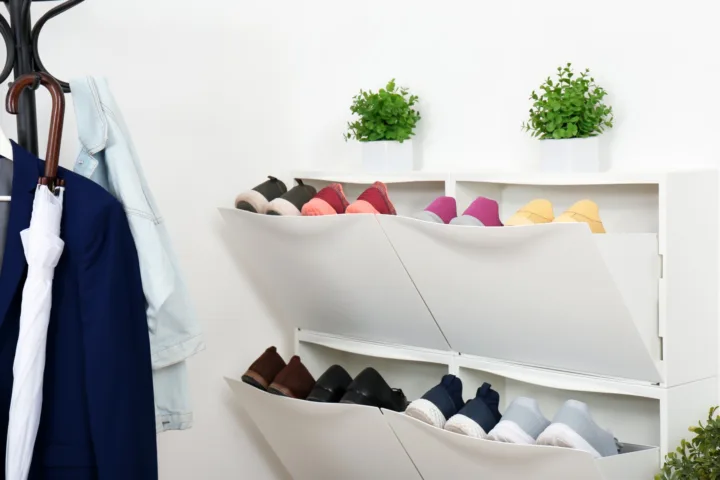
15. Slim Cabinet with Flip-Down Doors
A shallow cabinet only six inches deep sits against the back wall. Flip-down doors hide the shoes while keeping them accessible. I store dress shoes and the nicer pairs here so the closet looks cleaner when the door is open. The cabinet itself doubles as a surface for a small lamp or plant.
16. PVC Pipe DIY Holders for Small Shoes
I cut short sections of wide PVC pipe and mounted them in a grid on a leftover board. Each pipe holds one sneaker or flat. The whole board hangs on the side wall. It looks a little industrial, but it keeps the lightest shoes completely off every other surface. Cost me less than twenty dollars and an afternoon.
How I Keep the System from Falling Apart
Organization only lasts if the system matches real life. I check the closet every Sunday night. Any pair I have not worn in two weeks moves to the seasonal bin or the donation bag. I never let the floor become the default landing zone again. One pair out of place gets put back immediately. That tiny habit protects the whole setup.
I also limit new purchases. If a pair does not have a clear home before it enters the house, it does not enter. Harsh? Maybe. Effective? Completely.
Common Mistakes I Made Before These Ideas
I used to buy every cute organizer I saw online without measuring. Half of them did not fit. I learned to measure the closet depth, width, and door clearance first. I also used to keep every shoe “just in case.” That habit created the original pile. Now I keep only what I actually wear.
Another early mistake: putting the prettiest shoes at eye level and the practical ones on the floor. Practical shoes belong where I can reach them without thinking. Pretty shoes can live higher up.
Frequently Asked Questions
How many pairs can a small closet realistically hold with these ideas? With the combination of vertical towers, door organizers, and stackable boxes I comfortably store around thirty to thirty-five pairs in a closet that used to feel full with twelve.
Do over-the-door organizers damage the door? The ones I use hang with soft hooks and never scratch. I check the fit once a month and adjust if the door starts to drag.
What is the cheapest way to start with 16 small closet shoe organization ideas? Begin with alternating heel-to-toe placement and seasonal rotation. Both cost nothing and free up space immediately. Then add one stackable box set or a door organizer when you are ready.
Should I store boots differently from sneakers? Yes. Boots need more height and support. I keep them on lower shelves or in the metal door rack. Sneakers and flats go in mesh pockets or clear boxes higher up.
How often should I reorganize? I do a full reset twice a year when seasons change. Weekly I only put things back in their spots. That keeps the system from sliding into chaos again.
Final Thoughts from the Other Side of the Avalanche
I no longer dread opening the closet door. The floor stays clear. Every pair has a home I can reach without a scavenger hunt. The 16 small closet shoe organization ideas I listed here are the exact ones that stuck after years of trial and error in a space that never grew larger. Start with the free moves. Add the organizers that match your exact measurements. Keep only what you wear. The pile will shrink. Your mornings will get quieter. And one day you will open the door and feel actual calm instead of mild panic. That feeling alone is worth the effort.